When you start shooting long guns, you will quickly learn which one of your eyes is dominant. Your dominant eye is what you use to line things up. This is more important in shotguns than it is in any other type of firearm because your eye forms the “rear sight” of the gun, and if it doesn’t line up properly with the bore and the muzzle/front sight, the gun will not shoot where you want it to.
Eye dominance is tricky, because it comes in degrees—you can be strongly dominant in one eye or only weakly dominant in one eye, or you can actually not have a strong dominance at all. Your dominance can even swap back and forth over time and even in the course of a day based on fatigue and other factors (although this is rare). Most of us, though, have one eye that is obviously dominant all of the time.
The problem, particularly with shotguns, comes in when your dominant hand is opposite of your dominant eye—a right-handed shooter with the left eye dominant, or a left-handed shooter with the right eye dominant. We call this cross-dominance, and you cannot shoot a shotgun properly until you address it. Interestingly, women are statistically more likely to be cross-dominant than men are. There are two main ways of dealing with cross-dominance: Switching sides or occluding the eye.
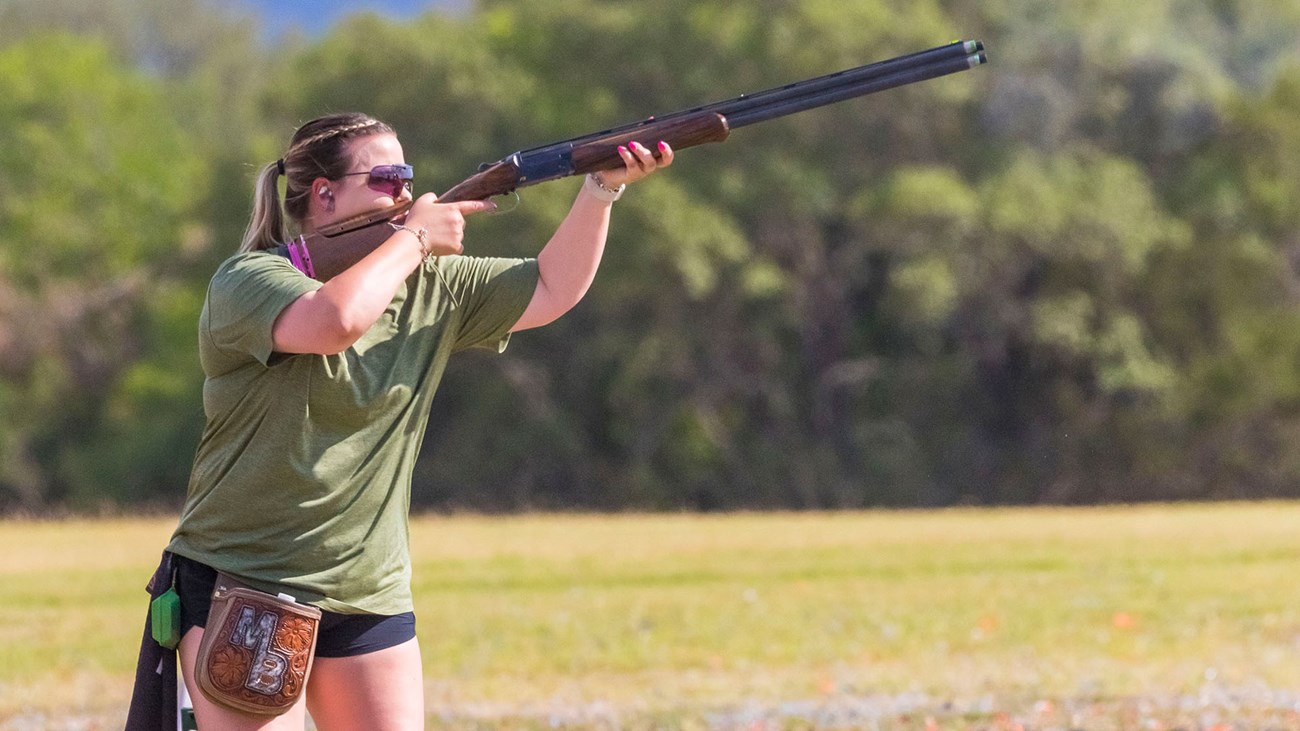
Switching the Side You Shoot On
This is the preferred method of dealing with cross-dominance when shooting a shotgun—move the gun to the side of your body that your dominant eye is on. Unfortunately, this can be really difficult to do, as you’ll have to train your whole body to load, operate and move the gun with your “off” side. Depending on the shotgun, you might even need to purchase a new gun that accommodates the move—particularly if it’s a semi-auto and you’re switching from shooting right-handed to shooting left-handed. You won’t want the shell from a right-handed gun ejecting across your face if you’re shooting on the left side of your body; it can be quite distracting.
The longer you’ve been shooting, the harder it is to make this transition, which is why the beginning of your shooting journey is the ideal time to make the switch. If you discover your cross-dominance when you first start shooting, consider yourself fortunate. Transition to your off side immediately before your movements and habits are really ingrained. It still will not be easy, but it’ll be easier than if you try other methods for years and then decide to make the switch once your body has developed real muscle memory on your dominant side.
It will cost you many frustrating months (perhaps years) of serious practice to get used to shooting on your off side, and this is why many shooters choose not to follow this method of dealing with their cross-dominance. Still, it is considered the best method if you can do it, because it will put your dominant eye in line with the muzzle, which is ideal.
Occlude the Eye
If you can’t or won’t switch the gun to the opposite side of your body, you’ll have to force your non-dominant eye to “take over” dominance when you shoot. There are two reliable ways of doing this, and they both involve taking the dominant eye out of the picture in one way or another. If your dominant eye can’t be used, the non-dominant eye has no option but to take control.
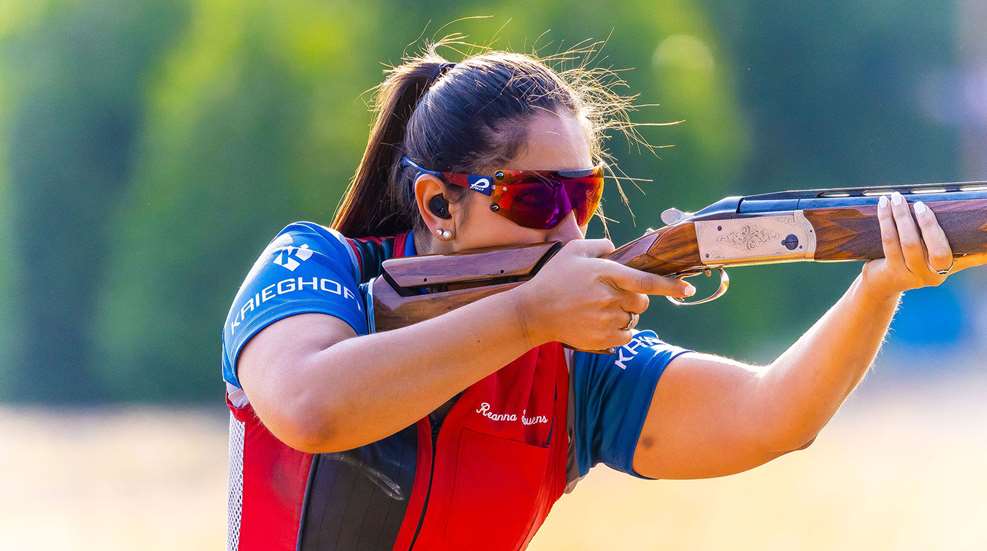
Closing the Eye: It is best to shoot a shotgun with both eyes open, as it allows you full access to your peripheral vision, which is optimal for tracking the target or the bird as well as for generally being aware of your surroundings (as on a hunting trip). However, if you are cross-dominant and are shooting the gun on the dominant side of your body, closing your dominant eye for the shot will force the non-dominant eye, which is in line with the muzzle of the gun, to control the shot. A right-handed, left-eye-dominant shooter would close her left eye. This method always works—the non-dominant eye has no other choice—but you must do it consistently, and it sacrifices peripheral vision.
To do this, close the eye as soon as you call “pull” and begin to mount your gun, and keep it closed until the trigger has been pulled and you are ready to make your move to the next target or end the shooting sequence. Your timing needs to be consistent from shot to shot. Don’t close the eye at “pull” on one target and then wait to do so until you pull the trigger on the next target—you’ll confuse your vision even more.
Occluding the Eye: Alternatively, you can occlude the dominant eye so that it can still see, but it can’t see clearly enough to control your vision. This preserves peripheral vision to some extent, but it takes getting used to.
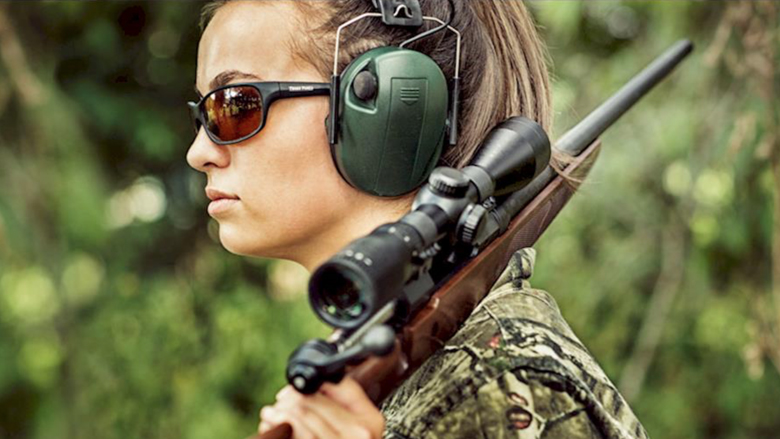
There are various methods of occlusion, all with the same result. Some shooters smear lip balm on their shooting glasses on the dominant-eye side so that eye can’t see clearly. Some use clear tape to accomplish the same purpose. Companies like Spot Shot and Magic Dot make semi-transparent sticky dots for your glasses, in various levels of occlusion. How much transparency you can get away with will depend on how strong your dominance is.
All these options blur your dominant eye’s vision enough to confuse it. What you don’t want is a solid dot that blocks the eye completely—your dominant eye will try to keep itself busy looking around the dot rather than just accepting “this is blurry; better switch to my other eye.” And an eye patch will completely remove your peripheral vision, so don’t even bother.
Depending on your dominance, this method might not be strong enough to force the non-dominant eye to take over, but the upside is that it allows you more access to your peripheral vision than closing the eye does. The only other trouble is that the dot/tape/smear needs to be in the right place, and if your glasses slip out of position, the dot goes with it. Make sure your shooting glasses are well-fitted to help avoid this problem.