
Since they joined us at the fireside in prehistory, dogs’ amazing noses have helped mankind develop at every turn. Since 10 minutes after they joined us at the fireside in prehistory and immediately whined for walkies, dogs’ amazing noses have been finding their way into every single instance of wild-critter feces in their paths. It’s a habit that can be annoying at 5 a.m. when it’s 39 degrees and raining, but it’s also a habit that can help save America’s wild sheep. According to Wild Sheep Foundation (WSF), Fido’s inherent drive to sniff out scat may just be the future of conservation for this precious American species.
“Poop-sniffing dogs, who knew?” commented Gray N. Thornton, President and CEO of the Wild Sheep Foundation, echoing our thoughts precisely. That said, it makes sense once you know two things: First, that one of the biggest challenges facing our wild-sheep population is that they are highly susceptible to catching diseases from domestic sheep; and second, that dogs have been proven capable of detecting diseases in humans and animals from scent alone.
Wild sheep are among America’s most iconic species, but they were in serious trouble by the mid-1950s. The WSF has been working since 1977 to help restore sheep to the mountain, and they’ve had a tremendous amount of success. Rocky Mountain, California and desert sheep numbered only approximately 25,000 in the 1950s nationwide; there are now more than 85,000. But the work isn’t done. “Beside over-abundant predators, the bane of wild sheep today is disease transmission,” continued Thornton. “There is more work to do, but from what we've seen thus far, our canine friends could be a game-changer.”
Meet the game-changers.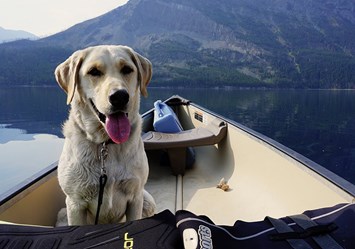
Working Dogs for Conservation (WD4C) is a Montana-based nonprofit that helps train dogs for all sorts of conservation-focused initiatives. Reports their website, “Our dogs can detect weeds before they break the surface, animals that live below ground, and aquatic organisms invisible to the human eye.” That’s only some of what you can do when your nose can pick out as little as one part per trillion. Right now, dogs’ capacity for discrimination is being used in medicine to help detect cervical and ovarian cancers before laboratory tests, detecting blood sugar crises in diabetic people—even COVID infections.
“We have demonstrated that our dogs can discriminate the scat of infected domestic sheep from those of uninfected sheep,” explained Pete Coppolillo, Executive Director at Working Dogs for Conservation. “Now, we're working hard to extend that ability to wild sheep as well.”
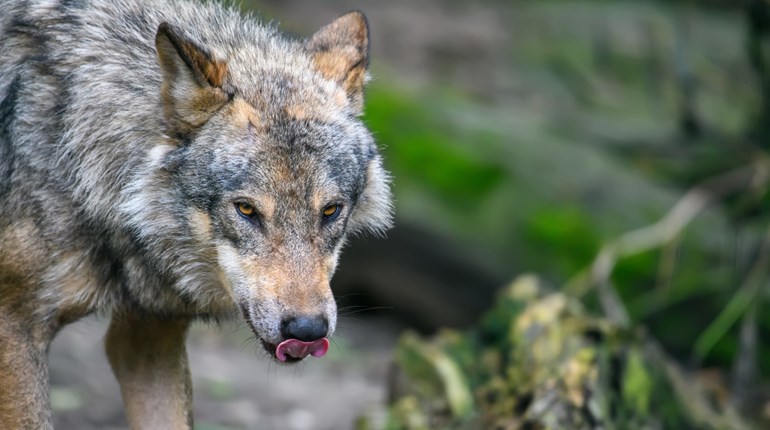
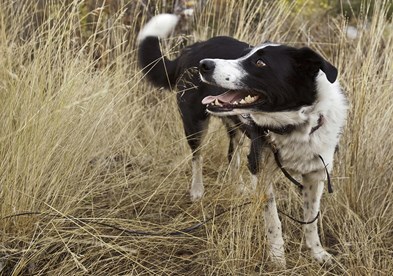
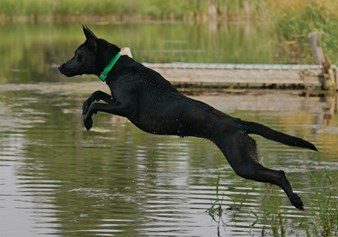
This new conservation strategy is all part of a new program in partnership with the Wild Sheep Foundation, Montana Fish Wildlife and Parks, W4DC and Utah and Montana State Universities. The program itself uses the same techniques that humans have used to train dogs to pursue specific scents for millennia. It’s still being trialed in a series of experiments that will absolutely remind you of what happens when you’re just trying to get Rex to do his business. WD4C staff plans to conduct various trials on various piles of sheep feces. (In lieu of images depicting this process, please enjoy some photos of some of WD4C’s four-footed superstars.)
“Once these trials are complete, livestock, wildlife and land managers will have new tools to help wild and domestic sheep coexist,” Coppolillo continued. “Our dogs could help prevent the inadvertent spreading of disease during wild sheep captures by having a trained dog to screen scat from the sheep staging to be moved—if any of them are infected, they stay put or are removed from the population. We are so grateful for WSF's investment and collaboration in this project. We’re opening doors to new ways to protect sheep, and we're excited to see the benefits."
The WSF’s Thornton is optimistic. “If we can detect infected animals without captures and handling,” he said, “what we invest in these testing captures can be put to other uses, like habitat enhancements. More importantly, will be the ability to translocate wild sheep to new ranges with high confidence that we're moving healthy sheep and not spreading disease along with them.”