
Most of us spend more time at our place of work than we do anywhere else besides our homes. Of course it makes sense that self-defense-minded people like NRA women would want to exercise their Second Amendment rights in a place they spend so much of their waking hours, but there’s a lot to consider if you want to carry concealed at work.
1. Are You Even Allowed?
This is the top consideration—whether concealed carry is even an option where you work. First, is it legal in your state? In some states, your concealed-carry permit might not be valid in federal buildings, schools, bars and more. If you work in one of those places your state restricts, the discussion is over. You can’t carry at work.
Assuming it’s legal, is it allowed by your employer? Check the employee handbook, any employment contracts you may have signed, or other paperwork that might lay out rules regarding firearms, and don’t forget that if your office leases space in a building, the building owner might have his or her own rules outside of what your company has laid out.
If your employer specifically states that firearms are not permitted at work, you have a big decision to make: Is this something you’re willing to risk being fired over (possibly catching a trespassing charge in the process)? Frankly, I’m not, so I stopped carrying at work when the company I worked for came under new management and they laid out new rules prohibiting guns on the property. I didn’t like it, but I wasn’t about to upend my career over it. If I had been delivering pizzas or driving for Uber instead of climbing the corporate ladder, I might have decided differently.
One word of warning: Some places of business have an official “no firearms” policy, but it’s an open secret that people carry anyway and the boss looks the other way in a wink-wink don’t-ask-don’t-tell way. The attitude is that the policy is “just a formality for liability reasons” and “what corporate doesn’t know won’t hurt them.” Be very careful in that environment. Your boss doesn’t override corporate policy that comes from above his head.
Finally, if you are in a position that requires you to visit different locations during the day—sales, delivery, repair services, etc.—your firearm might not be permitted in some of the places you find yourself. Keep that in mind when deciding whether to carry or not.
2. Do You Need Specific Carry Adaptations?
Assuming you are allowed to carry at work, consider if you work in rough conditions or in close quarters with other people and if additional retention or a different carry position might be called for. For example, if you’re a construction worker carrying heavy loads and bumping into stuff all day, you might find one carry position or type of holster more practical, safe and comfortable than others.
If you work closely with people who might be unpredictable or dangerous, you might want additional retention on your holster.
If you wear a uniform at work, you might have specific challenges with the dress code that necessitate a different holster or carry position as well.
3. Where Will You Secure It?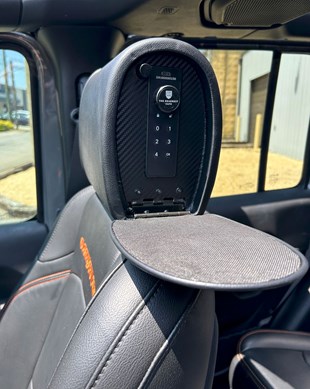
This primarily applies to off-body carriers, but it can also be relevant to workers who change clothing during the day or employees who travel to different locations. In all of those cases, you need a way to secure the gun.
If you are a traveling sales rep who occasionally visits a real-consequences gun-free zone (like a federal building), you will need a way to secure your CCW in your vehicle. Dropping it in the center console and locking your car is bare minimum; I’d prefer you invest in a small safe or gun lock that adds another layer of security. And check your state laws about guns in unattended vehicles.
If you carry off-body, say in a purse or briefcase, the typical rules of off-body carry apply: You must remain vigilant and the gun has to be secured at all times. That means if you work in an office, you either take your briefcase to meetings and to the bathroom with you or you have some method (like a locked drawer at minimum) to keep the gun away from unauthorized persons.
4. And, as Always…
All the rules of concealed carry apply to work carry. First, concealed means concealed, and that goes double if you’re choosing to carry in a non-permissive environment. You might have to dress carefully to ensure you look professional but don’t print; you might even consider deep concealment like a thigh or ankle holster (or a pocket holster, if you can somehow find women’s pants that actually have real pockets).
Second, be discreet. Even if concealed carry is permitted at your place of work, odds are that some coworkers aren’t going to like it, and nothing good can come of them finding out that you carry and complaining about it to HR. The gray man approach is smart here—try to blend in, not stand out, and don’t advertise or draw attention to the fact that you’re exercising your 2A rights.
It’s perfectly reasonable to want to carry your firearm at work, considering how much time you spend there. Assuming it’s legal by law and allowed by your employer, you must put a little thought into keeping the gun secure and hidden, and keeping yourself safe and comfortable in the process.