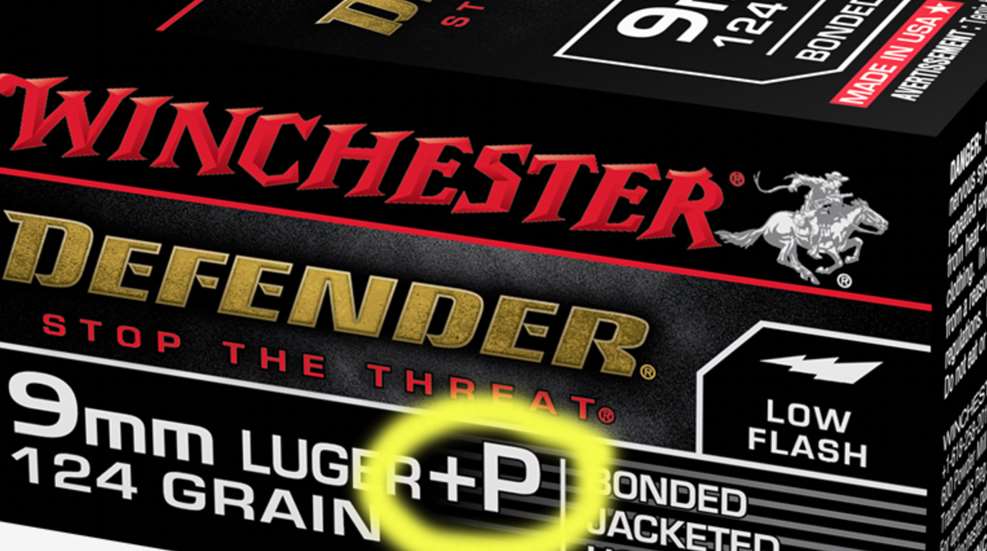
You might have noticed, when buying ammo, that there’s 9 mm Luger and then there’s 9 mm Luger +P; .38 Special and .38 Special +P, and so on. What’s the +P about?
Well, the P stands for pressure, and so any load that’s labeled +P has a little more gunpowder in it to generate greater pressure when fired than its non-plus-P counterpart. This can be a good thing—more pressure means a little more velocity, which you might want, and that velocity can sometimes help bullets expand better or penetrate deeper for a slightly more effective wound channel. We’re talking about a difference of about 100 feet per second in velocity.
However, extra pressure can also be a bad thing. It means higher recoil, for starters. But more importantly, firearms are designed to handle a specific amount of pressure, and thus ammunition is manufactured (and most is standardized by SAAMI) to generate the appropriate amount of pressure for the firearm it’s made for. Keeping the gun and the ammo within these standards is what keeps stuff from blowing up. If you shoot ammo that generates more pressure than a gun is designed to handle, bad things can happen. You won’t always have problems, but you won’t know until the worst happens.
Therefore, the answer to “how bad is it to shoot +P ammo?” depends on the gun you’re using. If it’s rated for +P ammo, shooting it is no problem at all. If it’s not rated for +P ammo, it could potentially be very bad. In short: Do not shoot +P ammo out of a gun that’s not rated for the additional pressures. How will you know? Your gun might have “+P” stamped on the barrel, or you might find this information in the gun’s owner’s manual. If you cannot confirm that your gun is rated for additional pressure, you should not shoot +P ammo out of it to be safe. You can, however, safely shoot regular ammo out of a gun that’s rated for +P.
You might also hear of ammo labeled +P+. While SAAMI sets standard pressure parameters for regular ammo as well as +P ammo, there are no standards for +P+ ammo. The +P+ simply means that the ammunition has even more pressure than +P, and there’s no standard to govern it and no upper limit for how much pressure it will generate. It’s a bit of a wildcard, since there are no SAAMI classifications for it, and some manufacturers will only sell it to law enforcement agencies who are willing to sign a waiver. Because +P+ can mean potentially anything pressure-wise, you are unlikely to find any gun manual that will recommend or even allow for the use of +P+ ammo.
So, back to the topic at hand: regular ammo vs. +P. Because +P ammo has a little more gunpowder in it, it’s often a little more expensive than regular ammo, and whether the additional velocity will translate to better expansion or better penetration has to do with your gun, the gun’s barrel length, and other factors. Frankly, I don’t bother with +P ammo, but if your gun is rated for it, you think the extra velocity gives you a little peace of mind regarding stopping power, and you don’t mind the extra cost and recoil, go for it. But again—only if your gun is rated for it.