So you’re done shooting and it’s time to reholster your handgun. It might seem like this is a simple thing to do that needs no explanation. And for the most part, it is, but just because reholstering is simple doesn’t mean you can take it for granted or do it without thinking. There are some important things to keep in mind when putting your handgun back in its holster.
1. Be Sure It’s Really Time to Reholster
Most (hopefully all) of your reholstering will be done at the range or during a training session, but if you’ve just used your gun in a defensive scenario, all the same rules apply, with one additional guideline: Don’t put the gun away until you’re sure the threat has been stopped. At Gunsite Academy, the instructors teach students to “look and assess” after each shot string. To do this, you lower the gun just slightly so that you can see over it clearly, keeping it at the ready in case you need to shoot again. Scan with your eyes and the gun to your left and to your right to ensure there are no further threats.
You should train this habit at the range, keeping your scans to 45 degrees or less so you’re not coming close to breaking the 180 or muzzling anyone. As you train this, it’s easy for it to become routine, and I have caught myself doing it without really focusing—I wasn’t seeing anything at all or actively looking, just making the movement mindlessly. Pay attention to what you’re doing, make sure the scene is safe and no further threats need to be addressed, and then you are clear to reholster.
2. Safety First
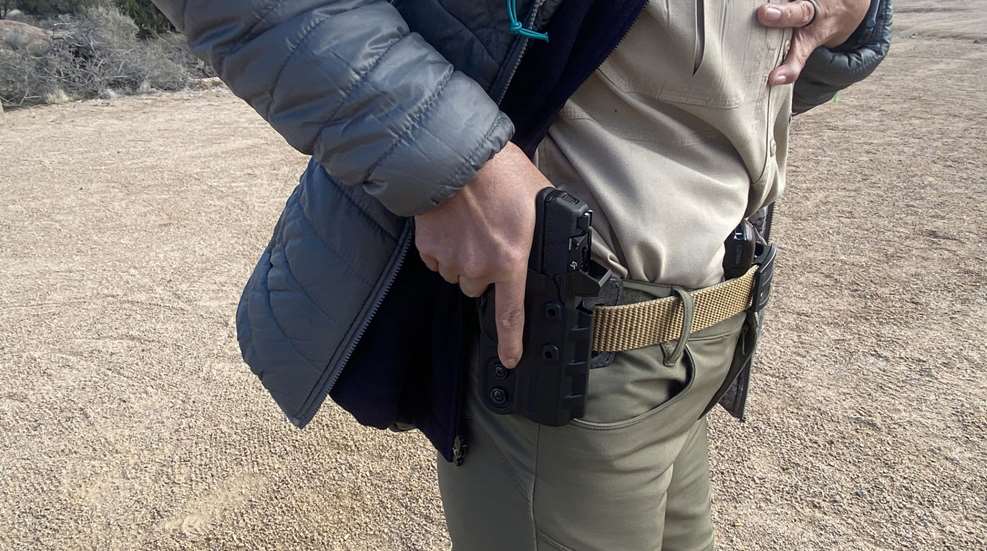
There is never a time when you can let your focus lapse around firearms or take safety for granted, and reholstering is no exception. Just because the threat has been stopped or you are done shooting at the range doesn’t mean everything is “over” and safe. You must continue to follow the rules of gun safety while you reholster, which means your finger needs to be well out of the trigger guard and you must be careful not to muzzle yourself or anyone else while you’re moving the gun to the holster. Bring your non-shooting hand to your chest so as to keep it out of the way.
It’s easy to angle the gun inward and accidentally point it at your own leg while you’re finding the holster, especially if you are still getting used to the motion (or to a new holster or carry position). Don’t fumble around with the muzzle, searching for the holster. If you need to, take time to look down at the holster as you guide the gun into it—with more training, your body will eventually find it easily without looking, should you feel the need to keep your eyes elsewhere. And speaking of taking your time …
3. Slow Down
In training and even in most defensive use situations, there is absolutely no reason to rush through reholstering and many reasons to take your time. The threat has passed and everything is safe—otherwise you wouldn’t be reholstering yet—so slow down. Whatever you do, do not hurriedly slam the gun down into the holster. This is easier said than done, because shooting is a high-adrenaline activity and much of what we do with firearms (running slides, racking bolts, smacking mags in place) is done firmly and definitively. Reholstering is an exception, and you should do it slowly and gently. Why?
Because stuff happens. Jackets slip down over the top of holsters and shirts get pulled out of belts. An empty case or other debris could have found its way into your holster while you were shooting. Is it likely? No. But by reholstering slowly and carefully, you’ll give your brain time to register any problems and stop yourself before they get worse. You do not want loose clothing or any kind of obstruction to get shoved down into the holster with your gun, because it could potentially get inside the trigger guard and even pull the trigger if you’re using enough force.
Reholster slowly, and if there’s any resistance or something feels off in any way, stop immediately. There’s no need to be in a hurry for this part of the shooting process. Take your time, look if you need to, and always follow all the rules of gun safety.