Muzzleloading is a specialized activity. Just about any shooter can tell you what a muzzleloading firearm is, but very few can tell you how to load and fire a muzzleloader. Muzzleloading firearms can be very fun to shoot, but you must do your homework as there is a lot of know-how required to enjoy muzzleloaders safely.
One of the most important aspects of shooting muzzleloading firearms is understanding the propellants that are used in the gun. Black powder for muzzleloaders is called “G” grade, which stands for “Sporting Grade” powder. There are eight “G” grades in black powder propellant sizes. Black powder sizes used for muzzleloading firearms are denoted with the letter “F.” F grades are shown as Fg, FFg (2F), FFFg (3F), FFFFg (4F) and FFFFFg (5F). There is also a Whaling grade, Cannon grade and Saluting grade.
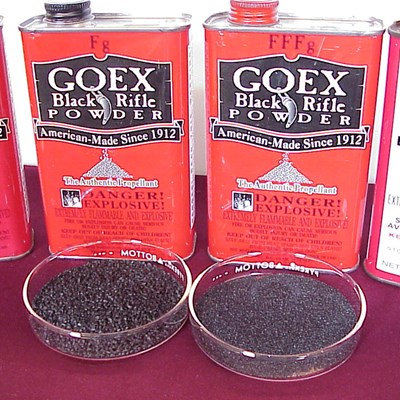 There is also “A” grade black powder. “A” grade stands for “Blasting Grade” and is used primarily in the manufacturing of fireworks. “A” grade black powder is classified as FA, FFA, FFFA, FFFFA, FFFFFA, FFFFFFA, and FFFFFFFA, Meal D, Meal F and Meal XF. Fortunately, muzzleloader shooters do not have to concern themselves with “A” grade black powder. They just need to know not to use it!
The classification “F” stands for “Fine” and dates back to when grains were classified as either fine (F) or coarse (C). The number of letter Fs denotes how fine the powder is. The more Fs, the finer the powder. FFFFFg (5F) is the finest powder used in muzzleloading. The finer the powder, the faster it will burn. Whaling black powder is the coarsest and cannon black powder is less coarse. Saluting black powder is less coarse than cannon black powder and coarser than Fg black powder. Saluting black powder is used in artillery blanks used in ceremonies that call for cannon volley.
There is also a corresponding mesh size to black powder grades. The grain size of the black powder is comparable to the screen mesh size of how many wires per inch are used to sift the powder. The higher the mesh number, the smaller the opening. The “g” indicates that the granules were tumbled with graphite to smooth and polish the edges. The larger the granules, the slower the burn rate of the powder. The mesh size is how black powder is sorted according to its grade. A different size sieve is used to allow different size powder to pass through.
- Whaling - 4 mesh (4.74 mm)
- Cannon – 6 mesh (3.35 mm)
- Saluting – 10 mesh (2 mm)
- Fg – 12 mesh (1.7 mm)
- FFg – 16 mesh (1.18 mm)
- FFFg - 20 mesh (.85 mm)
- FFFFg – 40 mesh (.47 mm)
- FFFFFg – 75mesh (.149 mm)
So, what does all this mean? It means that different grades of black powder have different applications. Using the wrong black powder in your muzzleloader can have disastrous effects. Knowing the right black powder to use in a muzzleloader is as important as reading the data stamp on the barrel of a modern firearm to know the correct cartridge to use in your gun.
 Fg is a coarse grain black powder and used in rifles larger than .75 caliber and in 10-gauge or larger shotguns.
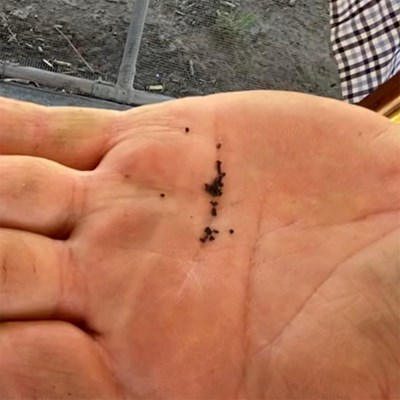
FFg (2F) is a medium grain black powder used in larger rifles between .50 and .75 caliber and in 20-gauge to 12-gauge shotguns. It is also sometimes used in pistols larger than .50 caliber. It resembles coarse black pepper (left image).
FFFg (3F) is a fine-grain black powder used in smaller rifles and pistols under .50 caliber. Since FFFg burns faster than FFG it is more suitable for muzzleloading pistols. This is because the powder should completely burn before the projectile exits a pistol’s short barrel.
FFFFg (4F) is an extra-fine-grain black powder used as a priming powder in flintlocks. It is placed in the pan so that when a spark from the flint striking the striker quickly ignites and sets off the charge. It burns extremely fast and hot.
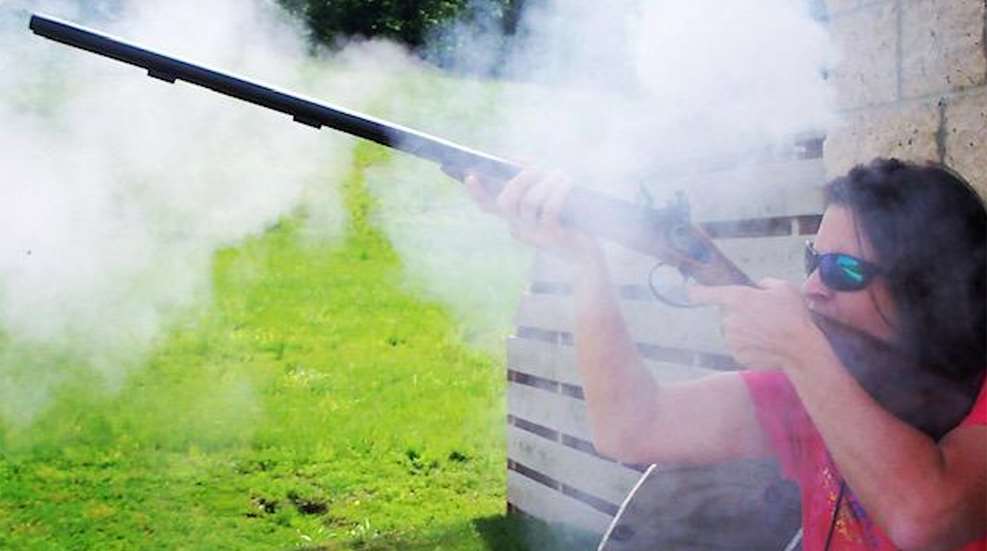
FFFFFg (5F) is an ultra-fine black powder used in performance muzzleloaders or reenactment muskets for shows. This very fine black powder produces a lot of smoke.
Regardless of the firearm you choose to shoot, always follow the safety rules, and know that every firearm type may have their own specific safety features and procedures. Muzzleloaders take significantly more knowledge to operate than modern firearms. They also have the potential to present greater risks, especially if the several rules specific to muzzleloading are not properly followed.
The first step to becoming a responsible muzzleloading shooter is to take the NRA Basic Muzzleloading Course. This course is very thorough and covers the safe handling and shooting of muzzleloading firearms. Always consult with knowledgeable and reputable shooters, and those in the muzzleloading industry for guidance and to ensure safe operations.
—Heidi Lyn Rao