If you’re a hunter, there’s a good chance you’ve got some taxidermy around the house somewhere. And if you’re like me, there’s a good chance you admire and enjoy it, but don’t give it much thought outside of that.
You might not think about your taxidermy as an object to be cleaned or cared for, but the truth is, you should be doing at least a little bit of upkeep in order to keep your mounts in top condition. Here’s how.
 Basic Mount Maintenance
Many articles on the subject will tell you to dust your mounts weekly. But let’s get real—just about nothing in my house gets dusted weekly, and certainly not my taxidermy. Once a month or once every four months is more like it!
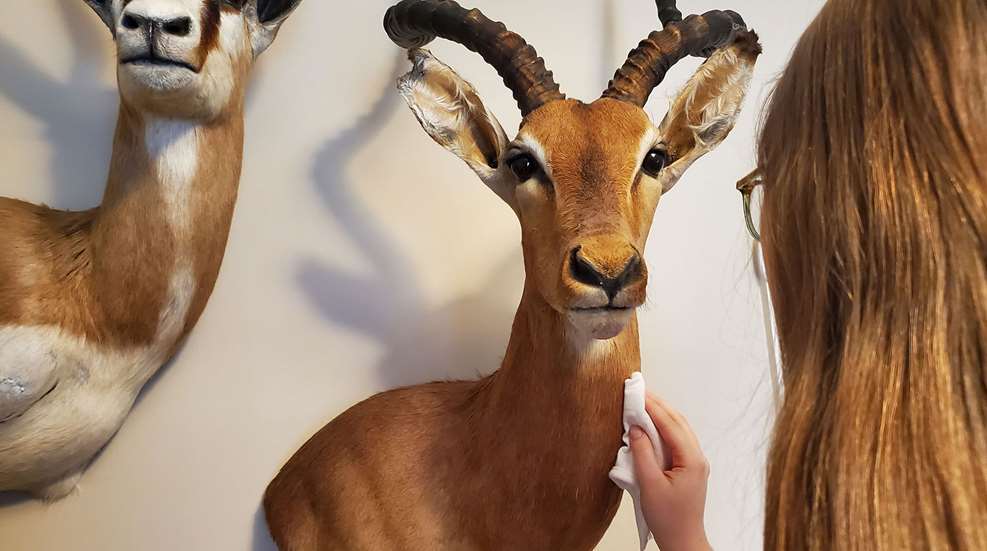
Use a feather duster, compressed air or a soft upholstery attachment on your vacuum cleaner to carefully dust deer, bear rugs and other mammals. Compressed air works particularly well for dusting the tiny nooks and crannies on fish mounts. You can use a dry or damp cloth to remove dust from bird mounts. Then use a damp cloth to wipe down the mount or rug, always moving with (never against) the direction of the hair or feathers. Don’t press down or rub hard—gentleness is the key. If this process has left the hair a bit out of place, you can fluff it or smooth it with a soft pet brush.
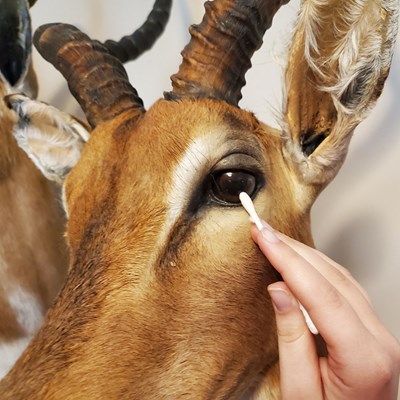
Spritz a little bit of glass cleaner on a cotton swab and use it to clean the eyeballs—don’t spray the cleaner on the eyes. You can wipe antlers and horns down with a damp cloth. There are cleaning and conditioning sprays available for antlers and hair/fur, but I prefer just using water for the most part. Whatever you do, avoid oily cleaners that can damage or stain the hair.
Tips for Taxidermy Displays
You can keep your mounts in top condition by displaying them properly in the first place. If you can, display your taxidermy somewhere it’s not likely to get bumped, knocked over by a child or chewed on by a dog. Teach your kids that it’s OK to touch once in a while, but only gently, and only in the direction of the hair or feathers. This is particularly important on birds and pronghorn, which have hollow hair that’s easily broken.
Direct sunlight will fade and dry a mount over time, so keep that in mind when selecting a location. Direct heat is terrible for a mount, although no one will blame you for hanging your trophy elk over the fireplace anyway (What else are fireplaces for?). Excessive humidity can lead to mold and mildew, so make an effort to keep the humidity below 60 percent. This is especially important to keep in mind if your trophy room is in the garage or a damp basement.
Exposure to smoke—from cigarettes, a woodstove or whatever else—can cause yellowing of the mount over time. Do what you can to keep your mounts away from smoke.
Dealing With Pests in Your Taxidermy
One of the reasons regular maintenance and cleaning of your mounts is important is it can give you a chance to spot a pest problem before it gets out of hand. The two main types of insects that will damage your taxidermy are moths and dermestid/carpet beetles. Both are bad news. If you spot little piles of sawdust on the floor under a mount, small holes in horns (not antlers) or bird legs, slipping hair, little shells that resemble rice on or under the mount, or lines or tracks in the hair, especially around the ears and base of antlers or horns, you might have a bug problem.
When it comes to prevention, if you’re concerned about moths, you can spray your mounts once a year with any moth-proofing spray that’s safe for clothing. Bifen, a liquid insecticide, can also be sprayed on your mounts once a year or so to prevent infestations. If you’re really worried about prevention or if you have an especially large or expensive taxidermy collection, you could consider sealing off the room and setting off a no-mess bug fogger once in a while.
What do you do if you find bugs? First, know that adult bugs—the ones you see crawling around—aren’t the ones eating your mounts. The larvae are what will do damage.
Beetles are a tough infestation to get rid of. Remove any adult beetles before they can lay eggs. Boric acid dries up eggs and larvae, but use with caution. Also keep in mind that if you have dermestid beetles in your taxidermy, you might also have them in your closet eating your wool hunting coat or in your den munching on your leather furniture. You might need to treat other areas of your house in addition to your trophy room.
If you find evidence of moths, you can try putting the mount in your freezer for two weeks, assuming it is small enough to fit. You should also fog the room (possibly your closets, too, as moths will spread to your wool clothing) and consider putting each mount in a garbage bag with a No-Pest Strip. You’ll want to leave it in the bag for a month or so. Again, you might need to treat other rooms in the house.
If worse comes to worst and you find your mounts have been damaged by pests, there are taxidermy restoration and repair services available that can help you. But with some attention, regular cleaning and some preventive maintenance, you can minimize your risk of infestation and keep your mounts looking great for years to come.