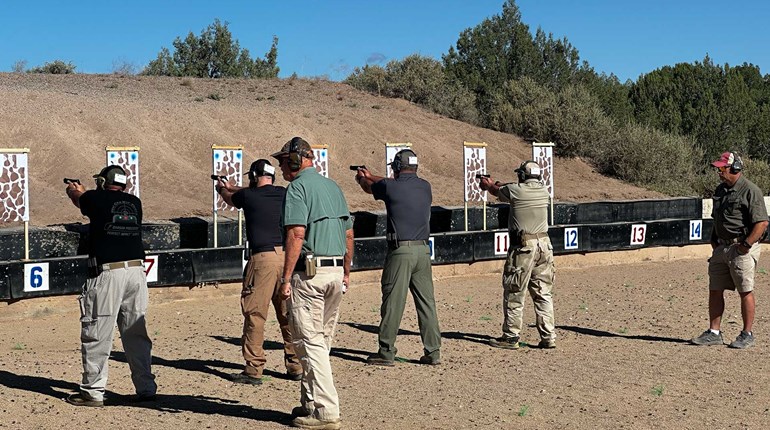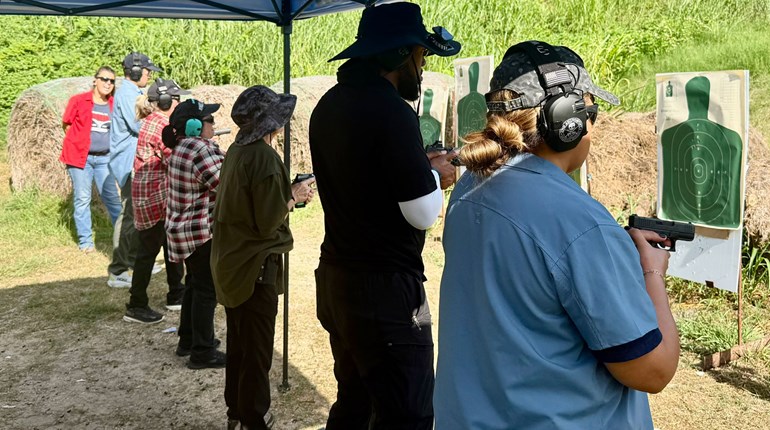

If I were to give advice to any new gun owner on purchasing a first firearm and subsequent training, it would be very simple and to the point: Don’t always trust the “experts,” and look to NRA Certified Instructors for accurate information. Some of the “experts” to avoid include internet and social media influencers; workplace watercooler wranglers; and “the-world-revolves-around-one-gun-and-one caliber” friends and relatives.
To say that I have heard it all is putting it mildly. Effective firearm trainers are skilled professionals. Unfortunately, many people think of firearm instruction as a hobby and not a profession. After all, we look to electricians for electrical advice, plumbers for plumbing advice, lawyers for legal advice, and doctors for medical advice. But just because someone owns a firearm and likes guns doesn’t entitle them to be called “firearms instructor.”
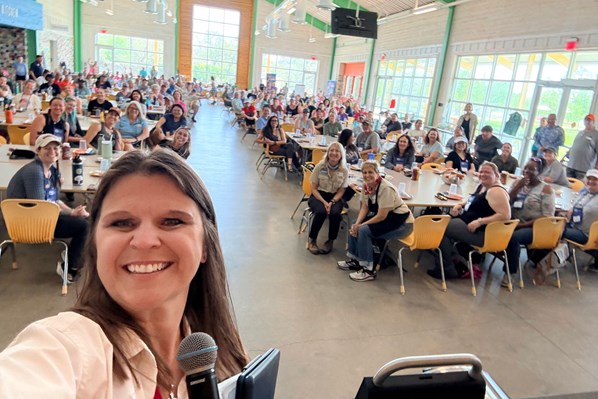
I am a little different than most firearms instructors. Instructing is not just a hobby or something I do on the weekends. Firearms instructing is all I know. First, my career spanned almost 30 years as the Texas Assistant Hunter Education Coordinator and the statewide Becoming an Outdoors-Woman Coordinator (BOW). One of my primary duties for the State of Texas was to teach individuals to shoot. In other words, I was a firearms instructor for Texas.
Second, I have been an NRA Firearms Training Counselor for nearly 20 years. I currently teach all the disciplines the NRA Training Department has to offer. I am also the NRA South Central (Region 7) Regional Training Counselor. My region spans across five states: Texas, Louisiana, Arkansas, Oklahoma and New Mexico. As the Regional Training Counselor, I am responsible for giving support and answering questions from NRA Instructors and Training Counselors from these five states.
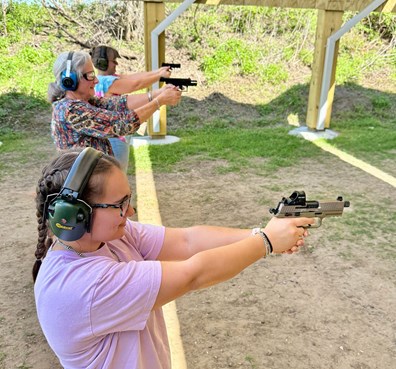
Third, I am a Texas License to Carry Instructor and a Texas Level III and Level IV Private Security Instructor. I am also certified in Texas to conduct the shooting qualifications for retired federal officers or any retired peace officers in the in the United States that holds a federal Law Enforcement Officers Safety Act (LEOSA) rating.
What all this means is that I am in the classroom and/or range more than 200 days a year. The good news for my students is that I am very effective in getting people on target and teaching future instructors how to be a more effective teacher. The unfortunate thing for me, I joke, is that I have no other marketable skills!
With all this said, I still consider myself a student, always wanting to increase my knowledge and improve my skills. In my opinion, if you ever reach the stage that you know it all and are no longer a student, your tenure as an effective firearms instructor is over.
Since I am in the classroom all those days a year, I have heard every excuse you can think of as to why a student is not shooting as well as he or she initially bragged about. I have also heard from many of my students the wide range of advice and training they have received from self-appointed firearms instructors. Some of it leaves me speechless, to say the least.
Three things I frequently hear that a new gun owner was told by his or her “expert instructor” are:
1. You Must Carry a 9 mm
The No. 1 misconception I hear from new gun owners is that their “expert” (spouse, friends or internet influencers) told them they must carry a 9 mm. What they are referring to is the 9X19 cartridge, also known as the 9 mm Luger, 9 mm Parabellum, and sometimes the 9 mm NATO cartridge. Fortunately, there are other options available that are just as effective.
Beginning shooters sometimes have difficulty managing the recoil of a 9 mm handgun. But considering the 9mm is the current choice for law enforcement professionals, the military and competitive shooters, how can new shooters be expected to begin with the calibers and guns of professionals? Some can handle it, but many cannot.
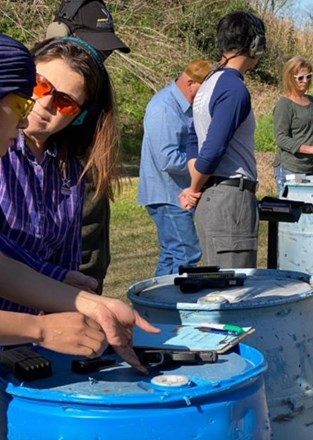
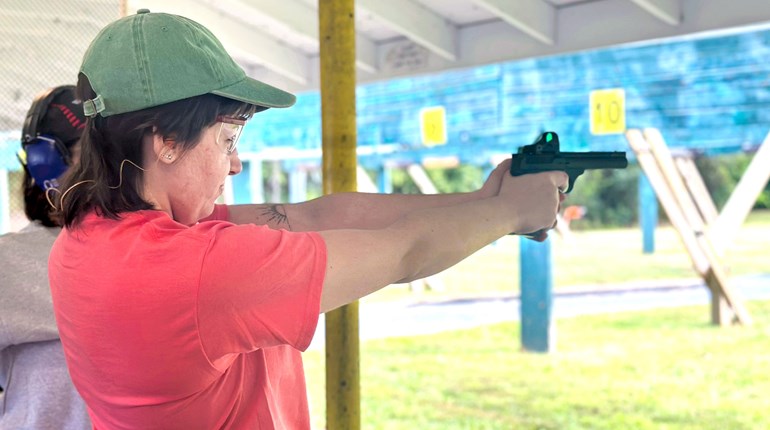
With new shooters, I always bring additional calibers, just in case the gun they bring has too much recoil for them. I typically include a .380 Auto and a .38 Special. Each caliber has pros and cons attached to them, including different types of recoil. Often the new gun owner ends up more proficient with the firearms I bring.
A woman recently contacted me because she was interested in taking private lessons with her new firearm. It turned out that she could hardly handle the 9 mm firearm she brought. On the plus side, she handled the .380 Auto very well that I supplied, and was doing much better with her shot placement. She told me that she preferred the .380 Auto, but her husband told her that she needed to carry a 9 mm. I told her to choose her own gun, whichever she feels comfortable handling, and if it is the .380 Auto, then that is what she should carry. I also told her that if any “expert” contradicts her decision, she should recommend to them to do a bit more research because a .380 Auto is a 9 mm, sometimes called a 9X17, 9 mm Kurz, or a 9 mm Short.
2. Your Magazine Must Hold More Rounds
New gun owners are often told they need a high-capacity magazine. While there are benefits to having a lot of rounds in your gun, there are other considerations. For example, you must be aware of any magazine capacity limits in the state in which you live or where you plan to travel with your gun. Even if you live in a state like Texas where there are no restrictions on magazine capacity, you must comply with other state’s regulations when you cross state lines.
Additionally, magazines that hold more rounds are often double-stack, which makes the grip wider, and could affect your accuracy if you aren’t sufficiently trained. It’s also possible that it is more difficult to carry concealed without printing. If you are more accurate with a firearm that holds fewer rounds, it translates into being able to stop a potential threat more quickly, which is really the goal.
As we continue to grow in our firearms journey, we become more proficient and knowledgeable. Our choice of equipment also grows with us and changes. A new shooter needs to focus on becoming comfortable with his or her firearm, not how many rounds they can carry. According to Houston Police Department Homicide, in a self-defense situation the average number of rounds a woman shoots is one; the average number of rounds a man shoots is three. Just remember that this is the average.
3. You Need the Most Powerful Ammo
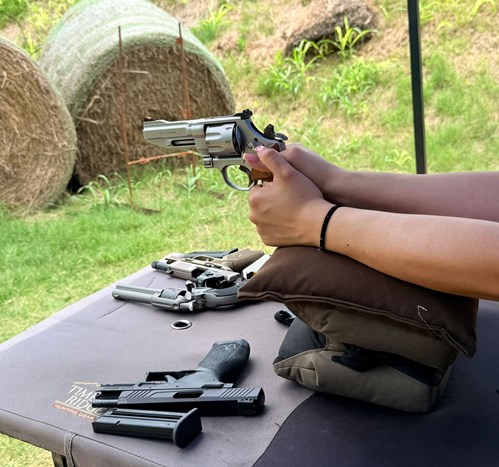
In terms of ammunition, power means energy. It is the energy of a projectile that causes destruction. The easiest way to increase the energy of a projectile is to increase its velocity. Remember, when you double a projectile’s weight, you double its energy, but when you double a projectile’s velocity, you quadruple its energy, which could translate to overpenetration.
When choosing a self-defense round, you must take into consideration where you plan to carry. If you are in a rural area, maybe high-velocity rounds are more appropriate. If you are in a densely populated urban setting, a cartridge that is lower in energy may be the safest route to take.
Misinformation leads to accidents. This is why it is so important for new gun owners to receive proper training. This starts with NRA Certified Firearms Instructors. Remember, you are responsible for every round you shoot. That means you are responsible for everything that projectile touches or destroys. Once your projectile leaves the barrel, you cannot call it back.
—Heidi Lyn Rao