
Obviously, I’m a big fan of concealed carry, and I’ve been doing it for more than a decade. But I get it: If you’re new to carrying a concealed firearm, even if you’re familiar with guns in general, it can real be really intimidating and nerve-wracking to start wearing a loaded firearm on your hip every day. That’s totally normal! Concealed carry is a big responsibility, but it’s also very safe when done properly. It’s OK if it takes you a little time and a few baby steps to work your way into it.
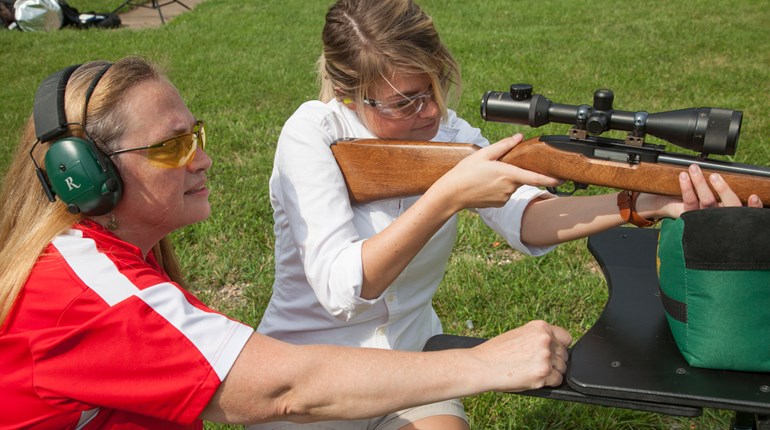
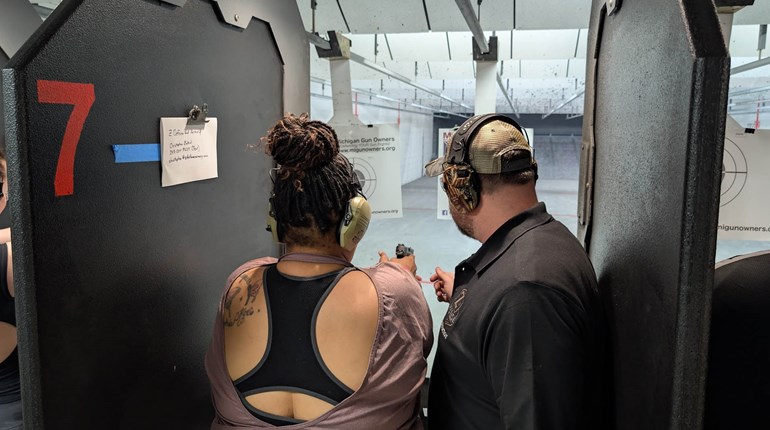
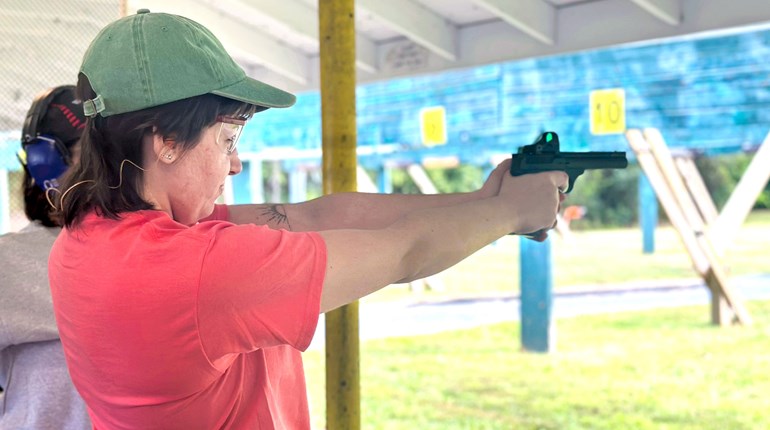
Don’t be intimidated—you can work your way into this at your own comfort level. The first way to do this is to shoot your gun at the range as much as you are able. The more you shoot it, the more comfortable you’ll be with it, and it starts to really sink in that no, guns don’t go off by themselves and yes, they really are extremely safe when used properly. Youare in control of this thing. If your range allows you to draw from your holster and shoot, that’s even better. Beyond that, there are three simple steps you can take to work your way into concealed carrying. Take your time with these, and only move to the next step when you feel comfortable doing so—but do make sure you move through them and don’t get hung up on step one or two.
Two Major Fears
One of the biggest fears of new concealed carriers is that everyone is going to be able to tell you have a gun on you. I promise that no one is staring at you thinking “She must be carrying a gun!” but you’re going to feel like they are for a little while until you get used to this. When you first start carrying a gun, you’re going to be constantly worried about “printing,” which is when someone can see the outline of your gun through your clothing. It’s true that you might have to adjust your wardrobe a little bit or even try different holsters or carry positions to avoid printing, but for the most part, this is not nearly as big of an issue as we think it is. People just don’t pay that much attention to other people.
The other fear some people have (not everyone) is safety related: You fear that the gun is going to somehow go off when you don’t intend it to. If you’re using a good, firm holster that covers the trigger guard, this simply isn’t going to happen, but I understand the nerves around this subject.
Step 1: Carry an Empty Gun
Yep, it’s perfectly fine (for a little while) to concealed-carry an empty gun with an empty magazine. Of course, this is about as useful for self-defense as strapping a brick to your belt, but it can be really helpful to get you used to the whole printing thing while taking the safety fears completely off the table.
Carrying your empty gun in its holster will give you time to work out your wardrobe, to try different holsters, to get used to putting a gun on every day, and to get comfortable walking, driving and going to the bathroom with this new added weight on your belt. This step is all about normalizing this new thing you’re going to be living with and giving yourself time to get comfortable with the “everyone’s looking at me!” delusion while you don’t even have to think about the safety aspect.
Step 2: Carry With an Empty Chamber
Once you get over your fear of printing in step one, it’s time to face your second fear about the gun being loaded. At this step, your magazine is loaded, but there’s no round in the chamber. This means that if your gun were to somehow defy the laws of physics and pull its own trigger, no bullet would come out. Of course, as I mentioned, this doesn’t really happen, but if you need this as a mental crutch to help your peace of mind for a little while, knock yourself out.
We don’t normally recommend empty-chamber carry for several reasons, but again, this is a temporary measure to help you get familiar and comfortable with concealed carry if you’re still nervous about it. Just be aware that if you should find yourself needing to use the gun for self-defense while it’s in this state, you will have to rack the slide before the gun is operational.
Step 3: Load It Up and Go
This final step is pretty self-explanatory. You got over your fear of printing in step one. You got over your fear of an accidental discharge in step two after you carried an empty chamber for weeks and the hammer never fell. Now you’re ready to put one in the chamber and carry your fully loaded handgun. That’s not to say you might not still be a bit nervous, but you should be considerably more comfortable now than you were before you started, and any remaining concerns will fade in time the longer you carry.
Now, I have to warn you that hard-core gun people are going to hate everything I just said. They’ll say that an empty gun is useless, and a gun with a full mag and an empty chamber is too slow and unreliable. They’re right on both counts, but the way I see it, you haven’t had a gun on you at all for the past however many years of your life. What’s another few weeks of going without or carrying in a less-than-ideal manner? Steps one and two aren’t forever—they’re only going to last a few weeks or months while you get comfortable enough to move into step three.
So don’t fret—if you want to carry concealed but you’re really nervous about the whole idea, try the three simple steps and you’ll be carrying with confidence in no time.
—Jo Deering