
Spend any time in the comments section of any gun-related social media post, or any time around a campfire with old-timers discussing gun topics, and you’re bound to hear some familiar phrases repeatedly. What gets passed down as conventional wisdom is often actually good advice or at least a solid, true statement—but some of it is utter junk. What’s true and what’s not?
TRUE: Guns Don’t Kill People; People Kill People
This is super cliched and it’s partly our own faults, because gun people love to spout this in the wake of tragedies as a way to combat all the anti-gun rhetoric that immediately pops up—but while it might be better saved for another day, it’s absolutely true. Guns are simply tools that fire a projectile at a fast rate. When, how and in what direction that projectile is fired are choices that a person makes. Like kitchen knives, chainsaws, vehicles and more, the tool only does what we make it do.
TRUE: God Made Man. Sam Colt Made Them Equal
Also cliché, but true. We call firearms “the great equalizer” because they level the playing field. A gun gives a smaller, weaker or disabled person the ability to defend themselves against a bigger, stronger person in a way that no other tool does nearly as effectively. This is good news for good guys and bad news for bad guys.
TRUE: The Only Way to Win a Gunfight Is to Not Get in One
See also, rule 1 of a gunfight: Have a gun. Both of these sayings are true. The first is a reminder of the cost of self-defense—you might emerge from a defensive gun use physically unharmed, which we would consider “winning,” but you’ll still pay a high price with your time and mental anguish, and potentially with your money and reputation if you have to defend yourself in court. The second saying (“Have a gun”) is also true, and it’s an important reminder that your gun does no you no good if you leave it at home.
TRUE: You Are Your Own First Responder
Absolutely true, as are all variants of this statement, such as “When seconds count, the police are only minutes away.” The police aren’t usually there to stop crime; they are more likely to arrive when it’s over to deal with the aftermath. If you are faced with an imminent deadly threat, there will likely be no time to call for help—you have to be prepared to help yourself.
Similarly, this is a reminder that having a little first-aid knowledge and possessing the associated equipment is a great idea. Knowing how to pack a wound with gauze or apply a tourniquet can buy you or someone else some time until professional help can arrive.
FALSE: “No One Needs an AR-15”
This one grinds my gears for two reasons. First, it’s obviously and blatantly false—you have no idea how many targets, be they feral hogs or murderous bad guys—I will face and how many shots will be required to neutralize them. Second and more importantly, “need” is irrelevant to the free exercise of our God-given rights as enumerated and protected by the Second Amendment to the United States Constitution. I do not have to justify my firearms ownership to anyone based on “need” or anything else.
FALSE: Slow Is Smooth and Smooth Is Fast
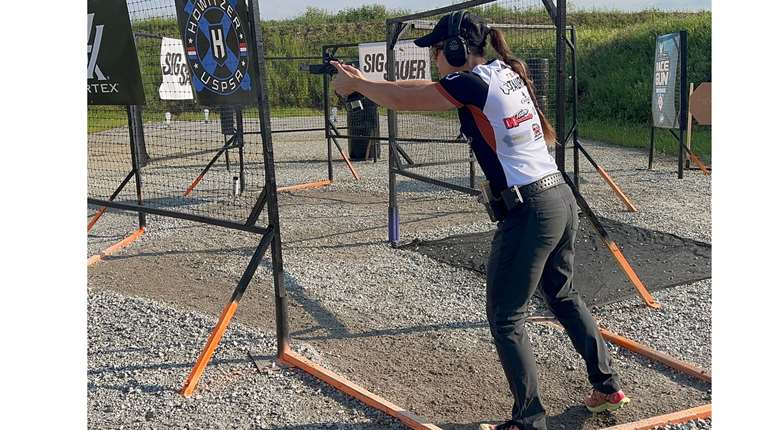
Look, I get why this saying exists, and it’s not entirely false (just mostly). The problem is that “smooth” is sort of a nebulous term. What do you even mean by “shooting smoothly?” Now, there’s a lot to be said for shooting at a level of comfort/calmness at which you’re hitting every target, if that’s what you mean by smooth. But the truth is that most of the time, “smooth” is just slow. If you’re not pushing yourself slightly beyond that comfort level, you’ll never get faster, and while accuracy counts most in a defensive gun use, speed absolutely matters, too.
FALSE: Always Train How You Fight
This is another one that’s partially true, but it’s taken so far out of context or to such extremes that it has become meaningless or just downright wrong. Yes, you should be doing some concealed-carry training that involves drawing from concealment in regular clothes (or from your purse), and if you’re able, some training under pressure that helps you learn to operate in an adrenaline dump. But for goodness sake, not every trip to the range needs to be a high-speed, low-drag, like-your-life-depends-on-it session. Sometimes you will be working on a specific, isolated skill—like a good trigger press, or reacquiring a sight picture after each shot—that needs to be done in a slow, controlled environment. And sometimes it’s July and I don’t want to wear a jacket to do my dry-fire drawing practice. Training like you fight is a good idea sometimes, but certainly not always.