Your concealed-carry license is good under the specific conditions laid out by your own state, but it’s also likely recognized in many other states as well. If you plan to travel with your firearm, it’s important you know which states honor your permit and which don’t. Do not take this for granted—I recently assumed that because I live in the gun-friendly South and more than 30 states honor my state’s permit, I’d be legal to carry just about anywhere within a few hundred miles. When I looked this up to confirm, I discovered that South Carolina does not, in fact, honor Alabama permits, and had I driven through that state with my concealed firearm, I would have been in violation of the law. If you’re going on any multi-state road trip, it is essential that you look up the reciprocity laws of each state you’ll be passing through. The NRA and USCCA have excellent state-by-state reciprocity maps that will help you figure it out. Or you can refer to the annually updated Traveler's Guide to the Firearm Laws of the Fifty States. And by the way, reciprocity is an excellent reason to obtain a concealed-carry permit even if you live in a constitutional (permitless) carry state.
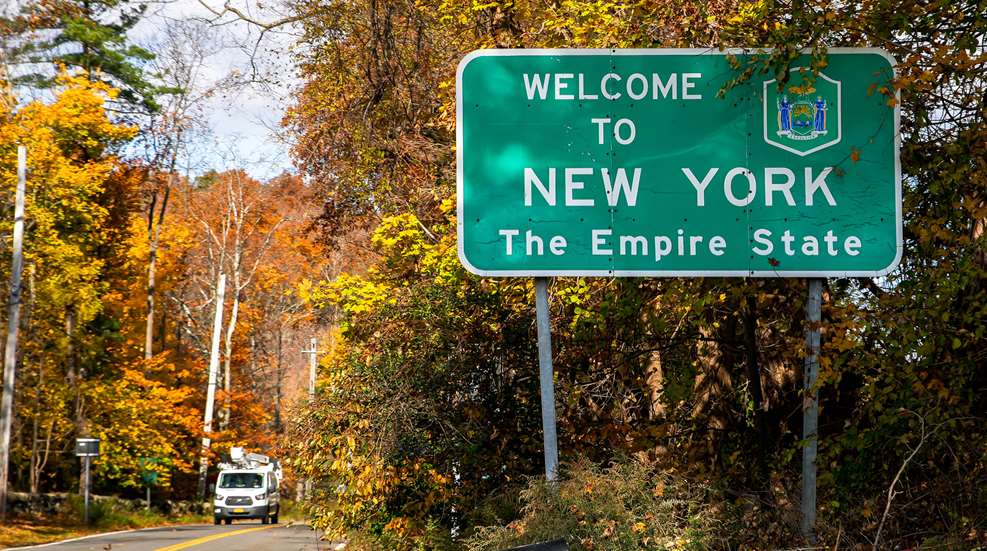
If you discover that you’ll be driving through a state that does not honor your permit, you need a plan to stay legal throughout your entire trip. I encounter this situation at least once a year on various road trips to visit family and friends. Look up the specific transportation laws in the states you’ll be passing through. For example, when driving through Maryland, you are required to keep the unloaded gun in a locked container somewhere the driver cannot immediately access, and the ammunition must be kept separate. In South Carolina, the gun may be loaded and in “a closed glove compartment,” but not in a door pocket, seat pocket or under the seat. In New Mexico, the firearm must be unloaded for transport. In New York, no person is permitted to possess a firearm without the legally required permits and licenses, which can vary by county.
The point is, you need to know what’s required in each state you’ll be passing through, and you’ll need to stop your vehicle safely before you enter that state and render your gun “legal” according to that state’s rules. You might need to plan ahead and bring some lockable cases for this. For example, as I’m driving through Virginia and am about to enter Maryland, I pull over at a rest area and discretely unload my concealed carry firearm, store the loaded magazine in a plastic case with a TSA lock on it and store the empty gun in a different locked case, which I secure in the back of my SUV. I’m only in Maryland for a few miles, but this is the only legal way for me to pass through the state.
The Firearm Owner’s Protection Act of 1986 (FOPA) decreed that persons traveling from one place to another have a defense for any state firearms offense in a state that has strict gun control laws if the traveler is just passing through, so long as the traveler is not otherwise prohibited from possessing a firearm, the gun and ammo are not readily accessible by driver or passenger compartment and the gun is completely unloaded (there’s a bit more to it, so look it up if you’re interested). This means that theoretically, you would have a defense if you were passing through a strict state like New York with an unloaded, locked-up and inaccessible firearm. However, this does not mean you won’t be arrested by state or local police and go through enormous legal hassles before it all gets sorted out—it only means you have a defense available to you in the legal aftermath. You cannot rely on FOPA as a quick and simple “get out of jail free card” when it comes to transporting firearms across state lines.
Bottom line: Know the firearms possession and transportation laws of every state you’ll be passing through on a road trip, and be prepared to stop before you enter a non-permissive state to remove and unload your concealed carry firearm and render it in compliance with that state’s laws.