
\There’s no way to get an accurate count of how many coyotes we have in the United States, but estimates range widely from 1 million to as many as 10 million. Whatever the number is, it’s a lot more than it used to be, and that’s a problem for people and their pets and livestock as well as for wildlife. While coyotes are a vital part of the ecosystem, too many of them can wreak havoc, as we’re seeing in many states.
This has led to a great increase in coyote hunting, although opinions are mixed on whether hunting coyotes actually helps decrease the population of these highly adaptable critters. But ecology aside, hunting coyotes is a lot of fun for its own sake. The fur market isn’t what it used to be, but if you’re interested in furs, winter is the best time to hunt coyotes—their fur is the thickest and considered prime in the coldest months. So what do you need to know to get started?
What Gun Do I Need?
Great question, with no real right answer. The truth is that nearly any rifle on the market will kill a coyote—they’re just not that tough to bring down. If all you have is your deer rifle, by all means, use it.
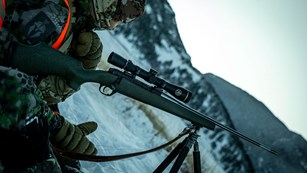
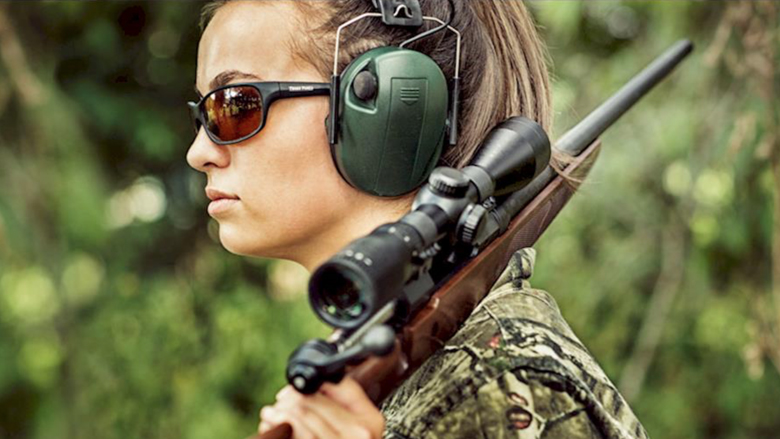
But if you’re looking to pick up a gun that’s better suited to predator hunting, you’ll want a rifle chambered for a fast-shooting cartridge that shoots a relatively small bullet. The .22 calibers are very popular here, and the .243 Win, .22-250, 22 Hornet, .223 Rem and others will work well. Cartridges like the 6.5 Creedmoor, 6mm Creedmoor and up into the 7mms also work well, particularly at distance, but they use slightly larger bullets. The bigger the bullet, the more it damages the fur, generally speaking (although bullet construction matters, too). If you’re going to keep your shots pretty close and you’re confident about shot placement, the teeny little .17 bullets will work beautifully in rifles chambered for the .17 HMR, .17 WSM, .17 Hornet and others.
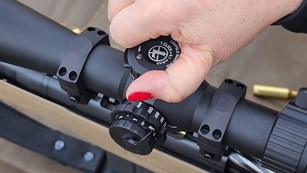
In general, depending on the terrain in your area, coyote hunters should be prepared to make shots of a few hundred yards or more. The faster and flatter-shooting your load is, the better. You want a quality bullet made for hunting—not target shooting—and you want a scope that optimizes your opportunities at dawn and dusk. If you want to hunt coyotes at night, which is a ton of fun but not legal in every state, so check before you go, you’ll need either thermal or night-vision or the old-school red spotlight.
What Other Gear Do I Need?
Coyotes can be hunted year-round in most places, but you’ll usually still need a hunting license and in some places, a furtaker’s license or a special night-hunting permit. Check your local listings.
Other than that, you’ll need camo clothing to keep you warm and help you hide from a coyote’s sharp eyesight. Your regular deer-hunting camo will work as long as it still blends in with the terrain in the dead of winter. And the other main thing is a call or a selection of calls—coyotes are primarily hunted by calling them in. More on that in the next section. Some hunters find success adding a decoy to their calling.
Coyotes hunters are usually on the move, so a steady shooting rest will be helpful for making a good shot from a field position, whether that’s a bipod on your rifle, a set of shooting sticks or a quality tripod.
Pack a rangefinder, but use it ahead of time, ranging various landmarks in your setup. You likely won’t have time to take ranges when a coyote is in front of you.
When and How to Hunt Coyotes
Coyotes are crepuscular, which means they’re most active at dawn and dusk. That makes those hours the best time to hunt them, although they can certainly be hunted at any time of the day or night (where legal).
Start with a little scouting to determine good hunting areas. Coyotes can live just about anywhere, but you’ll do well to find them where their food is found—that often means crop fields. Farms in general are good areas, as coyotes are drawn to livestock (especially in calving season), as are any other areas that are holding lots of rabbits, deer, game birds and other prey. You can also scout shortly before dusk and listen for a pack making noise—they’ll be near their den at this hour. That’s a good place to come back to in the morning. In general, you want to hunt in relatively open areas where you can set up to see the coyote coming from far away.
When you’re set up in a spot where you can stay hidden but survey a broad area, you’ll start calling. We could fill books with information about how to call coyotes, so I’ll only hit the very top-level highlights here. The most common method boils down to this cold fact: You want to sound like prey, and more specifically, prey that’s in distress. Whether that’s a squeaking mouse or a squealing rabbit or something else, you literally ring the dinner bell for a coyote when you make these kinds of noises. You can also try coyote howls as a way to create interest and entice a coyote to come running out of territorial jealousy, or in the spring, try pup-in-distress calls to appeal to denning coyotes. Electronic calls, while not as budget-friendly as mouth calls and hand calls, offer a huge variety of sounds and allow you to keep both hands free to run the gun. There’s definitely such a thing as over-calling, so don’t get too eager. You’ll probably want to place the caller/speaker some distance away from you so any incoming coyote focuses its attention on the source of the sound—not on you. If you are using a motion decoy, put it with the speaker.
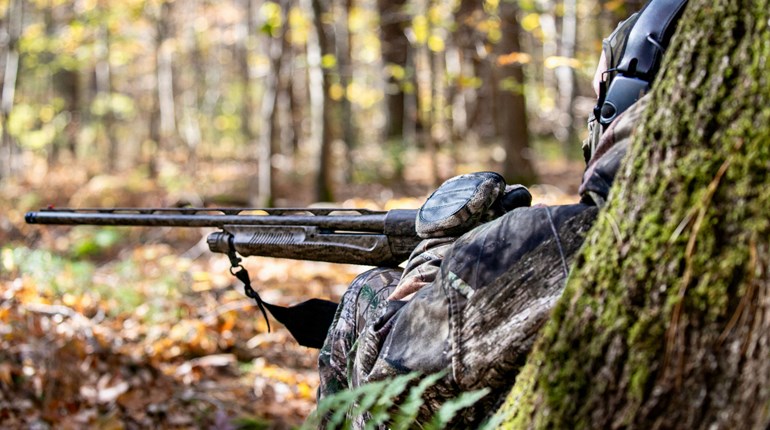
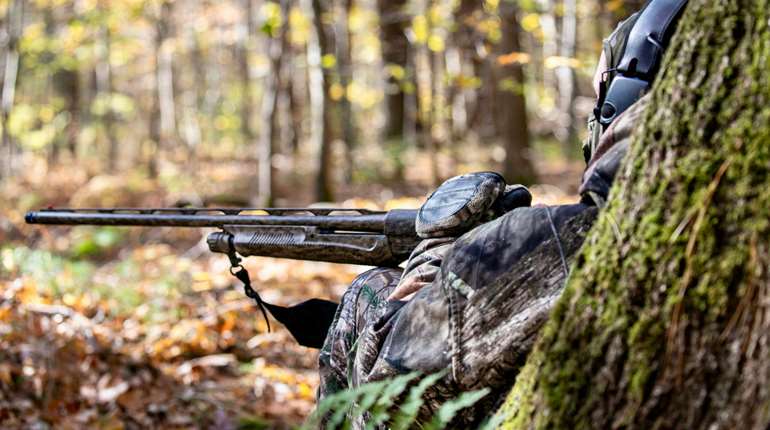
The hope is that a coyote hears your call and comes to you to investigate. You’ll shoot him at some point before he either gets too close and busts you or before he listens for too long and decides something’s suspicious and bolts. But you’ll never get that chance if he smells you, so playing the wind is absolutely vital in coyote hunting. Keep the wind in your face and stay hidden in brush or a pop-up blind, or at least keep your back against a tree to break up your outline.
Most coyote hunters will work a spot (often called a “stand”) for a certain amount of time—often under an hour—and then move on to another spot if they get no response.
Anywhere you’re hunting, but particularly in farm country, be very aware of your shooting lanes. Farmers are often happy to allow coyote hunters on their property, but you need to know which directions it is safe to shoot in to avoid livestock, equipment and, of course, buildings and people. Because you also have to play the wind, this can be a limiting factor on where you can set up. If the wind isn’t right for your safe shooting lanes, don’t even bother. Hunt somewhere else.
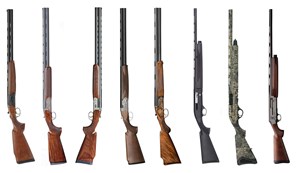
One more word of caution: Lots of other critters besides coyotes will be attracted to the sounds of prey. Don’t be surprised if you call in bobcats, feral farm cats, or all manner of other predators (I’ve even called in curious cows on more than one occasion). Always be sure of your target. Some coyote hunters, particularly those who hunt in tighter, thicker conditions where shots are close, will bring a shotgun along for in-your-face encounters.
Coyotes are famously wary and wiley. They are prey-driven and often can’t resist the scream of a dying rabbit call, but they’re also smart and will notice if that same sound has been coming from that same corner of the field for the past three days. You’ll have to keep changing tactics and switching up your calls and your location, always with the wind in your face, to have much success. If you get serious about coyote hunting, you’ll want to start watching videos and researching calling techniques and sequences, but for now, get out there and have fun harvesting fur.