
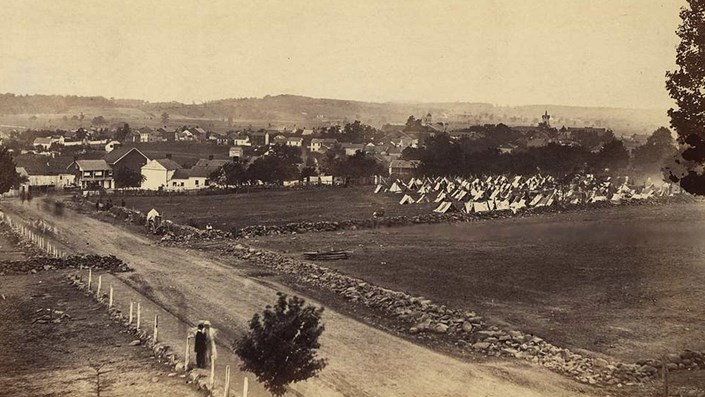
Camps set adjacent to the town in July 1863. Public Domain
While we celebrate the anniversary of the independence of our country this Fourth of July, it is also the anniversary of another major event in American history. On July 1, 1863, Robert E. Lee's Confederate troops moved into position with a plan to defeat George Meade's troops in Gettysburg, Pa. What followed was a three-day battle that claimed more lives than any other battle during the Civil War.
Despite a ban on women serving in either army, some felt a call to fight in the Civil War. Young women ran away from home to join, while others followed their husbands into battle. Dressing as a male soldier was essential to their mission. Many served for years undetected. Only death or treatment for sickness or a severe wound revealed their secret.
The call for able-bodied men to fight during this four-year war led to an assortment of combatants. Not having the physical examinations that were later established in war recruitments (40 percent of U.S. draftees during World War II were rejected on physical grounds), women often passed as younger men and were un-scrutinized as long as they "looked the part."
Here are several women and their stories from that fateful battle in southern Pennsylvania:
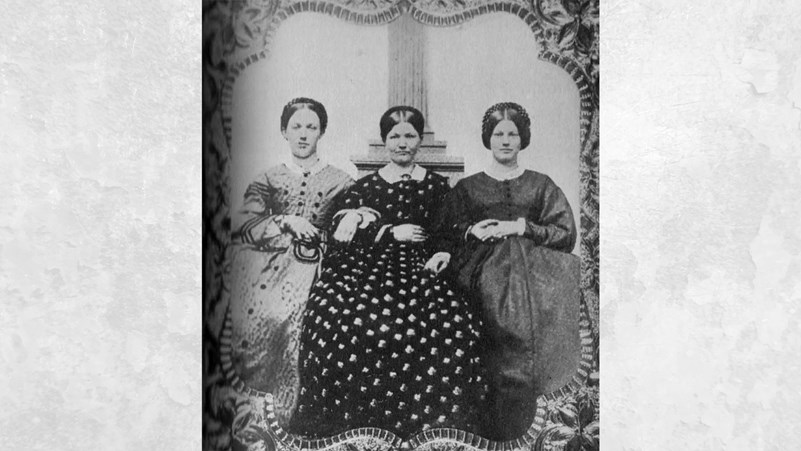
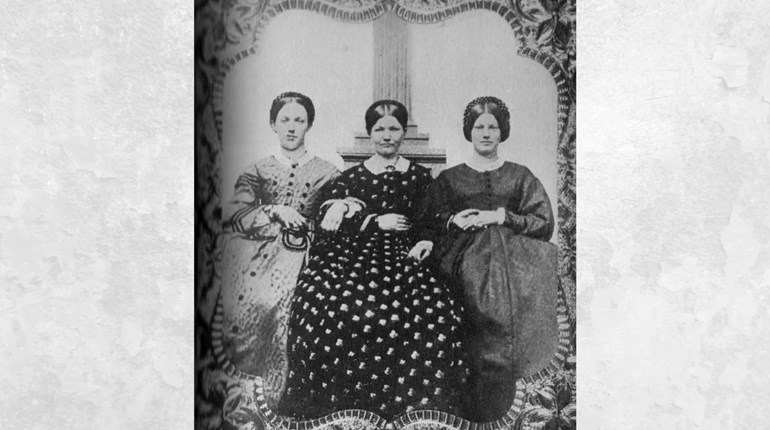
Pictured on the right, Ginnie Wade was the only recorded civilian death at Gettysburg. Photo courtesy the National Park Service.
Mary Virginia "Ginnie or Jennie" Wade — Civilian Casualty
Traveling to her sister's house on the edge of town at the start of the battle on July 1, 20-year-old Ginnie was helping make bread for the Union troops fighting in the adjacent field. More than 150 Minié balls hit her sister's house, with one of them striking Ginnie, killing her instantly. After her burial, Ginnie's mother used the dough that she had been preparing to continue to make bread to feed the soldiers. It was never determined which side fired the round that killed her. This was the only recorded civilian death during the battle.
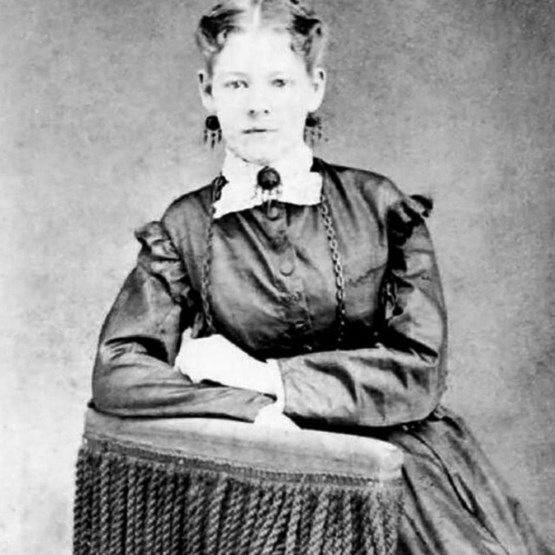
Young Tillie worked around the clock to deliver food and supplies to wounded soldiers. Public Domain image
Matilda "Tillie" Pierce — Giving Aid to the Wounded
Fifteen-year-old Tillie, a native of Gettysburg, heard of the impending attack on the Union troops. She and her family were prepared to help in any capacity. During the onslaught of the battle, Tillie and other girls from the town did what they could for the wounded soldiers that filled homes and barns seeking care.
"Some limping, some with their heads and arms in bandages, some crawling, others carried on stretchers or brought in ambulances. Suffering, cast down and dejected, it was a truly pitiable gathering. Before night the barn was filled with the shattered and dying heroes of this day's struggle."
They carried water. They distributed bread and beef tea. They prepared material for nurses to bandage wounds. Tillie sat with a wounded soldier to give him solace during his last few hours of life. Her memories of her experience during the battle stayed with her for many years and she wrote a memoir about them titled, At Gettysburg, or What a Girl Saw and Heard of the Battle: A True Narrative
Mary Siezgle — Union Soldier
Starting her service during the war as a nurse, Mary tended to the wounded on the front lines. As the war progressed, she followed her husband's regiment and decided that she wanted to fight alongside him. She joined the 44th New York Infantry, disguised as a man, and traveled with the men to fight at Gettysburg. There she was wounded but survived. However, about a week later it appeared in the New York Times that Mary was arrested for wearing a Union soldier's uniform, so her identity as a woman was probably discovered while receiving treatment.
Mollie and Mary Bell — Confederate Soldiers
Two cousins from southwest Virginia decided they wanted to fight for the Confederate States Army. Twenty-two-year-old Mollie and 15-year-old Mary cut their hair and dressed in men's clothing, making them believable enough to pass as young men to join a cavalry unit. They then transferred to the 36th Virginia Infantry where they fought at Gettysburg as well as in the Battle of Chancellorsville and at the Spotsylvania Court House. Mary was wounded by a shell fragment in the arm, but the young women were able to treat the injury themselves and Mary avoided having to undergo a hospital examination. However, a young lieutenant that they thought they could trust with their secret ended up turning them in and both women were sent to prison. No charges were brought against Mollie and Mary, and they were released, but banned again from re-joining the army.
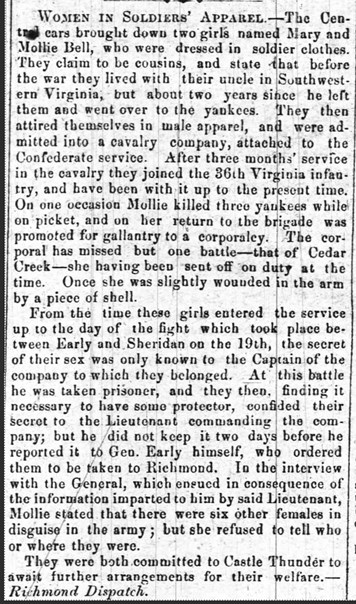
An article from the Richmond Dispatch about the sisters being discovered. Public Domain
Unidentified Soldiers — Casualties of Battle
Gettysburg was a loss for the Confederate Army. When the firing ceased both sides worked quickly to recover and bury their dead, but the hasty retreat of troops left much of the task to burial details. The discovery of the body of a woman wearing a Confederate private's uniform was listed in a report from a Union burial detail. "One female (private) in rebel uniform." It is likely that other female soldiers died over the three-day onslaught, but their true identities are hidden beneath the sod that buried them.
On the morning of July 4, 1863, Lee began to pull back his troops. The Battle of Gettysburg caused approximately 24,000 casualties from each side for a total of around 50,000, with over 7,000 killed. The land where blood was shed and courage was tested is now part of a national battlefield park with monuments and memorials for all who fought.
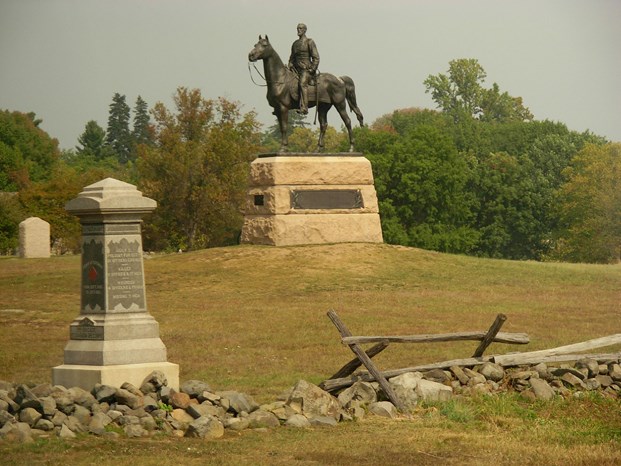
The Gettysburg National Military Park features memorials that you can view by driving throughout the park. CC BY-SA 3.0