
It’s the dead of winter as I’m writing this, and half of the country just got blanketed with a foot of snow. Even in the South, we’re dealing with ice and colder-than-usual temperatures, which got me thinking about how my concealed-carry system has been affected by the seasons. There are at least two major ways concealed carry changes from the summer to the winter. One is optional; the other is sort of forced upon you.
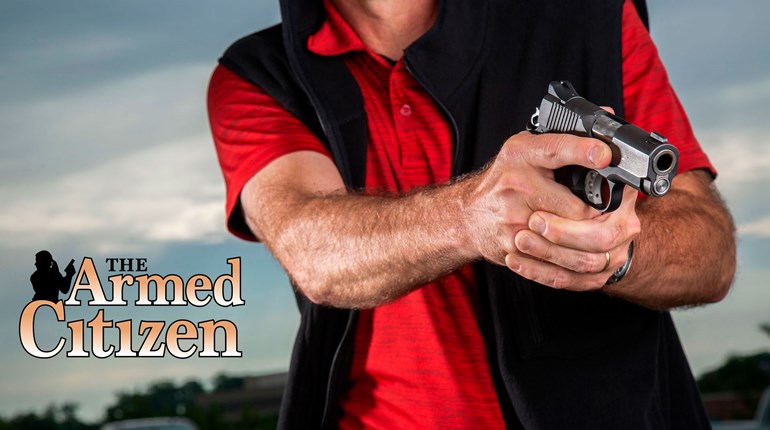
The first way concealed carry changes is that you have the option to carry a larger gun and/or utilize an outside-the-waistband (OWB) holster, because you’re wearing a lot more clothing, including cover garments like a sweater, jacket or vest. While I must work to hide a compact 9mm IWB at 3 o’clock under a thin summer T-shirt, I could (probably; I haven’t tried it) conceal a full-sized gun under a thick, comfortable, fashionably loose-fitting sweatshirt. When it comes to self-defense handguns, bigger literally is better in every way, with concealability and weight being the caveats. Take away the difficulty of concealing a gun and carrying something bigger is a no-brainer. Larger guns are easier and more comfortable to shoot, and they offer you more capacity.
Winter is the perfect time to utilize a cover garment that allows you to carry in an OWB holster, too. Anyone wearing a puffy vest in July draws “that’s weird” attention, but no one bats an eye if you stay bundled up in February. If you find outside-the-waistband carry more comfortable than IWB, as most of us do, or if you like the old-school-detective-style shoulder holsters, a cover garment opens a lot of options that you can’t get away with easily in the summer.
If you are going to switch up your carry gun, holster or carry position, it’s critical that you practice with the new setup. Even if it’s only dry-fire draw drills at home with your unloaded gun, your brain is going to need a little bit of practice to get used to the new rig, so don’t neglect this step.
The second way concealed carry changes from summer to winter is the sheer amount of clothing involved and the way in which it complicates everything. It might make concealment easier, as we just discussed, but it also makes drawing the gun more of a process because you’ll have more layers of fabric, probably thick fabric, to deal with.
Think about it—yanking your thin summer T-shirt up and out of the way so you can access your gun is a relatively simple process. But what if you’re wearing an undershirt, with the gun over it, then a button-down dress shirt and a sweater over that? Does the undershirt offer additional friction that makes it harder to lift your sweater? Does the button-down shirt have less stretch than a t-shirt and thus is more prone to getting hung up when you tug at it?
What about your winter coat? It’s almost certainly bulky and probably not very stretchy at the waist—maybe it’s long, down to mid-thigh. How are you going to sweep that out of the way if it doesn’t stretch? Can you even lift a long coat high enough to clear the grip of your gun? And if you can, does the added bulk mean you have to modify your grip-and-rip technique a little bit to clear your support hand safely?
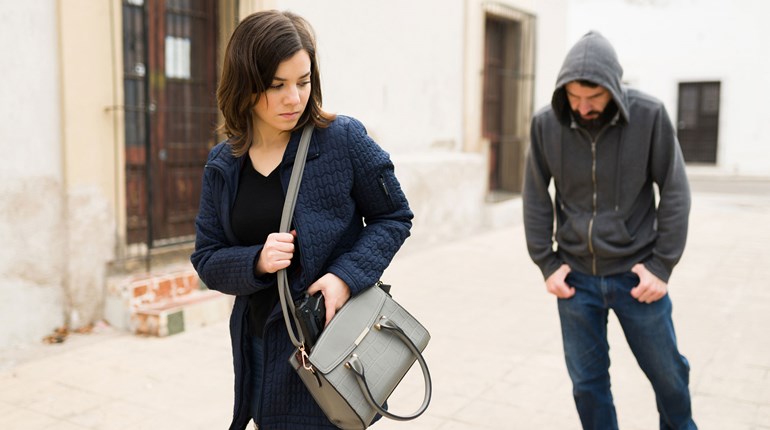
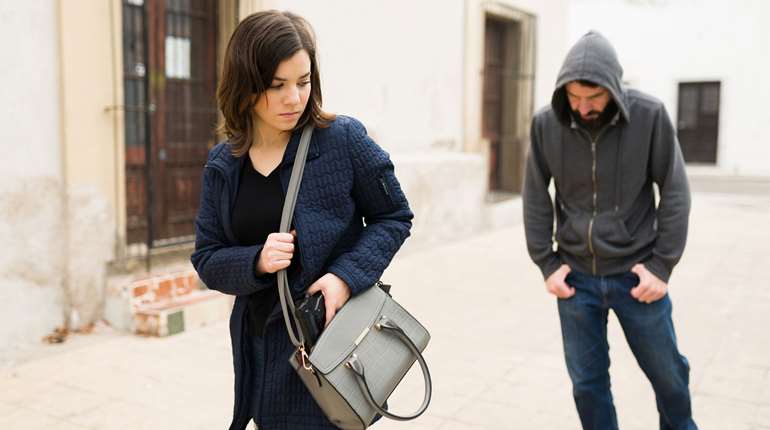
All of this applies to purse carry, too, albeit in a different way. The added bulk of your winter clothing and coat mean you might have to reach farther across your body to access the grip of your gun from your purse.
And, of course, gloves are an issue. Have you tried drawing your gun with your winter gloves on? Assuming you can grip and draw it safely and properly, does your gloved finger fit in the trigger guard and can you feel the trigger enough to execute a proper trigger press?
None of these issues are insurmountable problems, but they’re all things to consider. Again, dry-fire practice is absolutely vital here to help you identify any potential hiccups and work on modifications in a controlled environment. You might discover that you need a new pair of thinner gloves, or that you are just going to have to give up a second or two on your draw while you rip one glove completely off. In the course of dry-fire practice, you might discover that your winter coat just can’t be lifted high enough to access your hip holster, and you’ll need to unzip it for access or even switch to a coat designed specifically for concealed carry (they have a long zipper right over the gun so you don’t have to take the coat off or sweep it aside to draw).
Just as you do in summer, you will have to consider your wardrobe choices and how they affect your ability to carry a firearm. You might even discover that a different carry position works better for you in winter.
You might not have access to a range that will let you draw and shoot from concealment, but if you do, that’s the ultimate way to train for winter concealed carry. If you don’t, lots of dry-fire practice while wearing your full winter gear will get you ready for a worst-case scenario. You don’t have to change your concealed-carry setup when the seasons change if you don’t want to, but the change in your wardrobe will necessitate some tweaks to how the setup works—and you don’t want to find out what those tweaks and hangups might be at a critical moment.