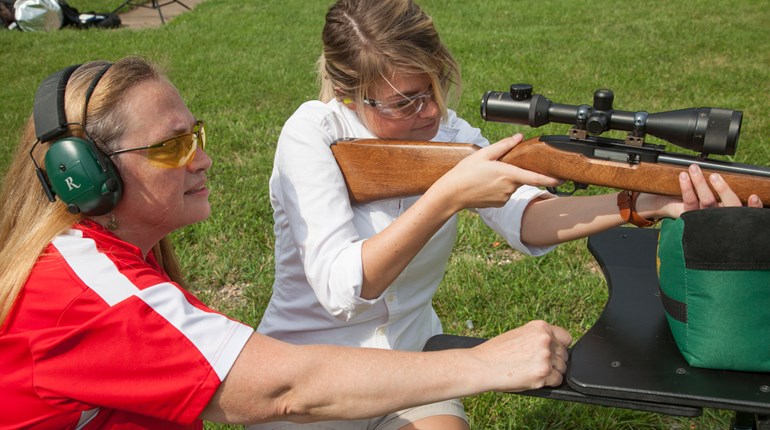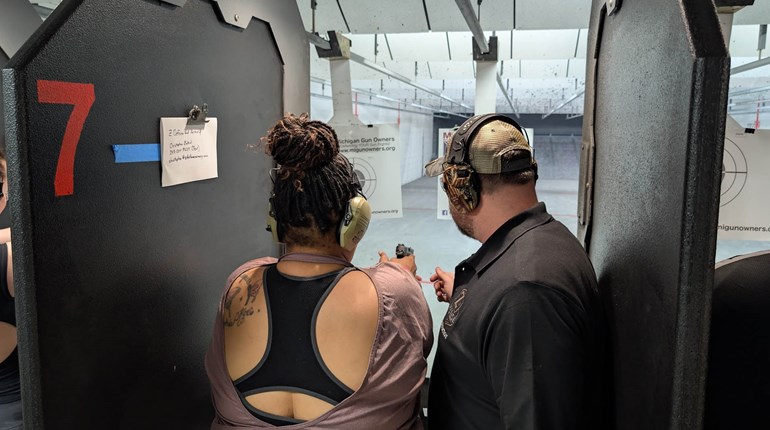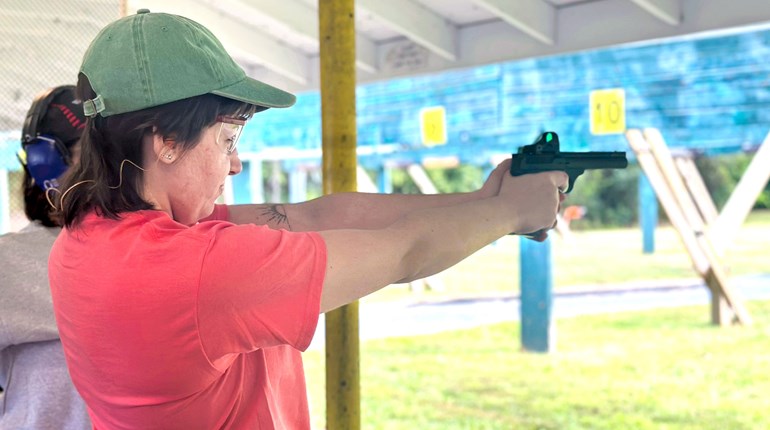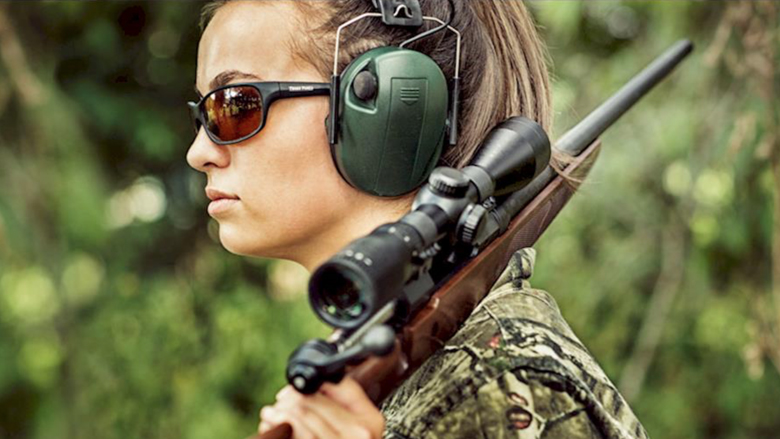

Being an NRA Certified Firearms Instructor has many benefits. For one, you get to do what you love! I get paid to talk about guns, shoot guns and be around other shooters while helping them improve their skills and techniques all the time. The downside is that it is a lot of work.
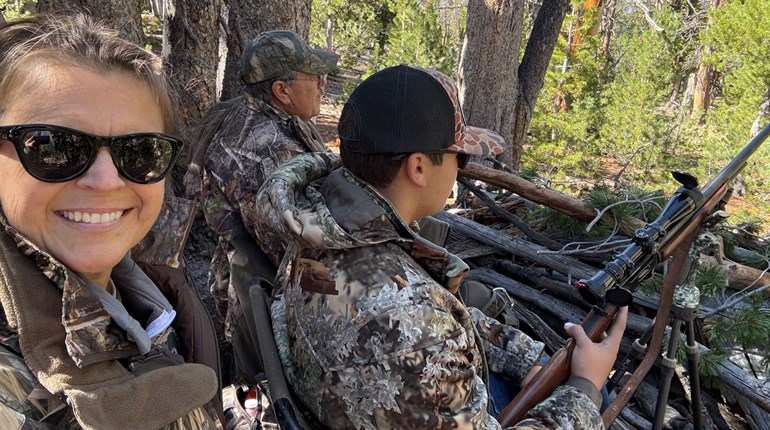
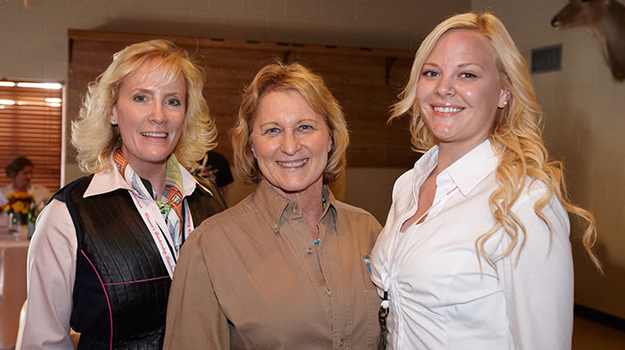
Most of my students are instructor candidates who intend to start their own firearms training school. Those who know what I do frequently hear my great stories from classes and trainings, and many friends and family have attended my courses. What they see and from their experiences, they think I have the coolest job, and rightfully so! But they don’t see all the work behind the scenes. If you are going to have a successful firearms training school, you are going to need some help. Fortunately for me, my husband, John, is my help. We are a what the NRA Training Department calls a “Training Team.”
The NRA encourages the use of training teams. In the NRA’s Basic Instructor Training (BIT) Course, Lesson II is dedicated to the use of training teams when conducting firearms courses. Training teams are also encouraged in Lesson IV of BIT. Additionally, for an instructor candidate to successfully complete and pass BIT and any subsequent instructor course, he or she must “demonstrate the cooperation and team spirit necessary to plan an NRA course together with other instructor candidates.”
There are 4 benefits to using a training team when conducting a firearms course. These include efficiency, a more diverse knowledge of firearms, backup availability, and greater customer service.
Efficiency
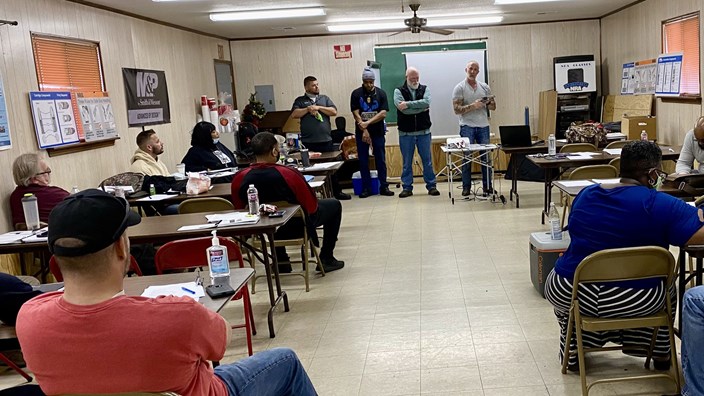
Training teams make instructing more efficient through teamwork. We all know that if we are doing any task, having one or more additional individuals helping us makes the job easier. By dividing up the work, it makes each member’s job easier.
Another benefit of training teams is that it motivates and supports everyone on the team. If one of the instructors is asked a question for which they are not sure of the answer, or if they are about to go into a section of the class that is not that instructor’s strongest area of expertise, another team member can jump in and address the topic or cover that lesson. Done correctly, the students will witness a smooth segue from one instructor to another without noticing the hand-off or “rescue.”
One of the greatest benefits of team teaching is that most of the details can be shared among team members. These include pre-course administrative duties and communications, setting-up the course online and advertising, preparing the classroom and range to successfully conduct the training, teaching the class, and tear-down duties to include course wrap-up in the classroom and on the range, closing out the course with the NRA and following up with all students upon completion. If you have ever set up an NRA Firearms Training Course, you understand and know what I mean. Many times, when the scheduled course date finally arrives, you’ve already spent an ample amount of time and effort setting up, advertising, communicating, preparing, and completing all the pre-course “paperwork” and setting up the classroom and range area for the day, you are already exhausted, before you first student arrives.
By working with others, many of these difficult and repetitive tasks are not as draining on you as if you had done them all by yourself. This means that you are ready, rested and mentally and physically prepared to start the class. The last thing you want is for your students to look at you at the beginning of class and think to themselves about how tired you look. This can set the tone for the whole class.
Diverse Knowledge
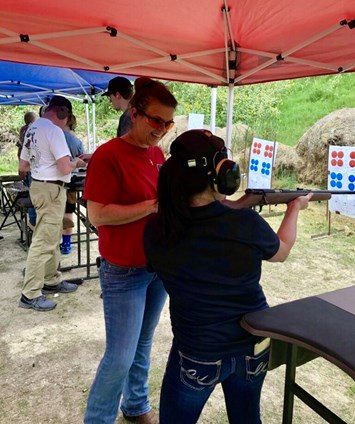
Training teams allow for a greater range of firearm knowledge. We all have different strengths, experiences, and interests. This means that different parts of the class or administrative duties can be assigned to those where it is best suited for their expertise. For example, my expertise lies in shotguns and administrative duties such as setting up classes, record keeping and reporting to the NRA. I am also extremely organized and have great communication skills, in my opinion, as well. I am the contact person all students reach out to for information, registration, class details, and follow-up questions upon completion of training. John, with his hunting and law enforcement background, has greater expertise in rifles and handguns.
The adage, “Jack of all Trades, Master of None,” means you should utilize all your team members’ strengths. It is impossible for one person to know everything, and there is nothing wrong with not knowing something. On the contrary, there is something wrong with not knowing and not finding out or not providing a knowledgeable resource like another teammate to deliver a suitable answer.
Another benefit of a training team is that it makes everyone a better instructor by being exposed to diverse gun knowledge. Since I have been teaching with John, my rifle and handgun knowledge has increased. Likewise, John’s shotgun knowledge and to some extent, his computer skills have increased. We have both become better instructors by regularly working with each other.
Backup
When you utilize a training team, you always have backup available if you or one of your co-instructors are going to be late for class, have something unexpected arise which prevents you from attending class or having to leave early. We all get sick, wake up feeling a little “puny,” or realize that things sometimes just happen outside of our control. Unfortunately, if you are the only instructor and have a class scheduled and unexpectantly fall ill, depending on the severity and if you are not contagious, you must show up. Many times, students have taken time off work to attend your class. Some have traveled several hours or have flown in and have hotel reservations and rental cars, so you just cannot cancel class right before the start time.
Having backup instructors is also important when family issues or dilemmas arise. John and I always take two vehicles to class just in case one of us must leave. Over the years with four boys playing high school football, we never knew when we would receive a call from the trainer at the school, with news that one of the boys was injured during practice and needed to be picked up and taken for X-rays right away—which has happened to us more than once!
Additionally, you always have the issue of you or one of your co-instructors having car problems. At some point we have all experienced getting into our vehicles, turning over the key, and hearing only a “click.” Dead batteries, flat tires and other car issues always seem to appear at the worst possible time. When these problems do occur, teaching with a team can ensure that the “show will go on.” Class begins on time and students are not waiting for the instructor to show up.
Customer Service
Training teams provide better customer service than instructors who train solo. Your students are exposed to different speakers, each with their own distinct teaching style, throughout the training. Some students connect better with some instructors, and vice versa.
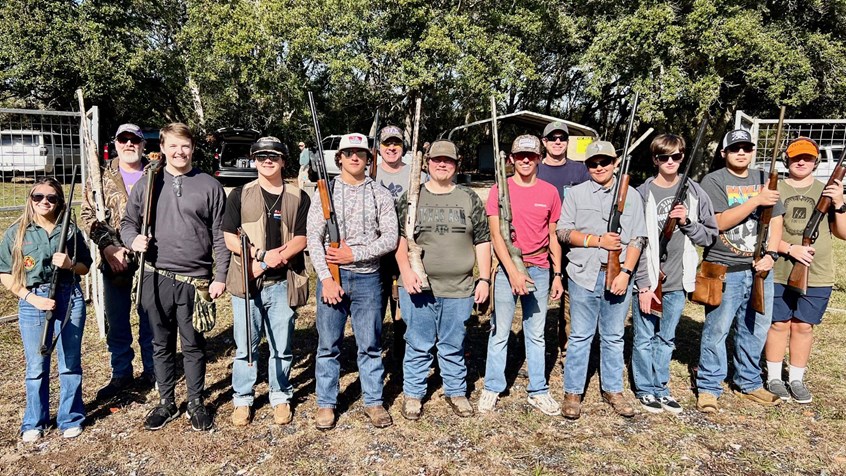
Instructors who train in a team more easily combat the boredom or monotony students may experience, as they keep things moving along both in the classroom and on the range. In an NRA Basic course, it is a one-instructor-to-one-student ratio while shooting on the range. If you have a large class and you are teaching alone, with a 1:1 ratio all but one of your students will be shooting at a time under your direct instruction while the other students are waiting their turn. With two or even three additional instructors, students can be under the direct supervision of additional instructors while shooting or involved in other activities which minimizes downtime.
It is not uncommon to have a group of individuals, either friends or coworkers, sign up for discipline-specific firearms training to take for fun or for a “team building” exercise. In these instances, training teams can accommodate larger class sizes. This is important to provide good customer service so that you can meet the needs of your customers and students.
Utilizing a training team when conducting firearms courses can make the job easier for the instructors and make the experience more effective, fun, and memorable for the students. Oftentimes, an NRA Firearms Instructor is the only person the public encounters who represents our organization. Remember, as an instructor, you are an ambassador of the NRA so when you utilize a training team, your students should experience professionalism, efficiency, and receive a quality class.
Those attending your class look at you and your training team as a direct reflection of the NRA. When instructors do a good job, not only do their students become more proficient, trained and educated gun owners, but they are also more likely to become members of the NRA to help protect our Second Amendment Rights.
—Heidi Lyn Rao