
As an NRA Certified Instructor, I encounter plenty of new gun owners. Many of them are excited to be in class and on the range, and eager to learn. Others are apprehensive and afraid. Some of these students have the correct equipment and reasonable expectations. Others have been ill-advised on which gun to purchase, and expect to instantly join the ranks of competitive shooters.
The four most common mistakes new gun owners make when purchasing their first firearm concern the weight, the chambering, and the fit of the gun, as well as seeking advice from individuals that think they know more about firearms than they actually do.
Weight
Gun weight is the Achilles heel of many new gun owners. This typically happens when a gun store employee is interested in making a sale more than helping the customer find the best firearm.
Many salesmen steer new gun owners to more expensive and lightweight options. Their sales pitch centers around ease of carrying without mentioning the increased felt recoil he or she will experience when shooting. It only takes a few additional ounces of weight to reduce felt recoil to a manageable level. Consequently, there is a delicate balance between gun weight and felt recoil.
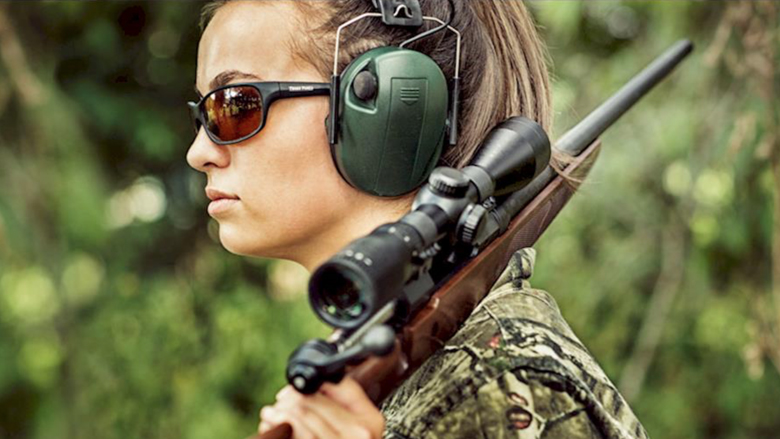
I address this issue more frequently right before the peak Argentina dove season, where many women are going with other hunters, and they want to brush up on their wing shooting skills. After talking with them before our lesson, they share with me their frustration because “they are just not good at shooting shotguns and hitting a moving target.” It does not take long for me to identify their issue: Their shotgun is too light. When we meet for a lesson, I let them try a medium-weight shotgun (6.5 lbs. to 8 lbs.). When they switch over to my gun, they immediately start breaking clays.
In the modern gun world, lightweight synthetic stocks are replacing the traditional wood “furniture.” This is one reason we see an increase in small calibers replacing the traditional larger calibers in hunting large game animals. It is all about recoil management, not ballistics. For example, you can see this in the resurgence of the 6.5 calibers replacing traditional calibers such as the .30-06 Sprg. and .270 Win. The problem comes when the new gun owner is steered to the larger calibers as beginning hunters.
It does not matter if the new gun owner is purchasing a first rifle, pistol or shotgun, the weight of the gun matters. A firearm that has excessive felt recoil can quickly turn off a new gun owner.
Chambering
One of the worst things you can tell a shooter is that they are shooting “too much gun.” Unfortunately, I sometimes must break this devastating news to some shooters, both new and experienced. Although sometimes it seems so, the gun world is not limited to 9mm and 12 gauge, for which most of firearms used for self-defense, military, law enforcement agencies, and both competitive and experienced shooters are chambered. However, other factors that come into play and there may be better options for new gun owners.
New gun owners need to “work up” to these calibers and gauges. Until they do, smaller calibers and gauges might be more appropriate to start with. If your state allows it, there is nothing wrong with using a .22 LR as your Every Day Carry (EDC) handgun. There are other smaller caliber options such as the .32 caliber and .380 Auto. As far as shotguns go,.410-bore and 20-gauge shotguns are available.
Many people may respond that these smaller rounds are “not adequate.” But as I’ve said I the past, carrying a smaller caliber is better than carrying nothing at all. After all, it is better to stop a threat as quickly as possible with whatever you have with you that you are comfortable using, as opposed to having a larger caliber that you are too afraid to squeeze the trigger and fail to stop an attack.
As an instructor, always consider starting a new shooter with a .22 caliber so they learn the basics and fundamentals of shooting. Once the new shooter accomplishes those skills, their confidence and success on the range grows and these fundamentals can be applied to a larger caliber or whatever the shooter is comfortable handling and carrying.

Fit
Many new gun owners purchase firearms that do not fit them, especially those who are purchasing their first rifle or shotgun. In fact, most new shooters who come for lessons bring guns that are way too big for them. This is typically the product of a salesperson who didn’t take into consideration “fitting” the gun to the shooter.
A quick way of checking the fit of a long gun is to bend your arm at a 90-degree angle at the elbow. Place the butt of the rifle or shotgun in the arm above the elbow and run your forearm and hand along the stock to the trigger guard. If your index finger (shooting finger) does not reach the part of the trigger guard that is in front of the trigger, the gun is too long.
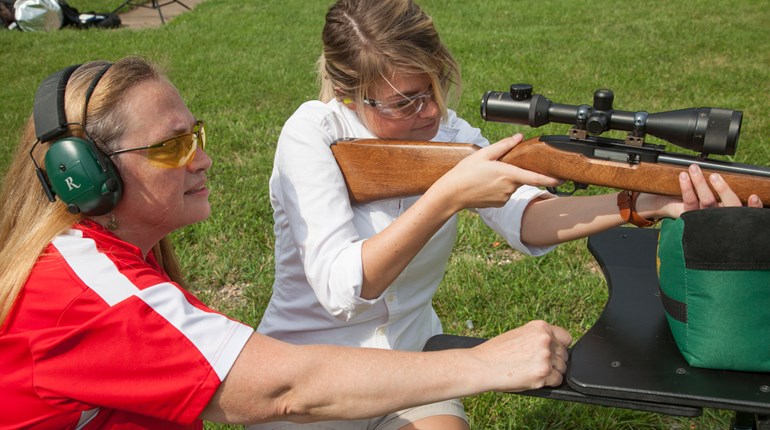
I routinely hear from parents who want rifle lessons for their children before they go on their first hunt. As per usual, the child has been given one of their parents’ adult-sized guns to shoot. That is why I always make sure that I have a youth model rifle on hand, which also allows for a better fit for the small-statured adult students.
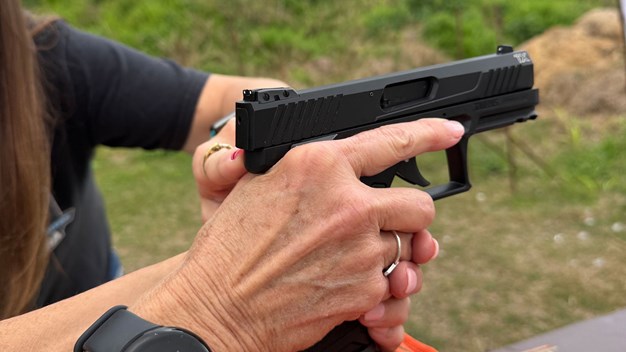
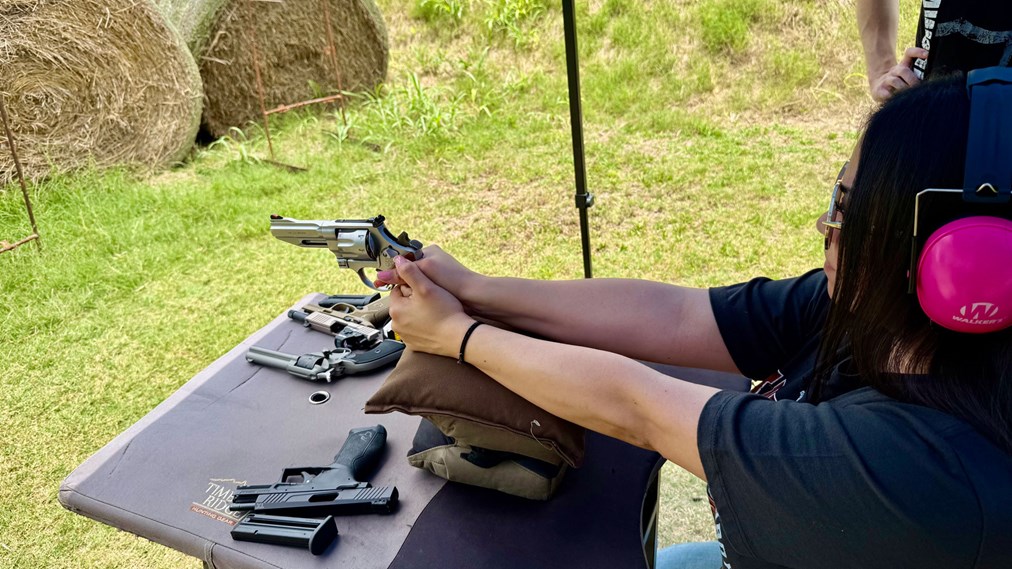
A properly fitting gun should be neither too big nor too small. Even though sub-compact pistols are popular today for concealed carry, sub-compact pistols may not be the best choice for a new gun owner. This is because it is harder to learn the proper fundamentals on sub-compacts than on larger models.
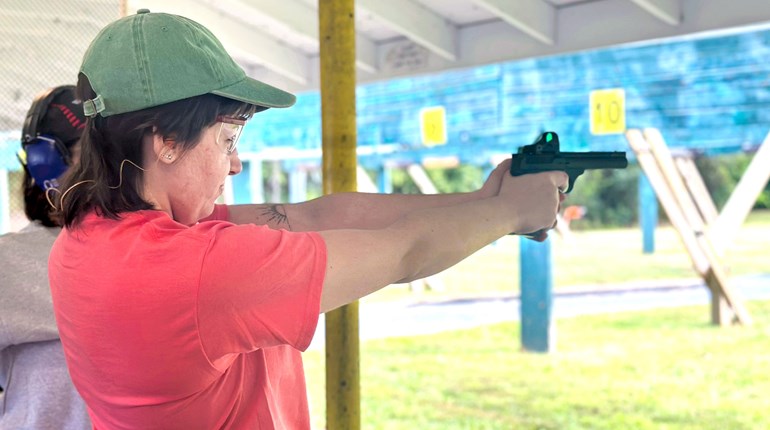
For example, a young man who was seeking pistol lessons from me showed up with a lightweight, sub-compact semi-automatic pistol. It was obvious from first glance that the pistol did not fit him. He could not hit paper at seven yards. I let him try one of my larger training pistols and he was on paper. He liked my gun better but insisted on using his gun. The more he shot the worse he got. With every shot, he was wincing in pain as the slide ripped more skin from his shooting hand.
If the gun does not fit the shooter, it is impossible to follow all the 5 Fundamentals of Shooting: Aiming, Breath Control, Hold Control, Trigger Control and Follow Through. If you cannot follow the fundementals, you are not going to be able to hit where aim. This can be very detrimental to a new gun owner’s confidence.
Guidance
If you live in the gun world as an instructor, FFL holder, gun salesperson or competitor, you know that there is no shortage of “gun experts.” Thanks to YouTube and other internet platforms, there is a lot of misinformation going around regarding guns. Unfortunately, much of the misinformation also comes from those living in the gun world, including instructors, FFL holders, gun salespeople and competitors. With so much misinformation floating around, it is no wonder new gun owners cannot seem to find the proper guidance.
A common mistake new gun owners make is seeking advice from the wrong “expert.” Unfortunately, how does the new gun owner know who to trust? This is a hard question to answer because oftentimes, the sales come before customer service. Spend some time near the gun counter at a retail store and just listen. There are times I question whether any time was spent vetting the employees who were going to be working behind the gun counter and answering questions from the public, especially new gun owners.
A new gun owner needs to start out by asking employees at the gun counter, co-workers, or “knowledgeable” friends” if they are NRA Certified Instructors. This is the best way to start off in the right direction. New gun owners should not stop there, doing the requisite homework to ensure that they are getting exactly what they want.
New gun owners will almost always seek out the advice of others when looking for their first firearm. Steering an individual toward guns that are too light, too heavy, too “much” gun, one that does not fit them properly, or one that puts them in an awkward position in order to shoot may turn them off to guns completely.
Remember, shooting is supposed to be fun. Shooting should not be painful or uncomfortable. If a new gun owner shoots a gun that is not fun to shoot, or one that hurts them because the gun does not fit properly due to size or too large of a caliber, it could result in one less gun owner and one less advocate for the Second Amendment. On the other hand, a new gun owner who is directed to the proper gun, more than likely will vote for the issues regarding the Second Amendment and potentially become a new NRA member.
—Heidi Lyn Rao