
Shooting nice, tight groups with your rifle is satisfying, and once you get a rifle dialed in and grouping like you want it to, you’re usually good to go. But every now and then, you’ll hit the range and your formerly great-shooting rifle is suddenly not grouping like it used to. What’s going on, and how do you fix it? It could be a number of things—so start with the easy ones on this list and work your way down.
Is It You?
Be honest with yourself—are you making good, solid shots? Are you having an off day and jerking the trigger or not being as disciplined with your breathing and trigger squeeze as you normally are? A lot of not-so-great groups are actually shooter error, but if you’re confident it’s not you, keep reading.
Is the Barrel Hot?
This varies depending on the barrel, but shooting a lot in rapid succession heats up barrels, and that eventually causes accuracy to erode. It might be as few as three shots in a row or as many as 10 or more, but every barrel will hit that “too hot” point if you shoot quickly and don’t let it cool down. Let it cool for a while and see if your groups tighten back up.
Check the Scope
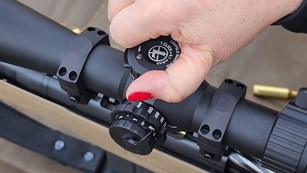
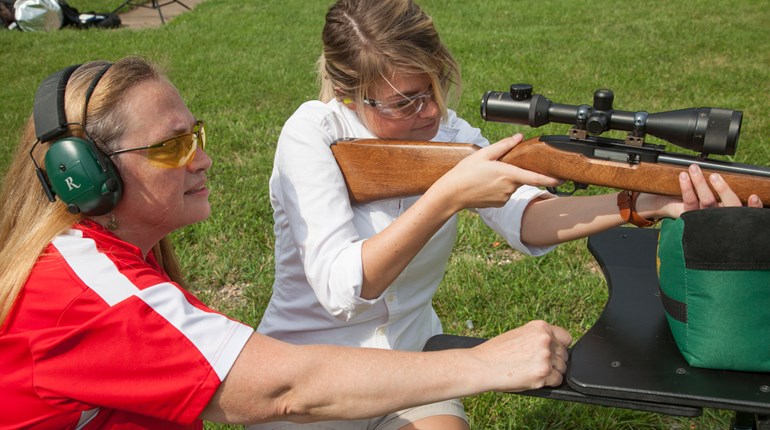
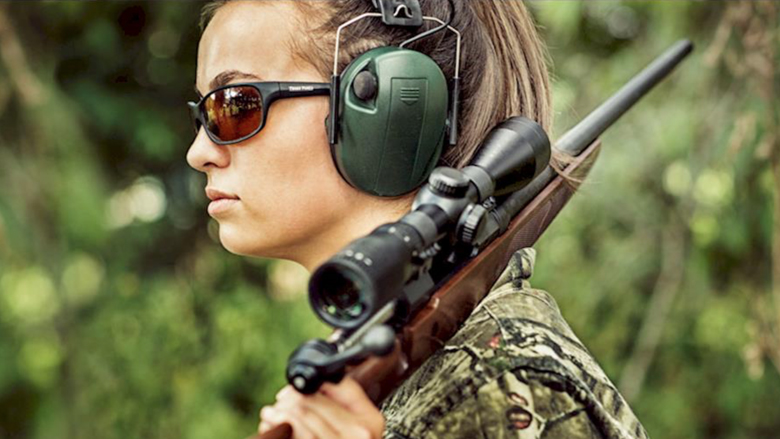
A randomly large group is often an indication that something is going on with the scope. First, check that the mount and all associated screws are tight but not overtorqued—loose screws and too-tight screws can both cause problems. Aside from shooter error, this is probably the top reason for a sudden increase in group size. While you’re at it, check the action screws, which hold the action in the stock.
Do your best to see if there are any potential problems in the scope itself. If it got banged around in the truck or the rifle was dropped, the scope could be damaged and the reticle might no longer be true.
Analyze the Ammo
Is the whole group opening up, or is the rifle still shooting a relatively tight group with one or two weird flyers? Flyers are often shooter error, but if you’re confident you’re not the problem, the next potential cause is inconsistent ammo. Is this a new box of your same old brand? Maybe it’s got some inconsistencies. The only way to know is to open a new box from a different batch. Of course, if you’re shooting entirely new ammo—a different brand, projectile type or weight, powder charge or anything else that’s different than you sighted the gun in with—that’s an obvious problem. Go back to your old load and see if your groups go back to what you expect.
Inspect the Barrel
Once the barrel is cool and you’ve triple-checked the gun is unloaded, examine the crown (muzzle end of the barrel) and make sure it doesn’t have any dings. If you’ve got a suppressor, muzzle brake or thread protector, make sure it is properly and firmly attached.
If your barrel is free-floating, check that it’s still floating as it should by running a dollar bill under the barrel between it and the forearm. If it’s not, there are a couple of potential reasons, and they require some work at home or at the gunsmith’s.
Is Your Rifle Too Dirty?
Some barrels don’t shoot well when they get too dirty. In particular, too much carbon buildup or copper fouling can cause accuracy problems. Give it a good cleaning, and I don’t mean just run a few patches down it—go home, use a quality solvent and really get that fouling out of there. Then go back to the range with the same ammo and see if your rifle shoots the groups you are used to seeing again.
Or Is it Too Clean?
On the other hand, some barrels don’t shoot well when they’re too clean. If you’ve recently done a serious clean, it can take anywhere from “several” to “quite a few” shots to get it reconditioned back to its normal state. Those first however many shots might be pretty erratic, so if your first couple of groups with a freshly-cleaned barrel aren’t satisfactory, shoot a few more to properly foul the barrel and see if the groups tighten back up.
If It’s None of That
If you can’t figure it out and none of these reasons sound plausible, try a new type (or two) of ammo if you haven’t already to eliminate ammo problems as a variable. Then try an entirely different scope—yes, I know, swapping scopes around is a pain. Try the original scope on a different rifle to see if you can eliminate the scope as a variable. If it’s not an ammo or a scope problem (and you’re SURE it’s not a you problem), you’ll have to get into some gunsmithing to really understand what’s going on. Some barrels do get “shot out” and lose accuracy permanently, but this typically takes hundreds or thousands more rounds than most hunters will put through their rifle in their lifetimes. If it’s a precision rifle with a high round count, a shot-out barrel is a possibility.
If you’ve tried everything on this list and haven’t gotten to the solution, consider a visit to a gunsmih for some deeper diagnostic work.