
The decision to buy a concealed-carry firearm and use it daily comes with a steep learning curve and a lot of information that can be overwhelming. The short version of what you need to do to carry comes down to a few simple steps—and one big thing that every person who carries should do first.
The Simple Steps
Step 1: Before you carry concealed, you must understand the laws where you live—that is federal, state, and local laws that apply to firearms and carrying them. First and foremost make sure you are carrying legally. Sometimes the first time a person shoots his or her gun is during a class to obtain a concealed-carry permit. If you fall in that category, this post is for you! You need more than just a single class, which is likely intensely focused on the law and not on actually shooting a gun.
Choices in How You Carry
Step 2: You must make some choices when you decide to concealed carry, the biggest one being which gun to purchase. We will leave that to other posts or articles to discuss the pros and cons of various carry guns and methods. What gun you choose and how you decide to carry are not the focus of this discussion. However, make sure you are choosing a gun and method that are legal where you live.
The First thing YOU should actually do: Get comfortable with your gun!
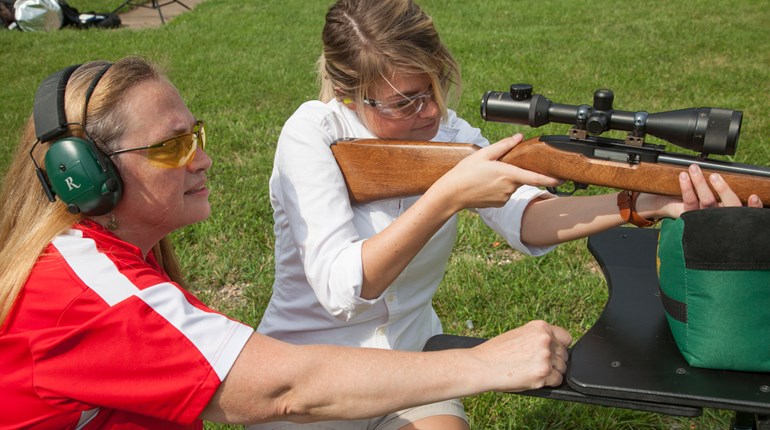
Many people new to concealed carry do not have an opportunity to get comfortable with their gun, and that’s the most important thing that they should be doing! Find a relaxed and controlled environment (i.e. not a crowded range, but a quiet place with a coach or mentor). Set expectations for no pressure or judgement and clear goals.
Start simple. Start by understanding how your gun works and how you manipulate it. I’m not talking about having your husband/father/friend show you in five minutes—I’m talking about a deep dive into what you have and how it works. Is it a platform new to you, or have you shot this type of gun before? Watch videos on how to clean, troubleshoot malfunctions, recommendations for the best holsters or carry methods for that gun. Check out dry-fire videos and see what you should look like manipulating the firearm. Learn everything you can about that gun before you head to the range. (You should honestly be doing this before you buy the gun.) Do not wait until you are going to your class to get a concealed-carry license to get familiar with it. Start learning now!
5 Things to make sure you can do before you shoot the gun:
- Load/unload the gun, and change a magazine. For the load and unload, if you don’t have dummy rounds, just go through the steps without ammo.
- Draw from concealment or a bag with your finger off the trigger.
- Learn the steps to take for clearing malfunctions.
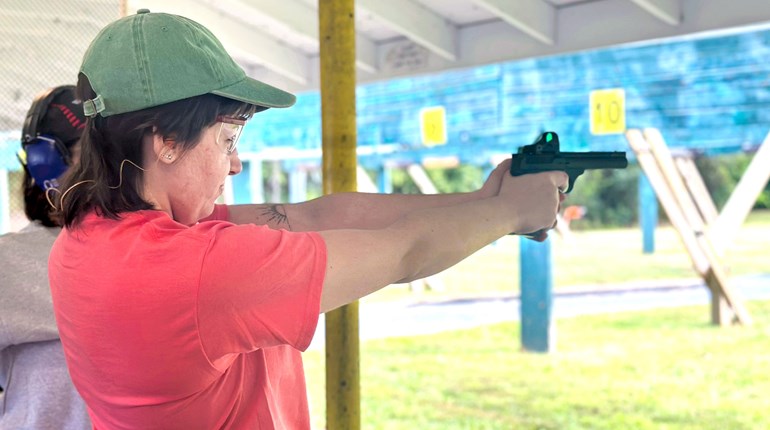
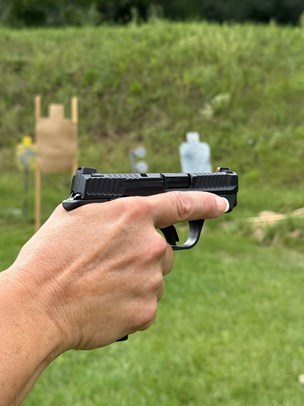
- Learn how to handle the gun safely on a range, being aware that you cannot break the 180 when holding the gun, and that you must keep your finger off the trigger and out of the trigger guard (lay it alongside the frame), until you are on the target and ready to shoot.
- Dry fire practice empty re-holstering, if you are going to use a holster, both to encourage good habits on the range and to practice checking that your gun is clear when you are done shooting. Inexperience and fear of holstering in an on-the-body style of holster are reasons some people carry off-body, in a bag. Learning what you must do will help you decide what method you prefer. But learn it with an empty gun and no ammo anywhere near you!
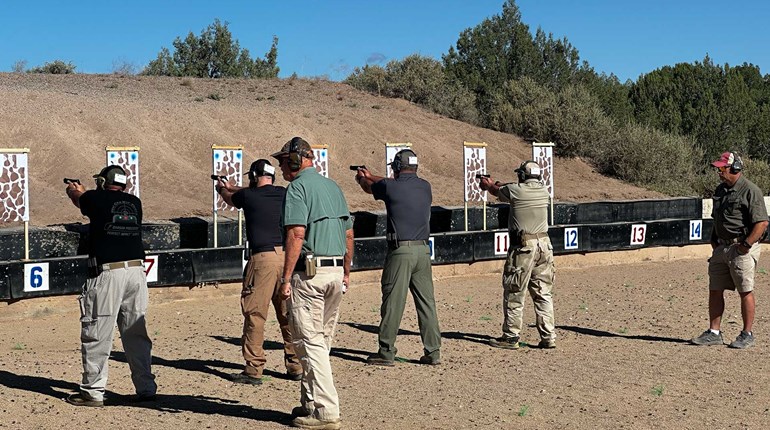
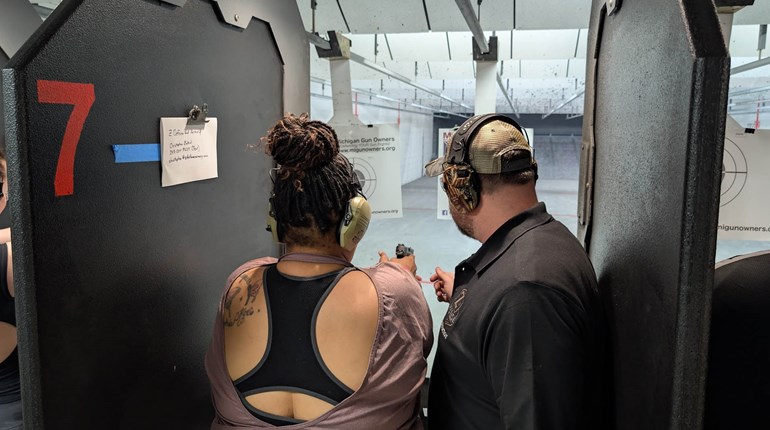
Once you know how to manipulate and use the gun, go take an actual shooting class.
If you can’t take a class right away, at least go to the range and do these 5 things:
- Shoot a group. Shoot groups at 5, 10 and 20 yards.
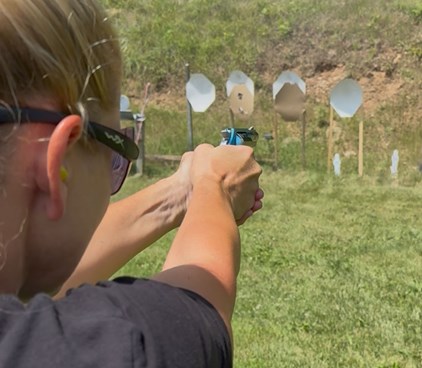
- Shoot for accuracy. Slow down your trigger press and print a dot target or 1 inch square (a target paster or draw a square with a marker) and shoot it at five yards, trying to hit the dot. Understand where you need to aim and make sure your sights / dot are where they should be. This will help you with trigger control.
- Shoot for speed—draw and shoot 6 rounds and keep them all on target at 10 yards. Start slow and without any speed, go through the motions with dry-fire a dozen times before you actually shoot for speed. You will likely only get to pull the trigger in dry-fire with an empty gun one time (depending on make and model of your gun), but you can practice staying on target, with your sights aligned after every “shot.”
- Shoot after drawing from concealment, but only after you are fully capable of a safe draw and getting well-aimed hits on target.
If you can take a class, do not go to just any class! To obtain your concealed carry, you might need a class that has legal requirements that your state mandates, and the instructor’s certifying agency mandates. That’s not what you need to get comfortable with your gun.
Once you’ve done the class for your permit, go take a class from someone who can teach you how to use the gun well. Attending a local ladies night at a range or league night or monthly falling steel match are other good ways to build more range skills and confidence. But by just getting on the range yourself, you can train good habits with just a few minutes and some dedicated practice. Comfort with your gun will give you the ability to focus on skills and technique in a safe way and give you more mental "bandwidth." And if you were ever in need of actually using a concealed carry gun, having training and confidence, so you can keep focused on a threat is invaluable.