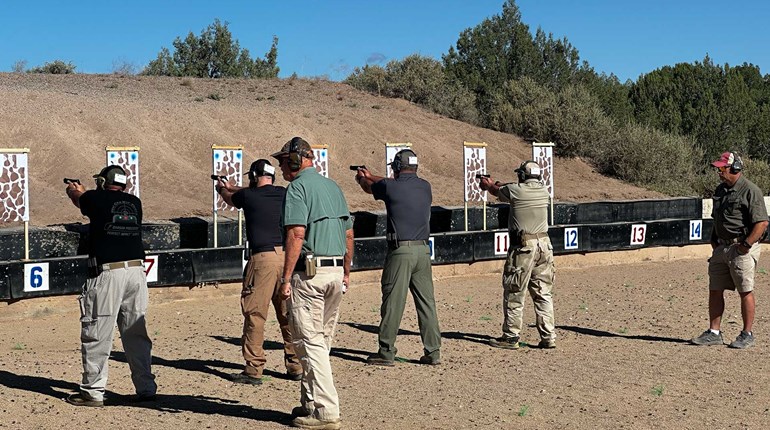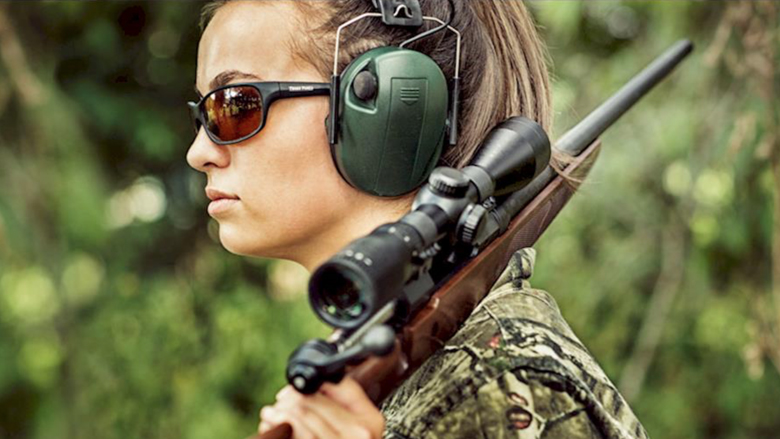

It has been said many times that students come to certified NRA Instructors trusting that they will get the “Gold Standard” in firearms training. This is so true! Regardless of an individual’s background and opinion about other training opportunities from which they have to choose, they consider NRA Certified Instructors the best, setting the industry standard. I have also noticed that individuals who have earned the title of certified NRA Firearms Instructor are very proud of their rating and take their responsibility to properly administer the NRA training courses that they are certified to teach very seriously.
Because NRA Certified Instructors are highly trusted and respected by students, they usually do not settle for anything less. Many are willing to travel long distances to be taught by an NRA Certified Instructor. As an NRA Training Counselor, I have had the pleasure of teaching firearms students from 15 states and one other country.
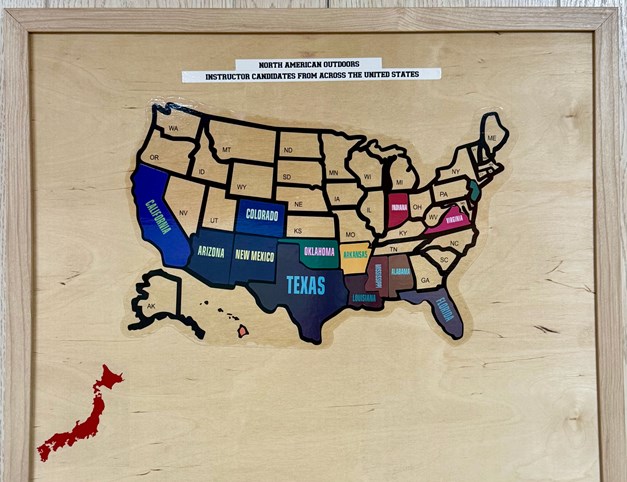
For fun, I created a training aid that hangs in my classroom—a map of all the places from where my students have traveled. The criteria is that the student must currently live in that state, travel to Texas to take my course(s), and then return to their home state or location. In short, the student came to me for the purpose of taking an NRA course, and does not currently have plans to relocate to Texas. My students enjoy looking at the map and it usually leads to discussions about growing their own business.
Most of the students who travel from out of state to take one of my NRA courses came from the “Lower Forty-Eight” states. In April 2026, two women traveled from Hawaii for the NRA Basic Shotgun, Basic Instructor Training (BIT), and NRA Shotgun Instructor Courses.
I have met many interesting ladies who teach NRA courses, and I was certain Sara and Kim were going to be the furthest traveling students I would ever receive. Was I wrong! In August 2026, I received an email from a woman, Sara, inquiring about the NRA Rifle certification. Sara Ramos currently serves as a District Director with Scouting America’s Far East Council. (Formerly known as Boy Scouts of America). I was speechless when she said that she lived in, and would be traveling from, Japan. Japan!!
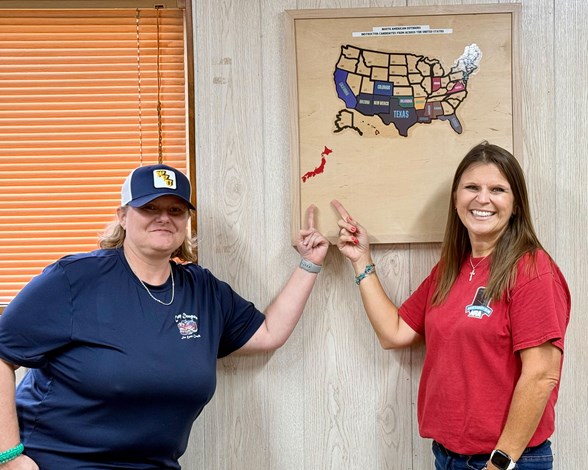
Sara’s journey to this position is probably a little different from most Scouting professionals. Before her full-time position with Scouting America, she served 22 years in the United States Navy as a Hospital Corpsman, retiring as a Chief Petty Officer. That experience gave her a tremendous appreciation for service, leadership, mentorship, and the unique challenges military families face—especially those stationed overseas. Today, Sara has the privilege of continuing to serve many of those same families, just in a different capacity.
The Far East Council is unlike any other Scouting council, serving Scouts and families who are spread across an enormous geographic area throughout the Asia-Pacific region. Her district alone, the Guiding Compass District, includes Scouting communities throughout Okinawa, Singapore, Thailand, Malaysia, India, Vietnam, Cambodia, Indonesia, Nepal, and other locations across Southeast and South Asia. Sara’s Council also serves military communities in Japan and South Korea, as well as American and international families throughout the region.
Being a Scouting professional “over there” means that her "district" isn't something she can simply drive across. Supporting volunteers and Scouts can mean getting on an airplane and traveling thousands of miles to serve. One week she may be working with Scouts in Okinawa, and another trip may take her to Singapore, Thailand, Malaysia, Korea, Tokyo, or the Philippines. Sara said this certainly makes the job challenging but also makes it incredibly rewarding!
Our military families overseas are especially important to Sara. Having spent her own career in the Navy, she understands what it means for families to move frequently, live thousands of miles from extended family, and constantly adapt to new communities. Scouting provides something incredibly valuable for these families: consistency. A child can move from a military installation in the United States to Okinawa, Korea, or another overseas assignment and still find the same Scout Oath and Scout Law, the same advancement program, and a community ready to welcome them.
Why Shooting Sports Matter
Shooting sports have always been one of those Scouting programs that can immediately capture a young person's attention. But what makes the program truly valuable isn't simply learning how to shoot. It is learning responsibility, discipline, patience, respect and—above everything else—safety. And this is one of the main reasons she wanted to become more involved with the shooting sports program in the Far East Council.
Providing shooting sports overseas presents some unique challenges. They operate in multiple countries, on military installations, and under Scouting America requirements, host-nation laws, military installation regulations, and range-specific requirements. They simply cannot assume that because a program is available somewhere in the United States, it can easily be duplicated overseas.
This is why having properly trained and qualified leaders is extremely important. Sara’s goal is to help strengthen her council's shooting sports program by developing qualified leaders and creating more opportunities for Scouts throughout the Far East Council to safely participate in the shooting sports.
Military Families and Firearm Safety
Many of the families who Sara serves live on or around military installations. Safety and accountability are already deeply embedded in military culture. Firearms are not treated casually. There are procedures, rules, qualifications, supervision, and an expectation that safety standards are followed every single time a firearm is handled. That mindset translates extremely well into the shooting sports program in Scouting.
Anytime we introduce young people to the shooting sports, we have an opportunity to establish those safe habits from the very beginning. Before they ever think about hitting a target, they learn how to safely handle a firearm, follow range commands, understand their responsibilities, and respect what they are handling. Those lessons extend far beyond the range. For Sara, a successful shooting sports program isn't measured by how many bullseyes a Scout shoots. Rather, it is measured by whether that Scout walks away understanding responsibility and safety better than when they arrived.
Why Sara Found the NRA Training
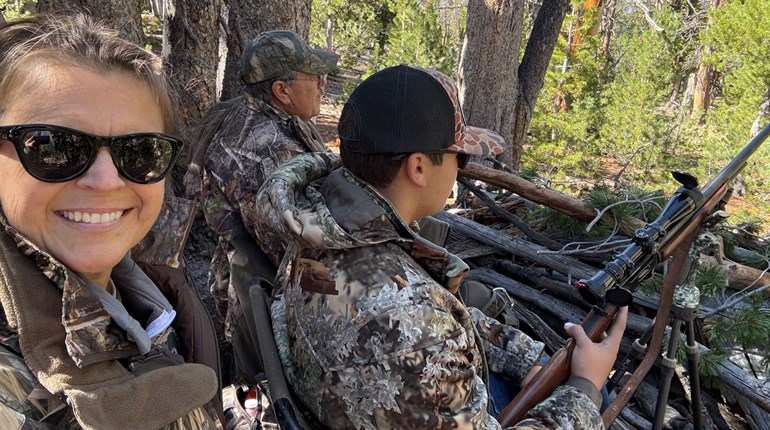
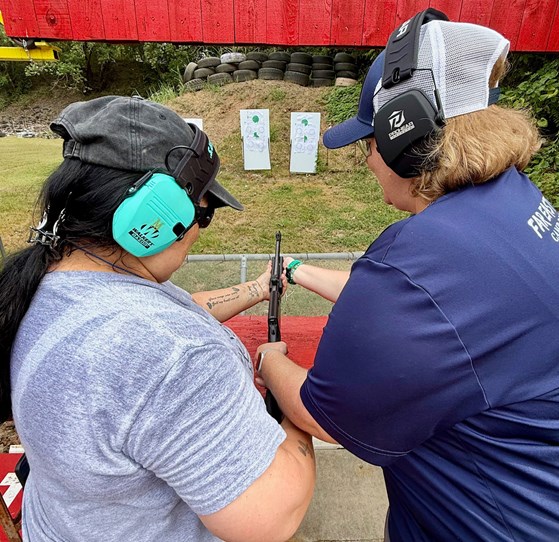
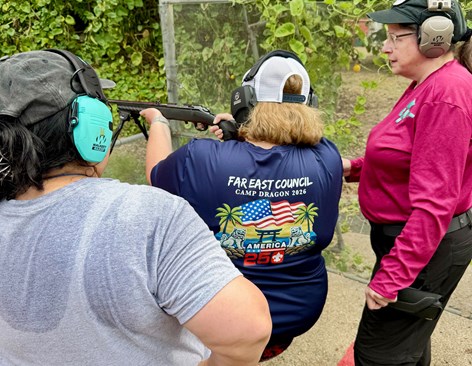
That desire to expand safe, high-quality shooting sports opportunities throughout the Far East Council is ultimately what brought Sara to the NRA Rifle training. She did not want to simply advocate for the shooting sports from an administrative position. Rather, she wanted the knowledge, training, and qualifications necessary to better understand the program herself and help make it successful first-hand.
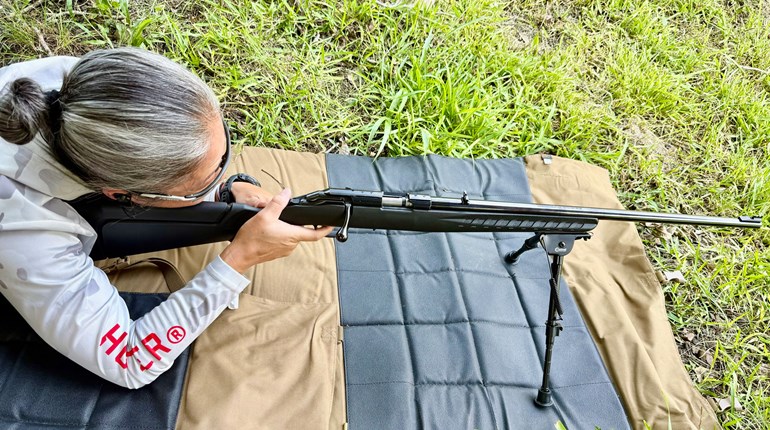
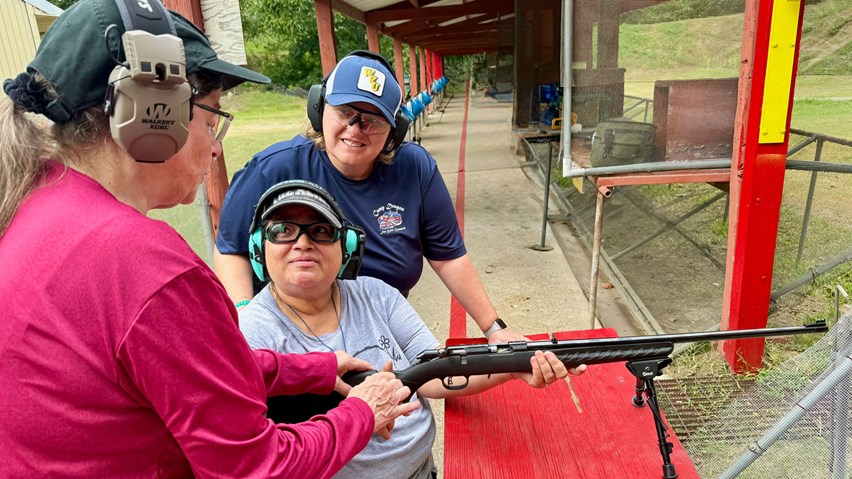
Sara shared that her training with me in September 2026 was an excellent experience. She particularly appreciated the emphasis on fundamentals and the methodical approach to safety and instruction. The course was not simply about demonstrating that you know how to handle or shoot a rifle. It was about learning how to become a better instructor to effectively teach those skills correctly and consistently to someone else, and that distinction is incredibly important.
Sara said as a Scouting professional, she spends a significant amount of time supporting and developing volunteers. Taking this course reminded her that being knowledgeable about something and being able to effectively teach it are two very different skills.
Sara also said she thoroughly enjoyed the other students who were also taking the courses. The environment was welcoming, professional and fun. She walked away not only with additional qualifications but also with ideas and enthusiasm that she can bring back to her council.
Bringing It Back to the Far East
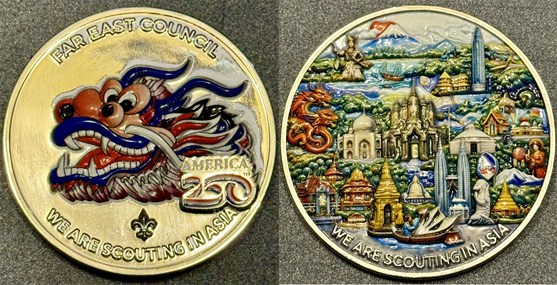
From Sara: “Now comes the exciting part—taking what I learned back across the Pacific. I want to use this training to help build a sustainable shooting sports program within the Far East Council. That means more than simply conducting a range at one event. It means identifying and training qualified adults, ensuring our programs meet Scouting America's safety standards, and creating opportunities that can continue long after any one person moves or changes positions.
That sustainability is particularly important in military communities because people are constantly transferring. Every few years, some of our most experienced volunteers receive orders and move somewhere else. Developing the next generation of trained volunteers is essential.
Ultimately, everything comes back to providing opportunities for young people. If we can give a Scout living thousands of miles from the United States an opportunity to safely pick up a BB gun or rifle for the first time, learn from a properly trained instructor, gain confidence, hit that first target, and walk away understanding the responsibility that comes with the shooting sports, then we have accomplished something worthwhile.
I spent 22 years serving military families as a member of the United States Navy. Today, I am fortunate enough to continue serving many of those families through Scouting America. I may spend a lot more time on airplanes these days, but I wouldn't trade the opportunity to support our Scouts and volunteers across the Far East Council for anything!”
—Heidi Lyn Rao