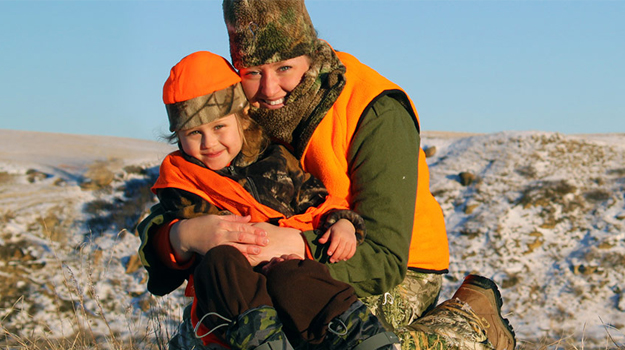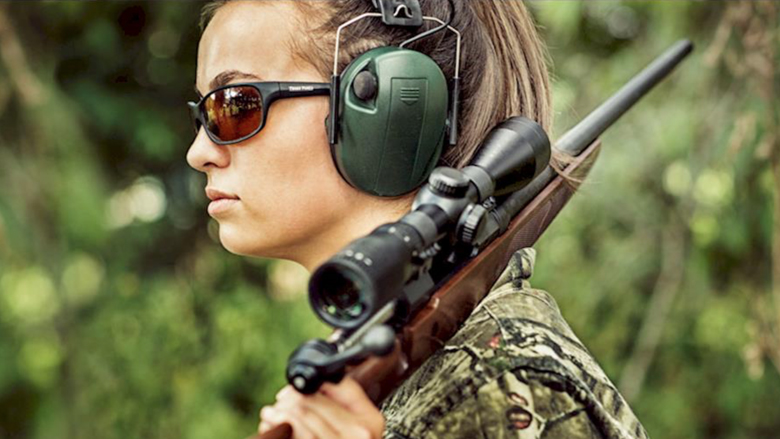

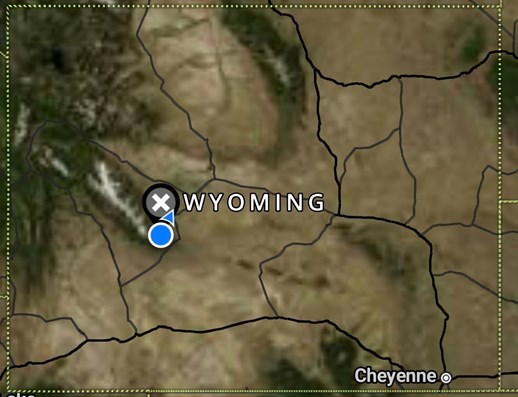
September is fall black bear season in Wyoming, and the urge hit us. So I, my husband and Luke headed to Wyoming for Luke's first bear hunt. Fall weather in Wyoming is a bit schizophrenic. It can be hot or cold; humid while it rains or snows; or a bear season could open in the middle of a drought. These weather conditions can all be experienced in one day—before noon! It is almost like being back home in Texas (without the snow).
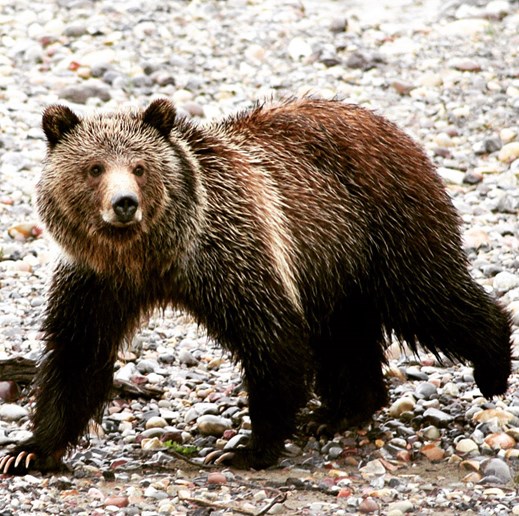
Grizzly bear/photo by author
Know Your Bears
Wyoming is one of the few states that is home to the inland brown bears known as “Grizzly Bears.” It is important to know the difference between black bears and brown bears because grizzlies in the lower 48 states are classified as a threatened species under the Endangered Species Act and carry penalties for violating, including criminal fines up to $5,000, imprisonment up to one year, civil penalties from $12,000 to $25,000, and forfeiture of any equipment, firearms and vehicles used in the commission of the violation
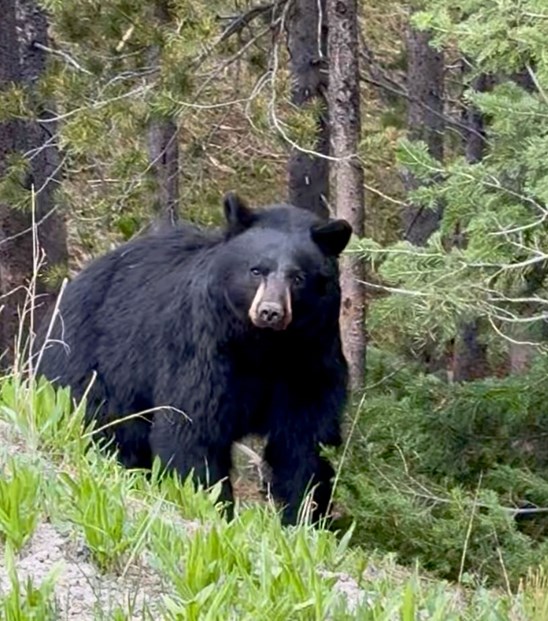
Black bear/photo by author
.
Brown bears are the most prevalent bruin in the world, whereas black bears are found in North America. Brown bear native ranges include Alaska, most of Canada, and the western half of the of the United States down through Texas and Northern Mexico. Historic ranges of the black bear include almost all North America and North Central America. The current range of brown bears are limited to Alaska, Western Canada, and the Northwest United States to include Wyoming, Montana, Idaho, Oregon and Washington.
There are approximately 45 to 50 grizzly bear attacks on humans per year in North America, with an average of five deaths. In contrast, there are approximately 12 black bear attacks on humans per year in North America with an average of two deaths.
Pre-Hunt Prep
To prepare for the hunt, we had to decide what gun and caliber would be the most effective for a quick, clean and ethical kill. Using a caliber too small increases the chance of wounding loss, so choosing the proper caliber is very important.
Sometimes, choosing the right caliber is more important than your comfort. In other words, if you choose to pursue large game animals, it is your responsibility to use the most effective cartridge, even if you are recoil sensitive. Luckily for Luke, he is not sensitive to recoil, so we had many options.
Black bears can be taken with many smaller calibers, but anything .30 caliber or above is recommended. Black bears in Wyoming can exceed 400 lbs. although it is more common to encounter animals between 200 to 300 lbs. We decided it would be best to prepare for bears on the larger end to ensure a quick, clean and ethical kill.
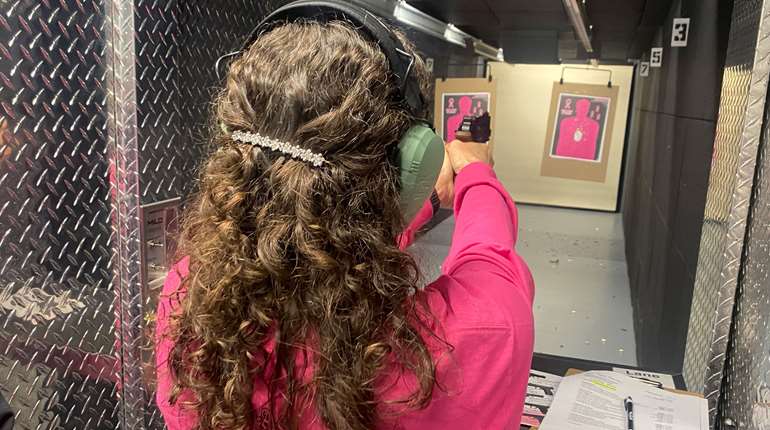
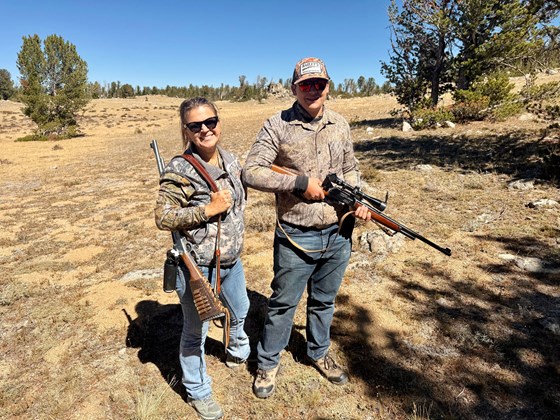
We went to the range several times over two months to see which caliber he would take on the hunt. Luke shot three different rifles that would be appropriate for black bear hunting—a Winchester 70 bolt-action chambered in .375 H&H; a Ruger No. 1 falling block chambered in .400 Jeffery; and a Marlin lever-action chambered in .45-70 Govt. In the end he settled on the Marlin.
The Hunt
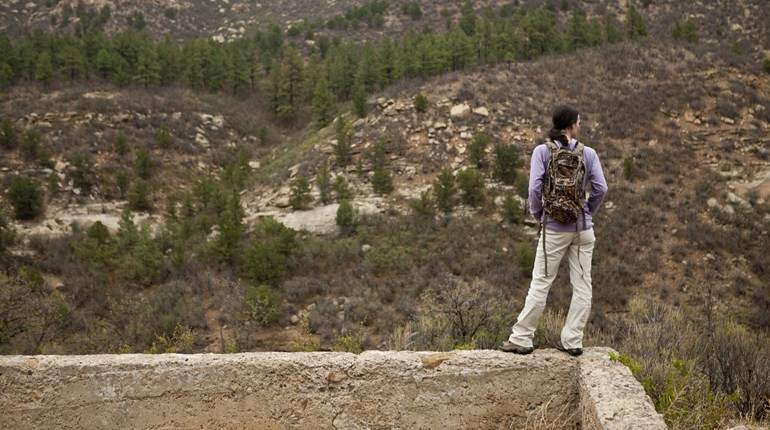
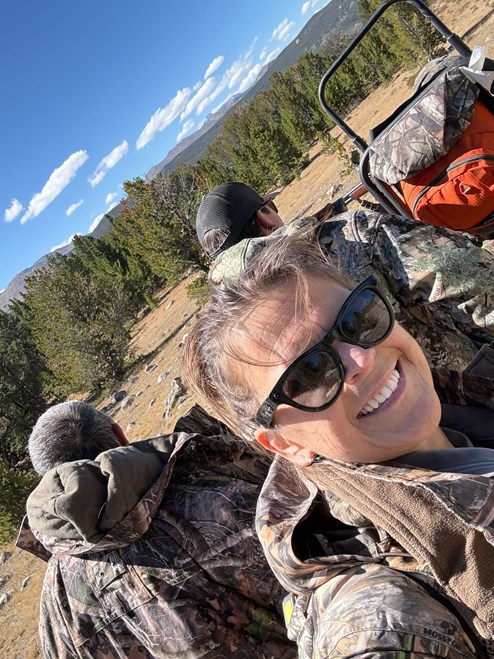
We would be hunting in the Wind River Mountain Range at 10,000 feet. We started up the mountain, being vigilant of any grizzly bears that might be present. Hikers and campers are advised to place “bear bells” on backpacks and make noise while in bear country to protect against bear attacks. We were trying our best to remain silent while making our way through the woods because we, on the contrary, did not want to let the bears know we were there.
We spent four days in silence for approximately 10 hours each day in a hide less than 50 yards from the bait. Not only did we have to sit in silence, but we also had to remain relatively motionless, moving only our eyes, scanning the forest for any patch of fur that might be slinking across the undergrowth. During these four days, we were visited by mule deer, elk cows, grouse, squirrels, various songbirds, woodpeckers, and one feisty badger that almost climbed in the hide with us.
Our first day in the hide produced no bears, so we hiked out, several miles in grizzly country after sundown, in the dark. The first bear showed up on the second night. It was a very large and skittish specimen. This bear did not hang around long and left as quickly and silently as it appeared. The whole encounter lasted about 10 seconds. The third day was similar to the first, producing no bears.
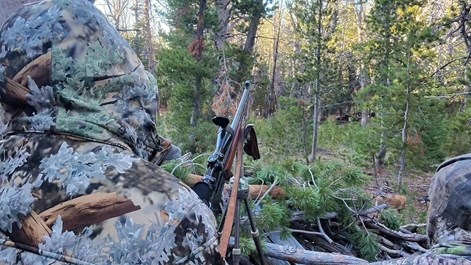
Each day when we arrived at the bait site, the large bait bucket was overturned and empty. We quickly and quietly refilled the bucket and returned to our hide. As we inspected the area daily, we found plenty of fresh bear sign. We were starting to believe that the bears were only visiting the site under the cover of darkness, after legal shooting hours have ended.
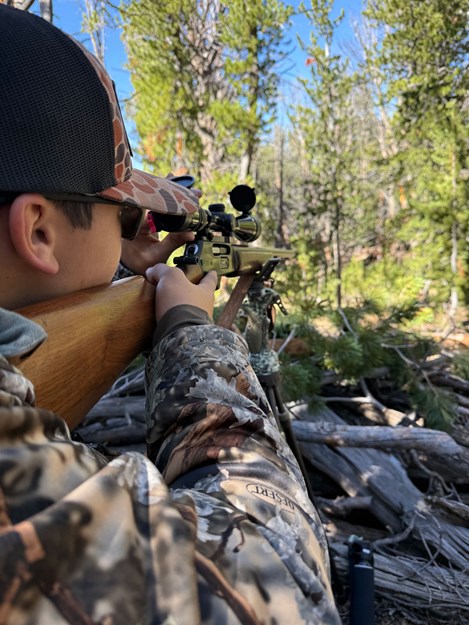
The fourth day and last day of our hunt started out like the previous three—empty bait bucket and plenty of bear sign. As the hours ticked away, Luke’s hope of taking his first bear began to fade. As the sun dipped over the horizon, legal shooting hours were fading as fast as the day. Then, like a scene out of a movie, a large black bear appeared with approximately six minutes of legal shooting hours left.
Luke was motionless as he watched the bear, waiting for a clear and clean shot. As the moments ticked away, the bear finally emerged in a clearing. Luke slowly and deliberately squeezed the trigger; the bear dropped and rolled over. We waited a short time then slowly left the hide to claim the trophy he worked so hard for. When we got to the spot the bear dropped, nothing! He was gone. No bear, no blood, nothing!
It turned out Luke had done what some of the most famous hunters in the world experienced. He apparently did not see a branch that rested between him and the bear. The bullet was deflected and it grazed the bear’s spine, temporarily stunning the bruin.
We searched the area for over an hour looking for the bear or at least some blood. Without finding either, we decided to take up the search early the next morning. With the help of some friends, we searched the area for more than five hours without any luck. It was a long hike out of the mountains and an even longer drive back home to Texas.
After the Hunt
This turned out to be one of Luke’s favorite hunts and one that he will never forget. The lessons he will take away from this hunt will be far more valuable than any amount of game taken. Months of preparation, scaling mountains, hours of sitting in silence, and at times, fear, all to end in a bullet being deflected by a twig!
Some of the most memorable hunts end with nothing tangible to show for all the hard work that was dedicated to having a successful hunt. The disappointment that Luke is experiencing now will end up as memories that, when he is older, would not trade for a dozen bears. Spending time with family and friends all focused on one thing—Luke’s bear hunt. There is no doubt that this experience will make him a better hunter overall.
Some of the best hunting stories by some of the most famous hunters in history end with an empty game bag. Elmer Kieth, Jack O’Connor, and other world-renowned hunters have experienced defeat pursuing some of the most elusive and/or dangerous game animals to be encountered in the wild. There is one thing that Luke has in common with these hunters—with each hunt that ends without success, they took away knowledge that made them a better and more ethical hunter.
The real value of any hunt is carried within, and without the need to prove anything to anyone else. The real trophy is the memory, not the physical “souvenir.” One of my favorite quotes from Robert Ruark sums this hunt up the best: “Nothing is any good unless you work for it, and if the work is hard enough, you don’t have to possess the trophy to own it.”
—Heidi Lyn Rao