
As a firearms instructor, getting a new shooter “on target” can be one of the toughest challenges. The quicker you can get them on target, the faster you can start the actual lesson. According to the NRA Education & Training Department, the goal of an NRA Pistol Instructor is “To teach the Basic Knowledge, Skills, and Attitude for owning and operating a Pistol Safely.”
Getting your student on target is more than having them hit the paper. It means that he or she is demonstrating the ability to shoot a grouping somewhere on the paper. This grouping does not have to be tight or hit at a sub-MOA. It means that there is an identifiable group of shots. Tightening up or moving a grouping is relatively easy compared to working with someone who has a “shotgun blast” pattern of shots all over the target.
There are three tools and techniques I use whenever I train a new shooter in the safe and proper use of a handgun. I start every student, new and experienced alike, on a .22 LR while maintaining a close presence as they shoot a blank target.
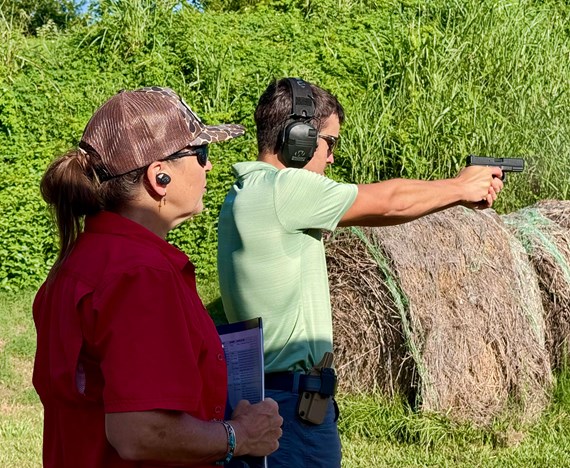
The Mighty .22LR
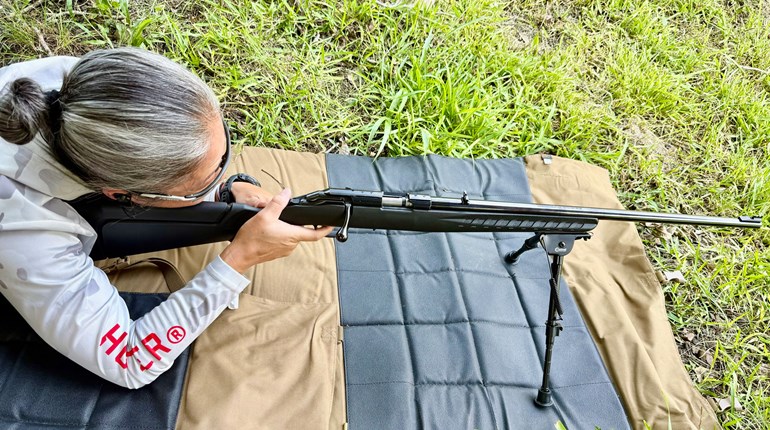
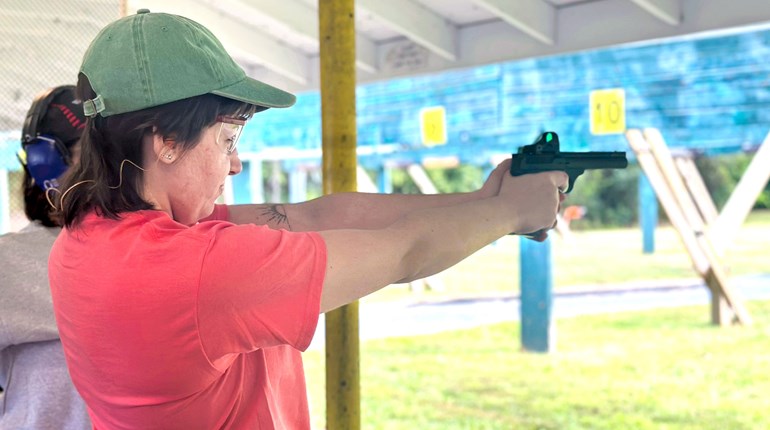
The .22 LR is one of the best tools when it comes to training. It is not just a tool for new gun owners but also a great firearm for experienced shooters to improve their skills and marksmanship. A .22 LR allows the shooter to concentrate and refine their skills while adhering to the 5 Fundamentals of Pistol Shooting – Aiming, Breath Control, Hold Control, Trigger Control and Follow-Through.
One of the benefits of training with a .22 LR is the low recoil. This eliminates one of the biggest factors in sub-par marksmanship. This allows for the shooter, new or experienced, to make any corrections to their shooting by eliminating recoil. That way when the shooter transitions back to their primary gun, continuing the correct techniques is easier.
The benefit of the .22 LR does not stop at low recoil. The rimfire .22LR is also much quieter than center-fire cartridges (adequate hearing and eye protection is still required). This means that most new shooters quickly lose the fear and apprehension when it comes to shooting when they start with a .22 LR. When center-fire cartridges are then introduced, most new shooters do not bring their old fears with them when they transition to the larger calibers.
The lack of recoil of a .22 LR also makes it easier to shoot longer before fatigue sets in. That means that your student will get more practice, instruction, and time behind the gun to develop the muscle memory to become proficient. As the saying goes, “Practice does not make Perfect, but Perfect Practice makes Perfect.”
Get Close
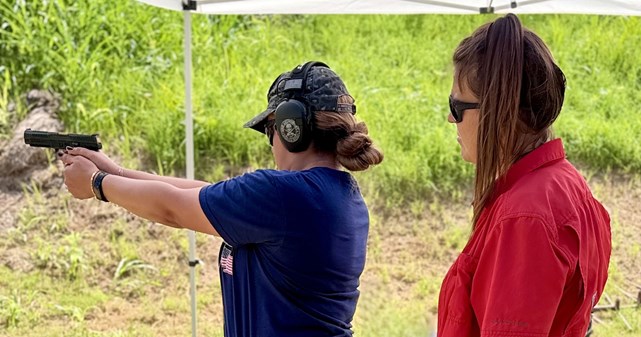
There are two things that a new shooter needs regarding being close. The first thing that an instructor needs to do is be close to his or her student. Many factors make a new shooter nervous. This can be recoil, noise, fear of the unknown, or a combination of any of these factors. The only thing they are not nervous about is the instructor or they would never have sought out training.
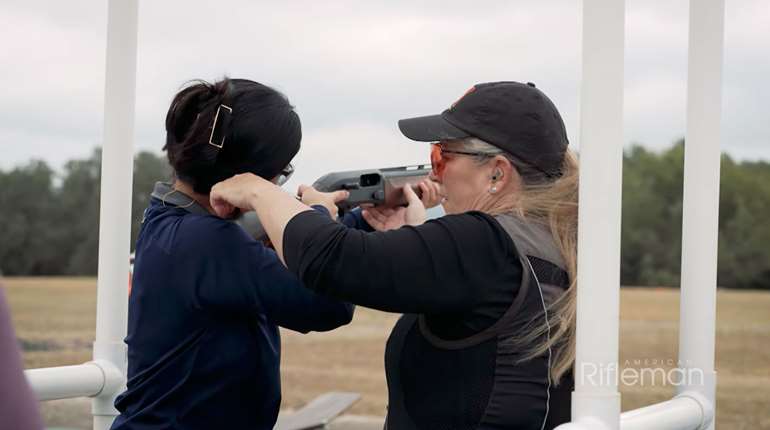
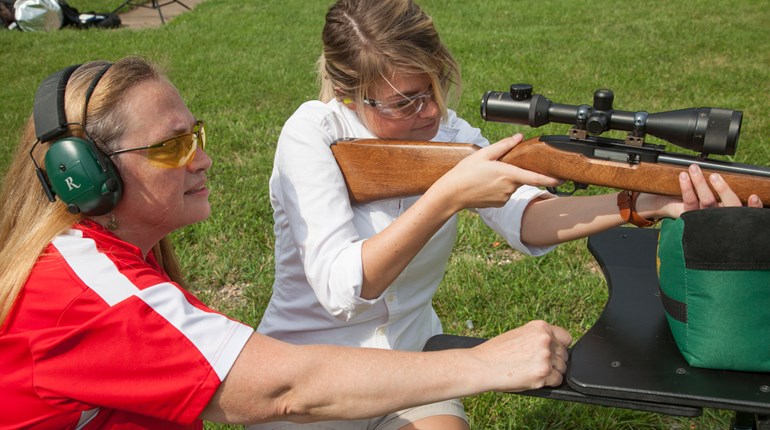
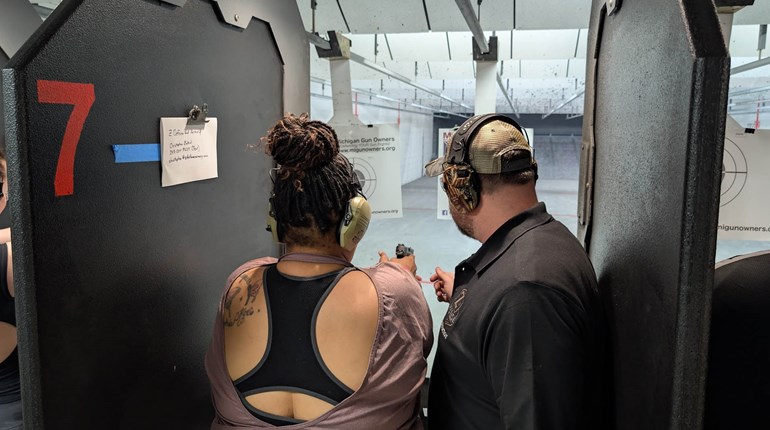
An instructor can do a lot to calm the nerves of their student, first and foremost is getting close to them. The closer an instructor can get without interfering with the shooter, the better. It lets the shooter know that if anything goes wrong, their instructor can step in and take control of the situation.
Additionally, the closer you are to your student, the easier it is to talk to him or her in a calm and lower voice than if you were standing six feet away. When the instructor is close, the student also does not have to strain, taking their concentration off the fundamentals of shooting, to hear or see you. Clear and concise instruction helps the new student maintain his or her calmness.
The second thing that a new shooter needs is to be close to the target. This contributes to success, which in turn provides comfort. You cannot be successful if you are discouraged. Even putting just a single hole in a piece of paper can mean the difference between success and failure.
As long as your new shooter is hitting the target, no matter where, he or she is motivated to improve. Unfortunately for many new shooters, an instructor starts their student too far away from the target and the result is a frustrated shooter. Frustrated shooters are the ones who give up on shooting thinking it is just not for them.
Blank Target
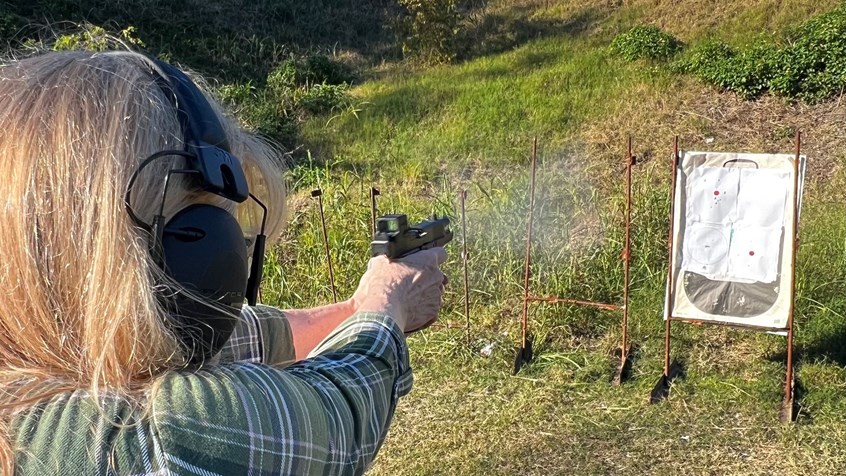
Having my student shoot at a blank target is one of my favorite techniques when getting a student on target. The “blank target” is not entirely blank. The idea is to take a blank sheet of paper or turn a target over and use either a pen or a “dot” sticker, place a small point of aim on it. The point of aim can be a dot, “X,” or any other small mark.
The idea is to eliminate as many distractions as you can. A traditional target with multiple rings or even one with one large ring can be very intimidating to a new shooter. This is because it looks like what it is—a target. A target triggers something in everyone, new and experienced alike, to try to achieve as high of a score as possible. It almost turns into a competition within themselves.
A blank target allows the new shooter to relax and concentrate on your instruction and/or the fundamentals of shooting. You can almost see your student start to calm down when you put up a simple piece of paper with a point of aim on it. If you are having a hard time in achieving a shot grouping with a student, with this technique their shooting suddenly improves.
A blank target can show your new shooter that producing a shot grouping is more important than scoring target points at this stage of learning. Additionally, because a grouping shows that the shooter is doing the same thing with every shot, it helps the student understand the importance of consistency when shooting.
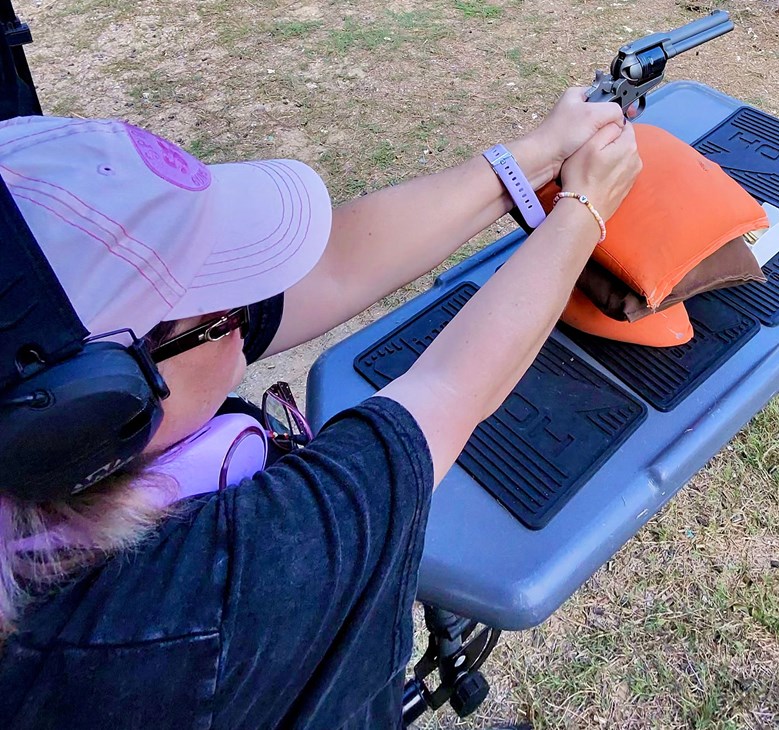
It is important to recognize that every shooter is unique. That means that we all learn differently, have different strengths, different weaknesses, and different experiences. What that means to you, the instructor, is to have as many “tools” in your toolbox as possible. What may not work for you might work for someone else; what works for some may not work for others.
As an instructor you should always train “to” the individual, not to the masses. It is your job to get them on target as quickly as you can so that you can find the right combination of techniques to benefit your student. Once you find that combination, which may be different from student to student, you can next start working on improving their shot grouping. The end justifies the means and if that goal is success, then train for success. As an instructor, we should ALWAYS strive to train for success.