
My many years as an NRA Training Counselor has afforded me the opportunity to interact with numerous NRA Certified Firearms Instructors as well as non-NRA trainers. I have learned that there are two types of instructors. The first instructor runs his or her class as a one-way interactive course, meaning the instructor expects the students to agree with everything he or she says.
The second instructor runs his or her class as a two-way interactive course, meaning the instructor values the opinions of the students and is open to learning from those whom he or she is teaching. This type of instructor does not think he or she knows everything, and this normally results in great classroom conversations.
There are three important things that I have learned from my students: how unique the Second Amendment is; how to be a better communicator; and how to be a better listener.
How Unique the Second Amendment Is
The Second Amendment is arguably the most important amendment in the U.S. Constitution. After all, it has been argued that without the Second Amendment, the other amendments are just words on a piece of parchment. Some who were born in the United States take this cherished right for granted, believing it will always be there for us. In reality, all of our constitutional rights are only as strong as those who it was meant to protect.
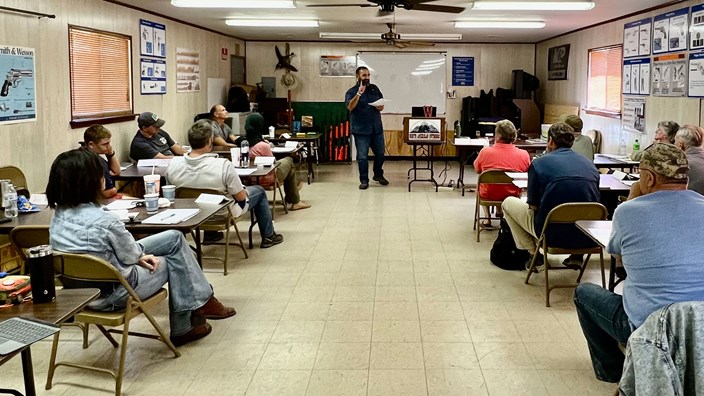
When we take something for granted, we often need someone or something to re-set us. It is usually the foreign-born students taking my classes that inadvertently re-set the awareness for Americans by birth. Each presentation delivered during an NRA class features a slide that reemphasizes the uniqueness of the Second Amendment. The slide is titled, “A Gun Owner’s Responsibility.” The first sentence reads, “Americans enjoy a Right that citizens of many other countries do not—the Right to own firearms.”
Many of these students came from countries where the government took away citizens’ guns and the ability to own them. These students proceed to tell the other students what it is like living in a country where you cannot own firearms. Some of their stories will leave you in a state of disbelief.
They continue by reminding us that we live in the United States, the only country in the world where just about anyone can walk into a store and purchase almost any firearm of choice. Then they drop the hammer and caution, “But you let politicians chip away at your Rights!” These students remind us that we should be single-issue voters when it comes to the Second Amendment.
Note: Regarding foreign-born students in class, the current NRA Policy for all NRA Firearms training courses:
“Under federal law, non-U.S. citizens are prohibited from participating in this course. Only non-U.S. citizens who are: (1) lawful permanent residents (green card holders), (2) refugees, or (3) individuals that have been granted asylum may participate in this course.”
How To Be a Better Communicator
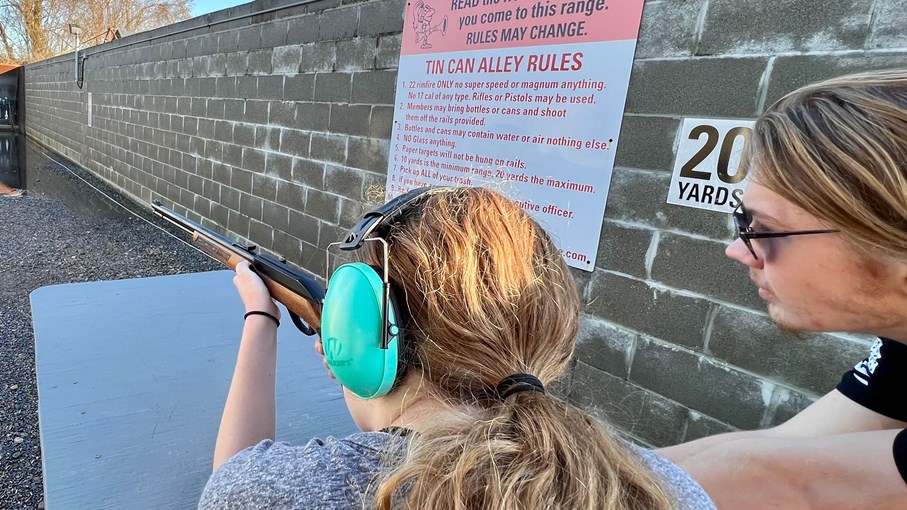
Communication is the key to being an effective instructor. This is true in any discipline, and firearms training is no different. Your student must be able to understand what you are asking them to do. This is not only for success but more importantly, for safety.
Teaching is all about communication. We have all had “bad” teachers in school or professors in college. That does not mean that the instructor did not know the topic, it only means that he or she may not have been a good communicator. After all, you can be the foremost expert on a subject, but if you cannot clearly pass the information on to others, that could cause issues in the learning process.
We are taught in NRA Instructor courses the importance of evaluations. We evaluate our students on how well they perform on the range, in the classroom and on the final exam. This lets the instructor know the progress of their students. Good instructors also look at these forms of evaluations as an indicator on their own communication skills.
If an instructor has one or more students who are having difficulty in an area, it could be the instructor’s communication skills. This feedback lets the instructor reevaluate the way they teach that portion of the lesson. By doing an internal evaluation an instructor can modify or change up the method or delivery of information that benefits the student. This separates a good instructor from a not-so-good instructor.
How To Be a Better Listener
Being a good listener is probably one of the most important qualities of a firearms instructor. I was always told that we have two ears and one mouth—that means that you should be listening twice as much as you speak. Additionally, there is a right way of listening and a wrong way.
The difference between the right way and wrong way of listening is not talking and still not hearing what is being said, and really paying attention to what your student is saying. For example, think of that person in your life who is only interested in what he or she has to say, and enjoys hearing themselves speak! This individual rarely lets you into the conversation and when they do, you can tell they are not paying attention to what you are saying. You can also see that while you are talking, they are not listening to you but rather thinking about what they are going to say next.
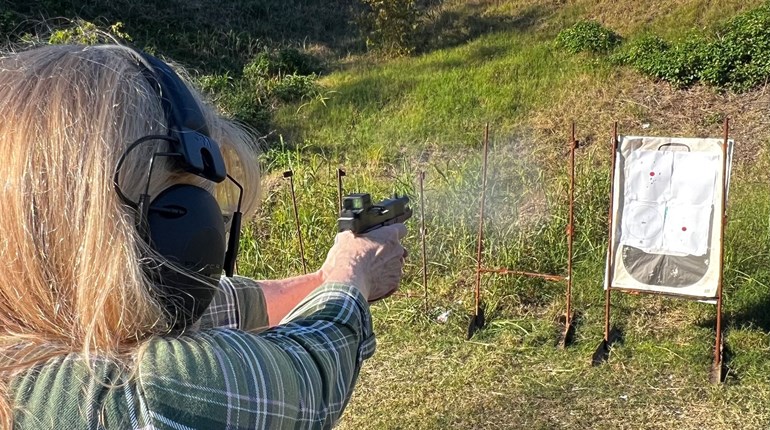
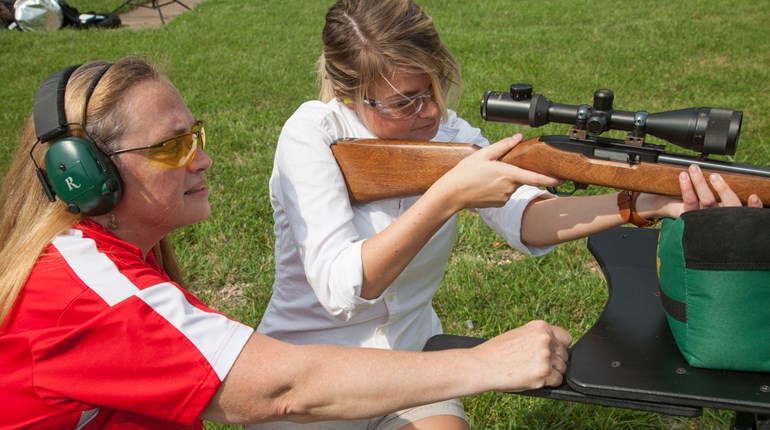
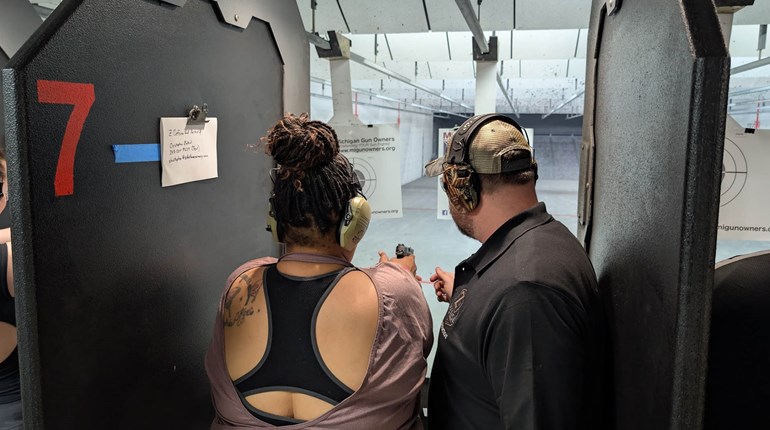
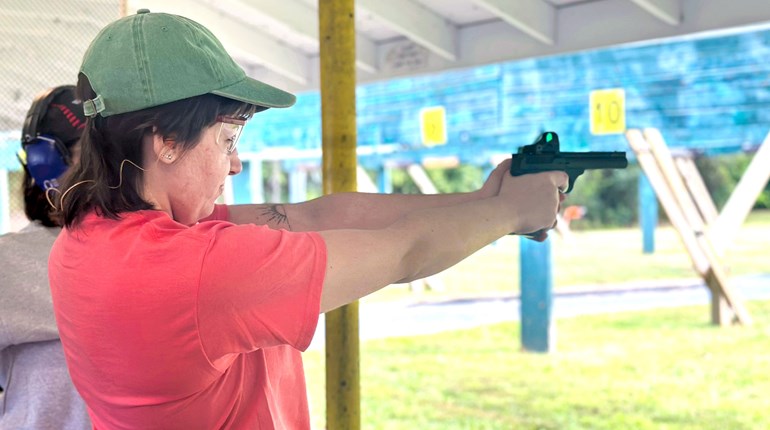
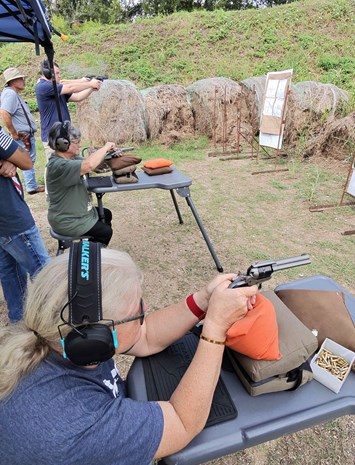
For example, by listening to your student when on the range you can learn what feels good, what hurts, what is comfortable, and what they like or don’t like when shooting. The instructor who really hears their student can modify or adjust the 5 Fundamentals of Shooting (aiming, breath control, hold control, trigger control, and follow through) to fit their student. The instructor, who does not hear what their student is saying, is usually very rigid and sticks to the shooting fundamentals as written. The result is a student who was not properly trained and in the worst-case scenario, a student who gives up on shooting.
Listening to your student includes observing them and their movements. Listening to your student’s body and the way they move can tell you a lot. In other words, listen to what their body is trying to tell you. For example, many times, someone in his or her late 60s cannot perform the same techniques and/or as smoothly as people in their 20s. The last thing you want to do is hurt someone at the range by insisting that they perform tasks that they cannot physically do safely.
By listening to your student, he or she will achieve success at the range. Instructors should match the training to the student instead of making the student perform task that he or she cannot physically do or techniques that they are not yet ready for.
The most important thing about listening is that you just might learn something. Everyone has different experiences, backgrounds, and norms they were raised on. By listening to your students, you could learn different techniques while following the 5 Fundamentals of Shooting. You could learn a better way of saying something that your student finds easier to understand.
The NRA Education and Training Department teaches that every firearms instructor should strive to grow and improve their classes. The best way an instructor can achieve this is to look at him or herself as a “forever student.” Remember, the best instructor never stops being a student!