
When you think of hunting dogs, you probably think of the species we see most often in the U.S. That includes Labs, Chessies and maybe goldens for retrieving, German shorthairs and English setters for finding and pointing, beagles for baying, cockers and English springers for flushing, and coonhounds for treeing. But there’s a whole other world of hunting breeds out there that are excellent at what they do, many of which you might have never even heard of. Check out these five lesser-known hunting dogs.
Pudelpointer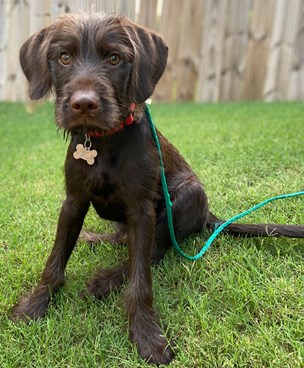
The pudelpointer is what hunters call a “versatile hunting dog,” in that it’s more of a Jack-of-all-trades than a specialist. The breed developed in Germany in the 1880s and was created by crossing an English pointer with a poodle (“pudel” is German for poodle). Pudelpointers weigh between 44 and 66 pounds and are known to be easy to train and calmer than some other breeds, with a high prey drive—and they’re low-shedding. You’ll recognize them by their distinctive beard, mustache and eyebrows, which sort of make them look like adorably distinguished old-man Muppets.
As a versatile breed, pudelpointers can be trained to hunt just about any bird or small game, from pheasants and quail to doves and ducks to squirrels and rabbits. You can train a pudelpointer to flush, point, track, and retrieve, and they even make great shed-hunting dogs.
Small Münsterländer
Also called the kleine Münsterländer, this is another versatile breed, from the Münster region of Germany (“Kleine” is German for “small”). They’re medium sized, 38 to 58 pounds, and weirdly, not related to the Large Münsterländer breed. They are affectionate family dogs and are good with children, and they’re known to be friendly, trainable, intelligent problem-solvers. Just remember—intelligence swings both ways, and you don’t want an intelligent dog to get bored, or it will find ways to entertain itself that you might not care for.
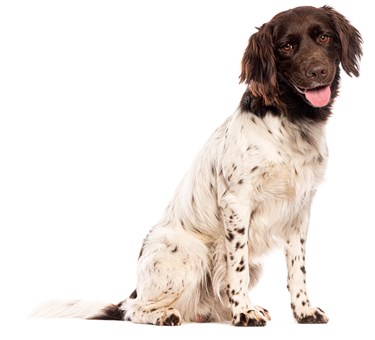
Their coats are white with brown patches, and some have tan markings or ticking, with a water-repellant coat that sheds seasonally.
Small Münsterländers can point, retrieve and track, and you can even train them as blood-tracking dogs for big game. They tend to like the water, so they’re great for retrieving ducks, but they also excel in thick brush, which makes them handy for upland birds, rabbits and foxes.
Catahoula Leopard Dog
Catahoulas are the state dog of Louisiana, and the breed lineage started in the 1700s with French settlers. There’s a wide variety of sizes—50 to 95 pounds—and colors, with just about any coat color and eye color combination imaginable. They’re known to be loyal and territorial, which makes them pretty good guard dogs for the family.
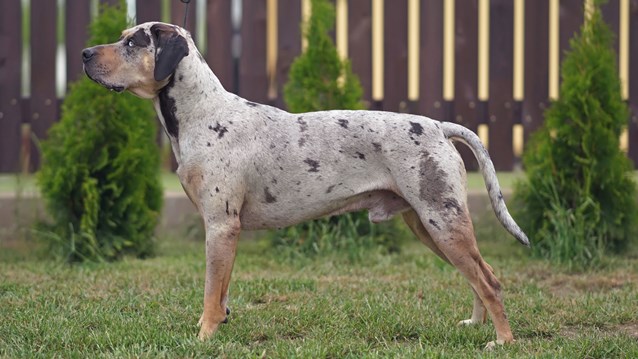
Though they’re often classed with the versatile breeds, Catahoulas are best at baying, treeing and catching. They’re great hog hunters, as they will corner a hog and catch or hold it for the hunter, often baying to let the hunter know where the game can be found. They’ll also track and tree squirrels, racoons and even mountain lions!
Feist
Feists are more of a group than a specific breed, although there are two feists recognized by the UKC: mountain feists and American feists. There are a ton of named varieties with different characteristics, but basically, feists are relatively small dogs—15 to 30 pounds—and are descended from a whole long list of terriers all mixed together. They have short hair and long legs, and they come in almost any color, with any length tail from long to bobbed.
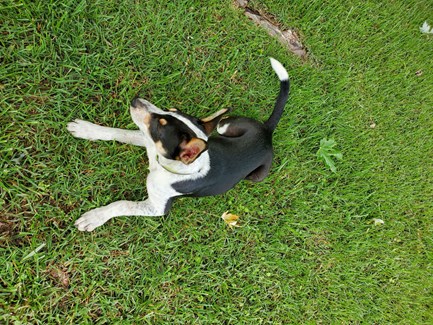
Feists are specialists—they hunt mostly squirrels, but they’re also good ratters if you have a barn with a mouse problem. They scent a squirrel and give chase, but they don’t usually catch the squirrel. Rather, they tree it and wait for the hunter to come shoot it. They’ll bark when they get one treed, but they don’t generally scream with excitement the whole time they’re running like some other breeds.
Feists are fast. I have spent a few days chasing one through the woods hunting squirrels, and while it’s an absolute blast, it’s also an intense workout—these little balls of energy will cross hill and dale in pursuit of their prey. They’re generally loyal and playful, which makes them good family dogs, but they do need training and exercise to manage their high prey drive.
Dogo Argentino
As you might have guessed by the name, the dogo Argentino originated in Argentina, bred beginning in the early 20thcentury to hunt wild hogs, peccaries and pumas. They’re gaining some traction in the U.S. as hog-hunting dogs in places like Texas. They’re intelligent, fearless and aggressive with game, and they work well in packs.
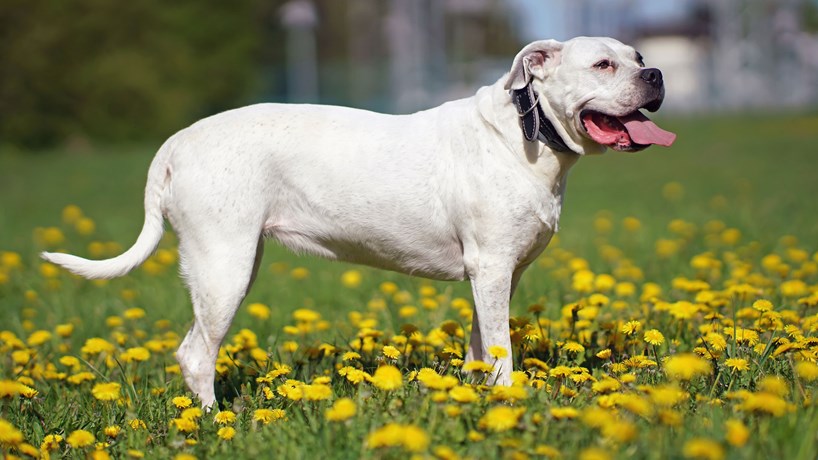
The dogo Argentino is extremely powerful, weighing as much as 100 pounds, with twice the bite force of a German shepherd or American pitbull terrier. They are generally all-white, which makes them more visible in brush and easily distinguished from the game they’re chasing. Some have a few dark spots. They have thick, muscular necks and an athletic build, with a great sense of smell and deep lung capacity—all of which makes them great catch dogs. Often hunting in packs, the dogo Argentino will track, chase and catch large prey like wild hogs, literally pinning a hog down until the hunter arrives.
The American Kennel Club lists them as highly affectionate and moderately good with children, but they’re not necessarily a family dog. The dogo Argentino’s size, strength, drive, strong will and guarding instincts make them best suited to well-experienced owners who can give them the exercise and enrichment they need.
In Summary
As a general word of caution, do your research before getting any breed, but particularly hunting breeds. These breeds, like other hunting and working breeds, need a job—most of the time, they’ll be bored and listless and potentially destructive if you don’t give them something productive to do, along with plenty of exercise. At the same time, not all dogs come from hunting lines, either. You can find Labs that are bred to hunt and Labs that are bred for other characteristics, like being ideal family dogs, and the same is true for most other hunting breeds as well. Even in the non-hunting lines, breed instincts are strong—a Lab, no matter its bloodline, is always going to love water and retrieving things. A feist is always going to want to chase vermin and a pudelpointer will always have a nose for birds and game.