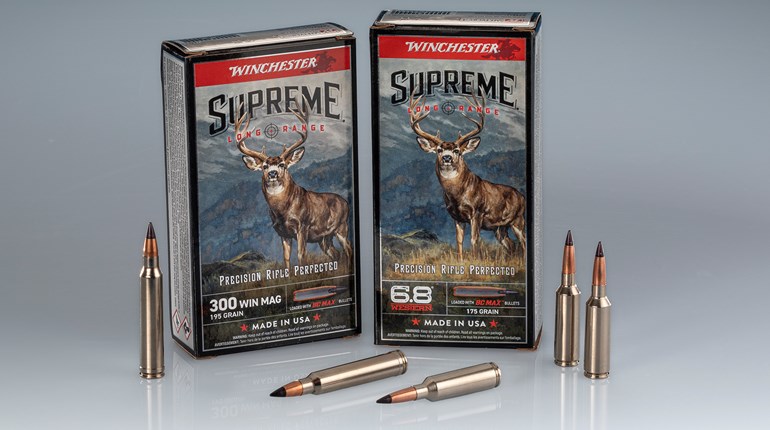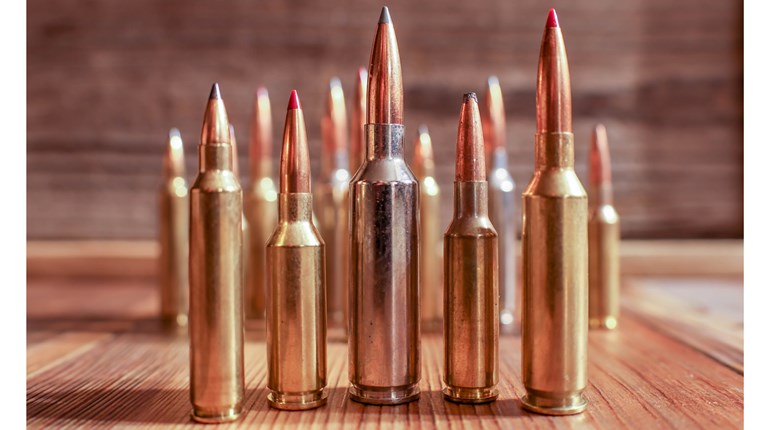

As an NRA Training Counselor, it is my job to evaluate candidates who wish to become certified NRA Firearms Instructors. This training includes taking students through the NRA Basic Firearm course of the desired discipline, the Basic Instructor Training (BIT) course, and the NRA Instructor course for the specific discipline. During the lessons, I try to prepare and educate my students on how to prevent accidents before they happen. One of the important topics we cover in class is to make sure that you have the right ammunition for your gun.
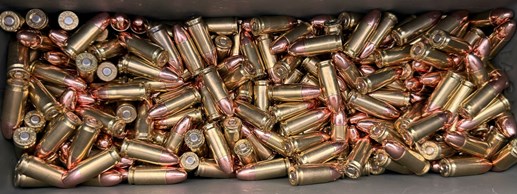
Ensuring that you are shooting the correct ammunition out of your firearm is an important rule to avoid a catastrophic accident. This goes not only for NRA Firearm Instructors but also for anyone who owns and operates a gun. Loading the wrong ammunition into your firearm is usually caused by either not paying attention when shooting different guns chambered for different calibers, or due to lack of knowledge or a deficiency in their training.
Loading the wrong ammunition into your firearm can lead to several different outcomes— none of which are good. Shooting the wrong ammunition out of your gun can result in damage or destruction of your firearm to serious bodily injury or death.
The 9X19 cartridge is by far the most common round found in the handgun world. What many shooters are not aware of is that there are five different 9 mm cartridges that can be encountered. Some of these may be considered obsolete for their original purpose such as military, law enforcement, or skirting/getting around laws, but they are not commercially obsolete. One 9 mm cartridge seems to lead the list of “forgotten cartridges”: the 9 mm Ultra.
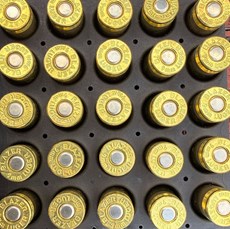
The 9 mm Family
There are five members of the 9 mm family that can be commercially found in brick-and-mortar stores, online and at gun shows. The potential of mixing up the 9 mm Ultra can be greater than the other 9 mm cartridges because it is a 9X18 cartridge. The risk of confusing this round with another cartridge is higher because there are two different 9X18 cartridges.
- 9X17—The 9X17 cartridge is considered the smallest of the 9 mms. Commonly known as the .380 Auto, this cartridge goes by other names such as 9 mm Kurz, 9 mm Short, 9 mm Browning, 9 mm Corto, 9 mm Largo, 9 mm Court, and probably several more designations.
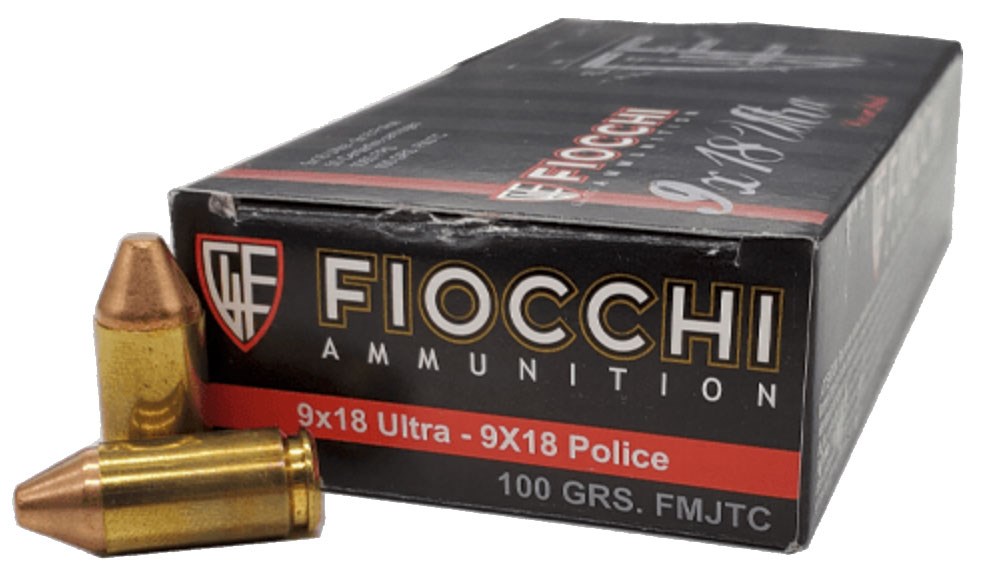
- 9X18—This 9 mm cartridge is commonly known as the 9 mm Ultra. This cartridge is also known as the 9 mm Ultra Police, 9 mm Police and the Walther Super.
- 9X18 MAK—This 9 mm cartridge is commonly known as the Russian round or 9 mm Makarov. The designation of this round is 9 mm MAK. If the firearm was produced in Russia, the data stamp on the firearm is usually indicated as 9 mm Makarov. If the firearm was produced in another Eastern Bloc country, it is usually stamped 9 mm MAK.
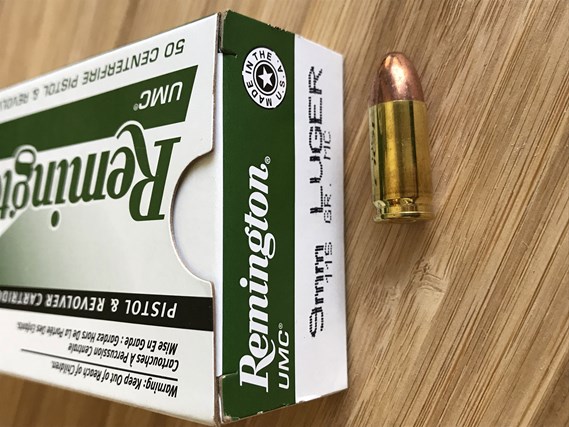
- 9X19—The 9X19 cartridge is the most common cartridge seen today. This cartridge can be known as the 9 mm Luger, 9 mm Parabellum (Para), 9 mm Glisenti, or 9 mm NATO. The 9mm Glisenti is a low-pressure Italian round and the 9mm NATO is a higher pressure round that should only be shot out of modern firearms.
- 9X21—The 9X21 cartridge was designed to skirt or get around the European laws regarding the possession of military cartridges by civilians. It was primarily developed as a competition round. It is known as the 9 mm Italian, 9 mm IMI, or 9 mm GP. The interesting thing about the 9X21cartridge is it is the same dimensions as the 9X19 cartridge. The case is 2mm longer, but the bullet is seated 2mm deeper, resulting in a case-overall-length (COL) of approximately 29.70 mm. There is a debate regarding whether these two rounds are interchangeable. To be safe it is best to shoot only the cartridge designation that your firearm is chambered in.
Origins
The 9X18 Ultra has a very interesting history. It was originally developed in 1936 for the German Luftwaffe (Airforce) at the start of World War II. At the time, with the exception of the Wehrmacht (Army), the standard issue cartridge was the 9 mm Kurz (.380 Auto) and the 7.65mm (.32 Auto). In Europe in the early 1900s, pistols were not considered secondary firearms and were only carried as a tool to get you to your primary weapon, the rifle.
Since the Luftwaffe did not carry rifles, Herman Goering wanted a mid-range pistol between the 9mm Kurz and the 9mm Parabellum. The 9X18 Ultra was born. It remained in production from 1936 until the end of the war in 1945.
The 9X18 Ultra remained an obsolete cartridge until 1972. From 1945-1972, the standard issued cartridges for police in much of Europe were the 9 mm Kurz and the 7.65 mm. The catalyst for change was the terrorist attack known as the “Munich Massacre” at the 1972 Olympic games in Munich, Germany. The attack resulted in 11 athletes and coaches killed, one police officer, and five of the eight terrorists killed. It was determined that the police needed a larger caliber handgun to handle organized threats, and the 9X18 was reborn.
The 9X18 Ultra stayed in production between 1972 and 1983. Manufacturers included Walther, Benelli, SIG Sauer and Mauser produced more than 20,000 pistols chambered for this caliber. This means there are a lot of pistols chambered in 9X18 Ultra that were imported into the United States.
What Instructors Need to be Aware Of
The 9X18 Ultra cartridge and chamberings are a relatively “forgotten” member of the 9 mm family. Very few shooters today are aware of this caliber. Most individuals automatically think of the Russian 9X18 Makarov cartridge when they hear the designation 9X18.
Additionally, as Instructors following the guidelines of the NRA’s Education and Training Division, we teach that new shooters should consult “knowledgeable shooters” and purchase from “reputable dealers.” Most people would consider large corporate sporting goods stores as having knowledgeable salesmen and would consider them as a reputable dealer. The problem is that I go to many of the used gun sections of these store and websites and find many 9X18 Ultra firearms being sold as 9X18 Makarov pistols.
There are several things that instructors need to know. It is important for instructors to remember that even though pistols are no longer being produced and chambered for the 9X18 Ultra cartridge, that does mean you will not encounter them. I have had several of these handguns show up in my classes over the years. It is also important to remember that if a student shows up for a lesson with a 9X18 Ultra handgun and 9X18 Makarov ammunition and you give the “okay” for them to shoot that ammunition out of that handgun, you could be responsible for the outcome, since this combination could result in a catastrophic failure.
The 9X18 Ultra firearm is still common enough that ammunition manufacturers such as Fiocchi offer these rounds for commercial sale and new brass is readily available to reloaders.
9X18 Ultra vs. 9X18 Makarov
Contrary to what many individuals think, the 9X18 Ultra cartridge and 9X18 Makarov cartridge are not interchangeable. Interchanging these cartridges violates one of the safety rules regarding shooting the correct ammunition out of your firearm. Doing so could result in catastrophic failure of the firearm and could result in serious bodily injury or death of the shooter and or those standing nearby.
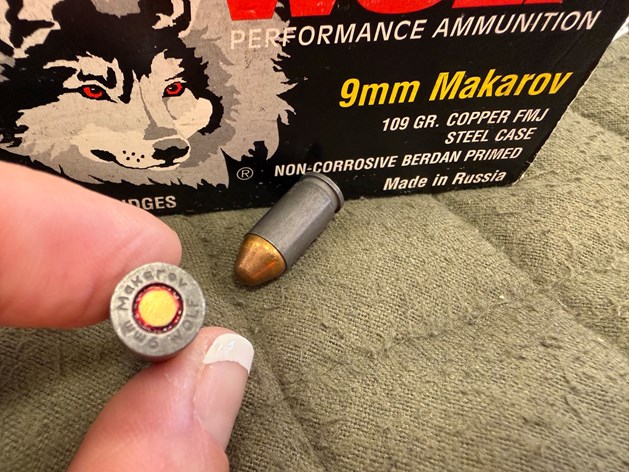
There is a significant size difference between the 9X18 Ultra cartridge and the 9X18 Makarov cartridge. The 9X18 Ultra uses a 9.01-9.02 mm (.355”) bullet with a case approximately 17.9 mm (.704”) long and an overall cartridge length of approximately 25.27 mm (.995”). The 9X18 Makarov uses a larger 9.27 mm (.365”) diameter bullet with an 18.10 mm (.713”) case and a maximum overall cartridge length of approximately 25.00 mm (.984”).
Interchanging these cartridges could result in extremely high pressures, headspace issues, and squib loads. All these issues can create extremely hazardous conditions.
As responsible gun owners and especially those who are firearms instructors, it is important that we do not become complacent. We should always continue to increase our learning through education. Just because most modern handguns were chambered in 9X19 does not mean others do not exist or that you will not encounter them.
Every shooter should strive to become a knowledgeable shooter. This can only be done through research and continuing education. Taking an NRA Basic and/or NRA Instructor Course is a great way of accomplishing this.
—Heidi Lyn Rao