I’ve written before about whether or not you, as a concealed carrier, should get involved in potentially dangerous situations that don’t involve you. Choosing to step in instead of avoiding is a personal choice, and one each of should weigh carefully under the given circumstances. I tend to lean toward the side of minding my own business and not inserting myself into someone else’s trouble.
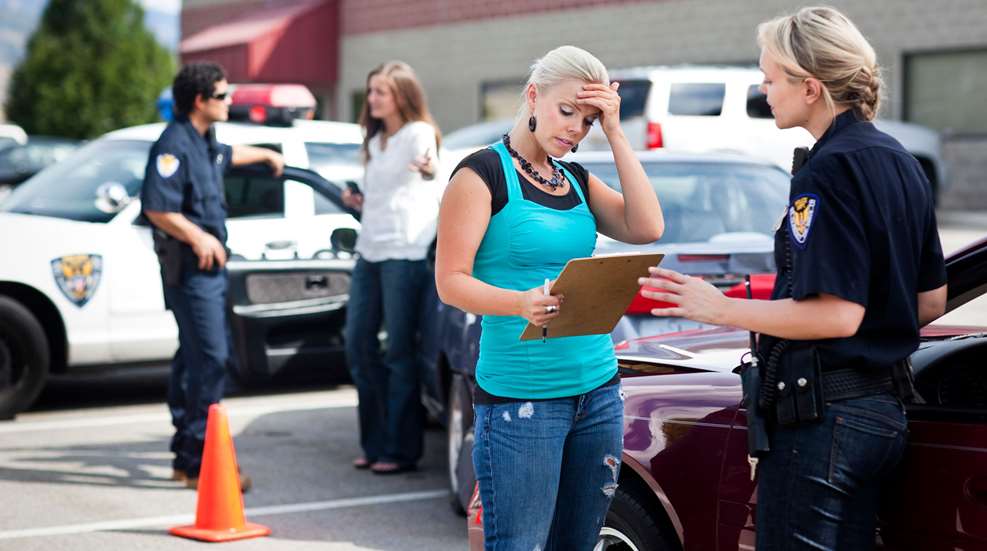
If you take this point of view, it doesn’t leave you out of the situation entirely. If you saw a crime unfold, you can provide information to the police later, and you might even be the one to call 9-1-1 while the dangerous situation is unfolding. In either case, it’s important that you know how to be a good witness. Witnesses are notoriously unreliable. Stress, environmental factors and your own biases can cause you to “remember” things that never happened and forget all about things that did. Here’s how you can do your best to avoid that problem and be a good witness, whether you’re the victim of a crime or an observant bystander:
Stay Safe
Your first job is to stay safe. Do not get closer to a fight or other type of crime just to take photos or obtain details for 9-1-1. Get yourself somewhere safe and observe from afar if it’s safe to do so. If it’s not safe, just get the heck out of there.
Keep It Simple at First
Focus on the big things, particularly if you’re talking to a 9-1-1 dispatcher. They don’t want your long, rambling story, and the police probably don’t want that in the initial on-the-scene report, either. Just spit it out—say what happened and where in quick and simple terms so help can be dispatched or the police can start to put together a picture of what unfolded. The time for details will come later.
Try to Remember the Big Things
Be aware that it’s natural to develop tunnel vision—you’ll be focused on the event as it happens and might miss all sorts of things going on in the periphery. If a weapon is involved, it’s natural for your focus to be drawn to the weapon, sometimes to the exclusion of most everything else. Try to see more than just what your tunnel vision wants you to focus on.
Go to the journalist’s six questions: Who, what, when, where, why and how. “When” is pretty much established, and “why” is not relevant in the heat of the moment (and you shouldn’t speculate about someone’s motive). But make careful note of where you are so you can tell 9-1-1 or relay exactly where people were standing when giving a report to the police later. Note who is involved—is there more than one assailant? Maybe an accomplice who has avoided most peoples’ notice? Is there more than one victim? Are there bystanders who jumped into the fray? Note basic descriptions: gender, ethnicity, body type, age range, or anything obviously distinctive, like purple hair or sleeve tattoos. Focusing on a distinct characteristic like that will help set the image in your brain, but make it something that’s not easily changed. “He was wearing a red shirt” isn’t super helpful as a description after the fact. “He was heavyset with acne scars on his face” is much more useful.
Then Work on Details
What color was the getaway vehicle? Was it an SUV or a sedan? Plate numbers are great, but that’s a lot of information to try to take in and remember in a split second. Which direction did they go in? Who was driving? Focus on distinctive characteristics of the vehicle and the people involved.
Did the perpetrator say anything? Did the victim scream for help or try to run away? Did you see a weapon, and if so, what kind?
Make Notes
Immediately after the incident, review in your head, maybe even say out loud, what you remember. “I saw the bad guy wave a knife. He was a lot taller than the victim and had a blond buzzcut and a face tattoo. He took off in a white SUV headed left down Park Street. The license plate started with 5W.”
Write down everything you remember as soon as you’re able. Time erases or changes memories very quickly, so the sooner you get it on paper (or a voice note on your phone), the better.
Don’t Talk to Others
If there are other witnesses, don’t talk to them about the details until you have written down or recorded your own memories. There’s a very good chance that other witnesses remember things differently, and if you all start talking about it, before you know it, someone says the car was red when you were sure it was black, and you begin to doubt your memories or create false ones. Get all the details you remember recorded before you start comparing stories with anyone else.
If You Don’t Know, Admit It
False memories are worse than no information at all. If you can’t remember what the second bad guy was wearing, don’t speculate that it might have been a yellow shirt. If you assume he had a firearm but you’re not positive because you only saw him pointing with his hand in his pocket, don’t tell the police that you saw a gun. If you heard shots but you don’t know how many other than “several,” don’t feel obligated to put a number on it.
Do not speculate when you’re giving information to the police. This is much easier said than done, because you want to be helpful. But your brain is going to make assumptions and try to fill in gaps to make everything make sense, so be careful to only report what you know, not what you think, unless you are asked.