
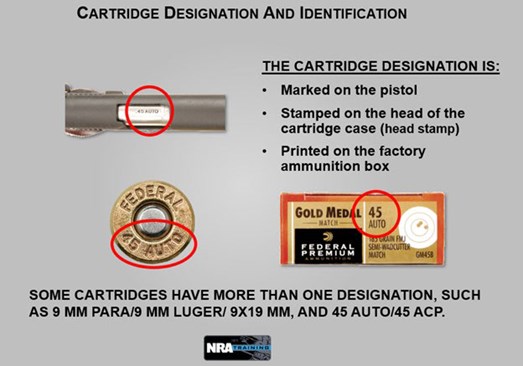
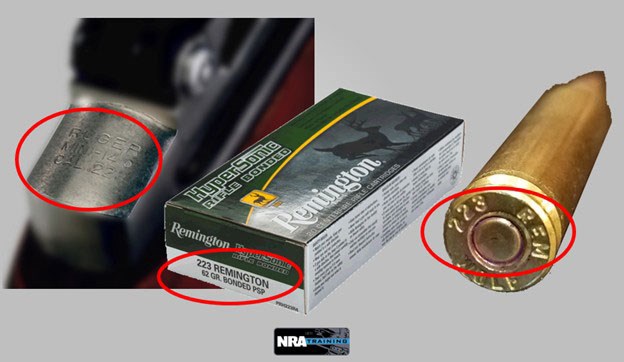
Safe shooters know the importance of using the correct ammunition in their firearms. NRA Certified Firearm Instructors are expected to teach the importance of matching the correct ammunition to the firearm in Lesson II of all three basic firearms courses: NRA Basic Rifle, NRA Basic Pistol, and NRA Basic Shotgun. Students are taught to match the data stamp on the gun, the head stamp on the cartridge or shell, and the ballistic data information found on the original box.
Ensuring that your ammunition matches your firearm is one of the primary rules when it comes to operating and using any firearm safely. This “rule” can get confusing to students. This is because there are exceptions to this rule. Growing up, we are taught by our parents, teachers, and sports coaches that we are to follow the rules and if you break those rules, there could be some adverse consequences.
When it comes to firearms, breaking the rules can have some very serious outcomes. This could be anything from a scare to a damaged firearm, serious bodily injury, or a life-threatening catastrophe. This is why we, as responsible gun owners, follow the NRA Rules for Safe Gun Handling as well as some other rules that make our sport so safe.
What can confuse many shooters is that there are exceptions to the rule: “You always match the data stamp on the firearm with the data found on the headstamp of the cartridge.” There are times when you can use ammunition that does not match the data stamp on the firearm. This confusion can come from “interchangeable” cartridges. Most notable would be the ability to use .38 Special ammunition out of a .357 Rem Magnum revolver or a .223 Rem out of a 5.56 NATO rifle. Each of these pairs of cartridges (.38 and .357) and (.223 and 5.56) have different size dimensions, but the .38 and the .223 each have lower pressures and are close enough in size to allow for their safe use in the firearm chambered for the higher-pressure cartridge, the .357 and the 5.56 respectively.
The other exception is cartridges that have identical twins. These are cartridges that have identical size dimensions, bullet weights, and powder charges but have different industry recognized names. The different names usually come from historical eras or events or names that coincide with the name of the person who developed it. Identical cartridges can be found in both pistols and rifles.
Identical Pistol Cartridges
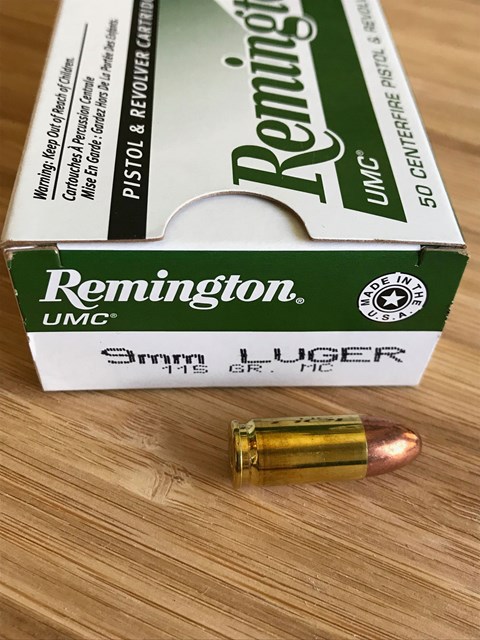
The 9 mm pistol cartridges have multiple “identical” cartridges. These include the 9 mm Parabellum, 9 mm Luger, and the 9X19. The 9 mm NATO cartridge can also be included in this list.
The original name of the 9 mm pistol cartridge was the 9 mm Parabellum. Georg Luger designed the 9 mm pistol cartridge in 1901 while working for the German arms factory, Deutsche Waffen-Und Munitionsfabriken (DWM). The Sporting Arms and Ammunition Manufacturers Institute (S.A.A.M.I.) changed the name of the 9 mm Parabellum to the 9 mm Luger in the 1920s to avoid legal issues with the name Parabellum.
The 9 mm pistol cartridge became commonly known as the 9X19 cartridge in the mid-1980s when striker-fire pistols, such as the Glock 17, became popular. This change occurred to designate which 9mm pistols were legal to be owned by civilians in Europe such as 9X19 versus 9X21mm cartridges.

The 9 mm NATO cartridge is the same 9 mm cartridge, just with higher pressures. This cartridge is not recommended to be fired out of 9 mm pistols made prior to the early 1980s.
The 9X18 cartridge has an identical twin called the 9 mm Makarov. This is a Russian cartridge that has a larger projectile than the other 9 mm cartridges. The 9X19 and the 9X17 cartridges have a bullet diameter of 9.01mm (.355 inches) and the 9X18 bullet diameter is 9.27mm (.365 inches). This is a difference of .26mm (0.010-inches).
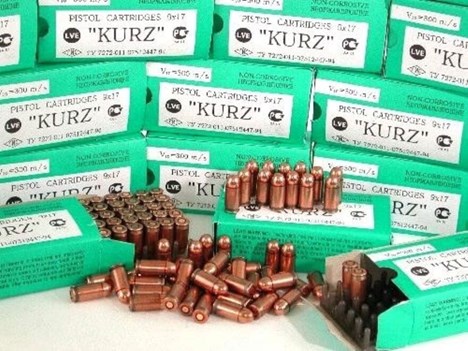
The 9X17 has a lot of identical twins. The original name of the 9X17 cartridge is the 9 mm Browning, named after John Browning, who introduced this cartridge in 1908. These include the 9mm Kurz, .380 Auto. 9mm Short, and 9mm Corto, just to name a few.
The .45 ACP was the original name of the .45 caliber pistol cartridge. The identical twin of the .45 ACP is the .45 Auto cartridge. The .45 ACP (Automatic Colt Pistol) was developed by John Browning in 1904. Shortly after its development, the .45 ACP was referred to as the .45 Auto cartridge. The official name of the cartridge was listed as “.45 Automatic Colt Pistol Ball Cartridge, Model of 1911” when the U.S. Army adopted the round in 1911.
Identical Rifle Cartridges
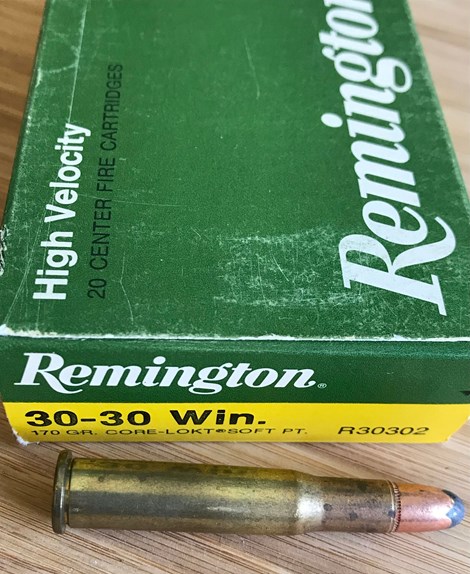
The .30-30 Winchester was the first civilian cartridge developed for the public using the newly accepted smokeless powder in 1896. This popular round was not known when it first came out as the common name, .30-30. It was originally called the .30 Winchester Smokeless. While hard to find, there are some manufacturers that still market the .30-30 Winchester as the .30 Winchester Smokeless for cowboy action shooters.
There are several other calibers that have identical twins that are, or that used to be, popular for hunting North American game animals such as whitetail deer. These include the .244 Rem and the 6mm Rem and the .250 Savage and the .250/3000 Savage. The .250 Savage and its twin the .250/3000 Savage was developed in 1915. The .250 Savage has a bullet diameter of .257 inches, hence its name. Additionally, the .250 Savage was the first recognized caliber to break the 3,000 feet per second (f.p.s.) ceiling at the time. Because of this, the .250 Savage is also known as the.250/3000 Savage.
The .244 Rem was developed in 1955 by necking-down a .257 Roberts to design a high-velocity varmint cartridge. Unfortunately, because it had a slower twist rate, it could not compete with the existing .243 Win cartridge that was already on the market. In 1963, Remington increased the .244 Rem’s twist rate from 1:12” to 1:9” and changed the name of the cartridge to 6mm Rem. Whether you call it a .244 Rem or a 6mm Rem, it is the same cartridge. But if you have a rifle that was manufactured between 1955 and 1963, your firearm probably has a 1:12” twist rate while later guns may have a 1:9” twist rate.
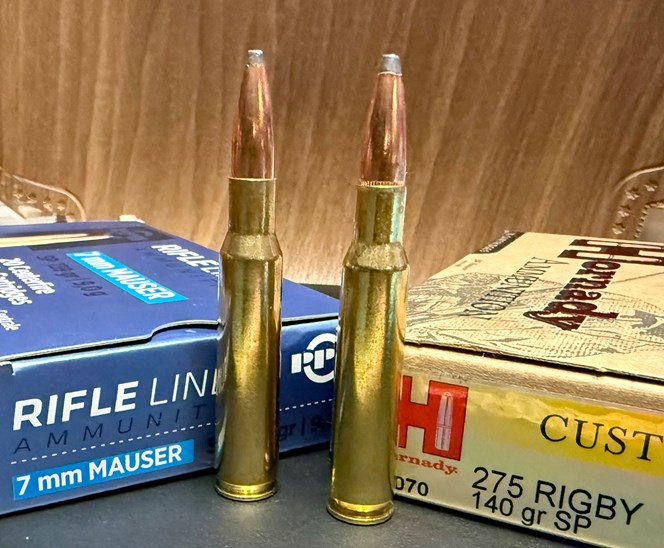
There are also European rifle calibers that have identical twins. The extremely popular 7mm Mauser was developed by Paul Mauser in 1892. The rifle, based off the 7mm Mauser, was built on the “timeless” Mauser action. This action was so advanced that James Purdey & Sons of England received a contract to reproduce and sell Mauser action rifles in Great Britain around 1909. The problem was that Britains had no desire to shoot anything German. As a result, James Purdey, in an act of marketing genius, renamed the 7mm Mausers made in Great Britain as the .275 Rigby.
Some identical cartridges have proprietary origins. The .450/400 Nitro Express is a good example of this. Around 1902, there was an explosion of new calibers on the market because of Great Britain’s prohibition against exporting .45 caliber ammunition to its colonies, particularly to India and the Sudan. To get around this law, gun companies began necking-down or necking-up existing .45 cases to come up with ammunition to export into these colonies. One of the most popular developments was the .450/400 Nitro Express developed by W.J. Jeffery. This cartridge goes by both names and is manufactured under both names. These cartridges are known as the .450/400 Nitro Express 3 inch and also the .400 Jeffery.
As you can see, this is why we never use “absolutes” as instructors. That means to try not to use the words “never” and “always” when talking about firearms because there seems to “always” be an exception out there. As an NRA Certified Firearm Instructor, I stick to the NRA curriculum. For beginners, I stress the importance of shooting only the designated cartridge that can be found on the data stamp of the gun.
It is important to be aware that there can be “exceptions to the rule” when dealing with firearms. If you are instructing beginners, be sure to stress the importance of shooting the right ammunition out of their firearm. Remember, the more we teach and stress the safety rules, the safer your student will be. This includes knowing what ammunition goes in your firearm.
—Heidi Lyn Rao