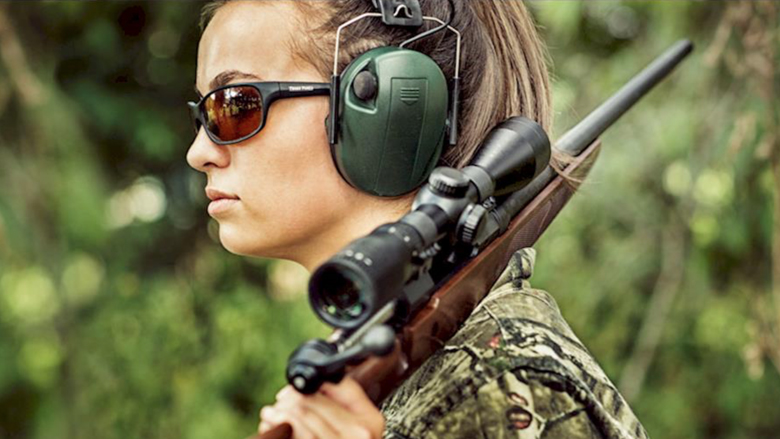

If you’ve decided that a shotgun makes the most sense for your particular home-defense situation, like I have, don’t rush out and invest in the biggest and baddest 12-gauge you can find just because it’s marketed for “tactical” or “security” use. While defense-specific shotguns have a lot of qualities that make them better in those bump-in-the-night moments than, say, your duck-hunting gun, take a second to think about whether a 12-gauge is the right choice.
The fact is, a sub-gauge shotgun can do the job just as capably, and it comes with a few benefits that might actually make it better. Here’s what to consider.
Is the 20-Gauge Effective?
This is, of course, the most important question, and the answer is a resounding yes. To understand why, you need to know how 12-gauge and 20-gauge shells differ.
A 12-gauge shotshell and a 20-gauge shotshell are capable of holding the same shot size. The difference is that because the 12-gauge shell is physical larger, it can hold more shot pellets and it will pack a little more gunpowder to propel them. Essentially, that’s it. The extra pellets and extra powder charge give the 12-gauge an advantage that shows up at longer distances—like in sporting clays or the duck blind, where the pattern has had time to open up and more pellets means more chance of some of them hitting the bird.
But the average home-defense shooting distance is less than 8 yards. At that distance, the 12-gauge hasn’t had time to really display its major advantages yet, and its patterns look very much like the 20-gauge’s. If you have never patterned a home-defense load at 3 to 10 yards, you should try it—it’s eye-opening. At just a few yards, everything hits like…well, like a shotgun blast to the chest. The patterns, particularly when the gun is choked with home defense in mind, don’t have time to spread out bigger than about softball size. (By the way, this is why we say you DO need to aim a defensive-shotgun and that spray-and-pray doesn’t work in close quarters.)
All that to say that the 20-gauge and the 12-gauge are both extremely effective at home-defense distances, to the point that one can barely be called better than the other. It would be the difference between “the threat has been thoroughly and completely stopped” and “the threat has been super-duper completely stopped.”
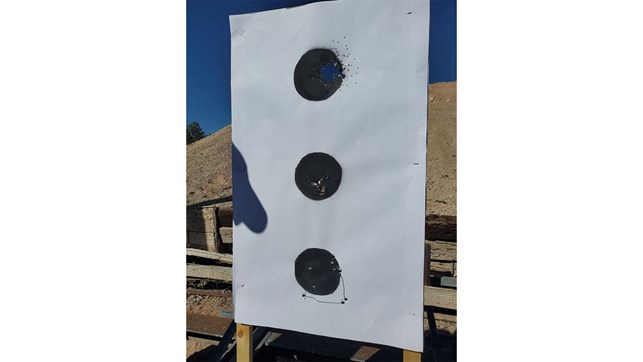
Shotgun patterns remain tight at typical home-defense distances. These are 12-gauge loads in the photo, but you get the idea. That’s birdshot on top, followed by a buckshot load at two different distances on the two bottom targets.
So Why Might the 20 Be Better?
The 20-gauge offers you a few advantages for home defense. Perhaps the biggest is the obvious: It has considerably less recoil because it’s pushing a smaller payload. While it’s true that you’re unlikely to notice recoil in an adrenalized state, you still need to train with this thing at the range when you’re not under pressure, and you are going to dread doing that if your gun is beating you up. Lower recoil makes training easier, and it also makes the gun easier for smaller-statured or recoil-sensitive family members to shoot—handy if you have more than one shooter in the house who might have to use the gun. Less recoil also means faster, more accurate follow-up shots should one be necessary.
The second advantage is that 20-gauge guns themselves are slimmer and lighter than 12-gauges. This makes them more comfortable to carry and less fatiguing to hold. If you are forced to maneuver through your house with your gun in a ready or mounted position (which you should not do unless you have to—say, to get to your kid’s room) this will matter more than you might think. Home-defense shotguns get heavy, particularly if you’ve added accessories like a weapon-mounted light and a shell holder on the stock. Any weight you can save will be welcome at the moment of truth.
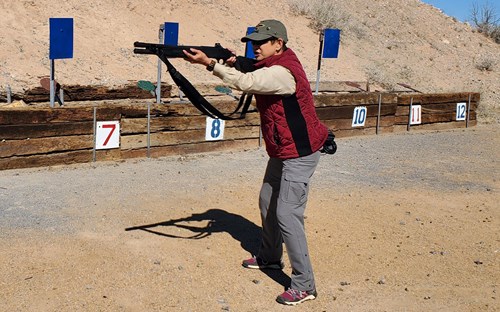
The 12-gauge is certainly effective, but at home defense-distances, the 20-gauge is nearly its equal—and it’ll spare you some recoil.
So What Should You Buy?
If you’re shopping for a sub-gauge shotgun for home defense, I recommend you buy one that has specific features: primarily a shorter barrel (18.5” to 20”) and a rail or other means of easily adding an optic. A higher capacity (standard duck guns hold five) doesn’t hurt, either. Mossberg’s 590 7-Shot ($640 MSRP), Winchester’s SXP Defender ($440), and Savage’s 320 Security ($289) are all great options that come in 20-gauge. You will probably want to add a red-dot sight for aiming, and maybe a weapon-mounted light for identifying threats in the dark.
Can you get away with a longer barrel? Certainly; the payload will be just as effective. The difference is in the handling—moving through hallways and around corners with 28 inches of barrel sticking out in front of you is a cumbersome endeavor. If all you have is your duck-hunting shotgun, it’ll do the job fine. But if you are shopping for a dedicated home-defense shotgun, go with the shorter barrel.
Choose your ammo carefully, as you would with any home-defense shotgun of any gauge. Bird shot is in the it’ll-usually-work-under-the-right-conditions-probably-we-hope category, which is flat-out not good enough for me. Heavy turkey loads with some larger shot mixed in and larger-sized goose loads are better, but if you’re investing in a home-defense shotgun, invest in some quality home-defense loads as well—which are usually Buckshot. No. 2 and No. 3 Buck are popular in 20-gauge loads, with defense-oriented options from Federal and Remington. Aguila, Winchester, and others make 20-gauge Buckshot loads that they market to hunters, but there’s no reason they wouldn’t work well for home defense.
If you want to use a 12-gauge for home defense because you already have one, because it’s what you’re used to or because you really want threats double-stopped instead of just regular stopped, or if your home is large and open enough that a defensive shooting is more likely to take place at 20 yards or more, you’ll get no argument from me. But if you’re shopping for a new home-defense shotgun, consider that the 20-gauge offers you very effective stopping power in an easier-to-handle, lower-recoiling package.