
When trail cameras first hit the market in the early 1980s, they recorded images on film and used trip wires to trigger the shot. In the ’90s, we got motion activation, a huge step forward. By the early 2000s, film gave way to digital photography, and photos were stored on SD cards. They were low-res and usually pretty blurry, but it was another big step forward. This is the era in which I started using trail cameras, and you can still buy SD-card cameras today, of course. They worked (and still work) well, especially compared to those old ’80s models, but they had their drawbacks: battery life was a major issue, and you were constantly having to go into the field to swap out batteries and SD cards that filled up quickly. When you viewed the images, you had to sort through hundreds of photos of squirrels and waving branches to get to the few photos of deer the camera managed to take before it ran out of juice or storage space. And God forbid a spider built a web in one corner of the camera, because it would fill up your SD card with a thousand worthless photos in a single day.
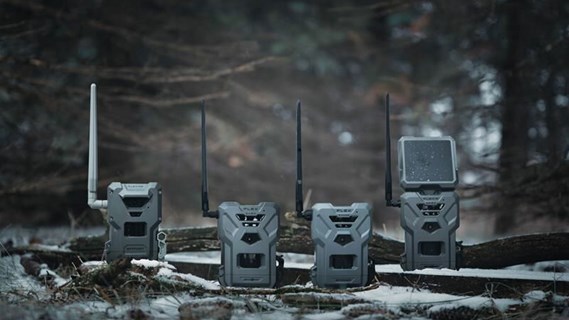
Spypoint images
Trail cameras have continued to make huge technological improvements since then, and today’s models can do things we only dreamed of 20 years ago. Solar is common, so batteries are a thing of the past on many models. Most have no-glow or infrared flashes that no longer spook game after dark. And cellular technology has really changed the game—now you don’t have to go into the field to check your pictures. The photos come directly to your phone, usually via the camera manufacturer’s app. Of course, this comes with a small monthly fee, but the convenience is tremendous—you can set up cameras in remote locations, even hundreds of miles away at hunt camp, and keep an eye on what’s going on without ever having to step food in the woods and disturb any wildlife in the area.
I once thought cellular transmission was the greatest innovation trail cameras would ever see. Then along came AI and proved me very wrong.
The AI Trail Cam Revolution
Most major trail camera companies now have AI integrated into their top-of-the-line models, and it solves seemingly all of the problems we used to have. Just two years ago at SHOT Show, a rep from one company walked me through their app and its technology and blew me away with what cameras can do now. Models from Moultrie, Stealth Cam, TactaCam, SpyPoint, Browning and more offer some or all of these features.
Connect to maps, GPS software like OnX, feeders, and other trail cameras: Now you can keep track of where your camera is, in some cases even after it shuts down or loses power. You’ll get an alert if it’s moved (stolen) from where it’s supposed to be, and in some apps, you can always see in real time where the camera is—you know, in case you forget exactly where you hung it. You can also connect to other trail cameras if you own multiple, and even your feeders in Moultrie’s case, helping you quickly establish movement patterns.
Live streaming or on-demand photos: Want to know what’s happening right now? Many apps feature live streaming or allow you to take a photo and see it immediately, and many can be set for instant transmission all the time if that’s how you prefer to receive photos. Some transmit on a schedule you set, if you only want to receive photos, say, once a week.
Adjustability and range: Some of the higher-end cameras can take photos in different directions —at least one brand can do 360 degrees. You can usually adjust most or all of the camera’s settings remotely, and on some models, you can tell the camera when to take photos and when not to—which is handy if you decide you only want photos taken during the hour around dawn and dusk, for example. You can shut them off if you’re done scouting for the season or make all sorts of other changes as needed.
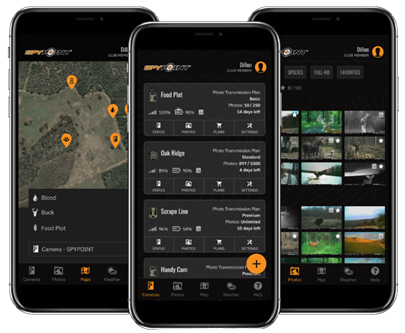
Image evaluation: This is the biggest deal, in my opinion. The best AI-driven trail cameras now filter the images before they transmit them to you, removing all those pictures of an empty field that were triggered by the sun, a blowing blade of grass, or other irrelevant events. They can identify species and tell bucks from does, and you can set the parameters of which photos you want filtered out. Just tell the camera (depending on brand and setup) that you want only pictures of, say, bears and deer, or coyotes and hogs, or everything except squirrels and raccoons. In some cases, you can even tell it you only want pictures of bucks, or you want it to take pictures of does but switch to video when a buck is on-screen. You can often pick which species you want transmitted photos of and which should just be stored for you to retrieve in-person. Some models will give you a live notification when a buck is active on-screen.
This features gives you a huge reduction in false triggers—the camera deletes or stores internally but does not transmit the photos you don’t want, which is helpful because many of the plans charge based on how many transmissions you get per month.
Zone coverage and exclusion: Some models allow you to modify or deactivate specific “zones” in the camera’s view. For example, if you have a 360-degree model, but you’ve set it on the edge of the treeline facing a food plot, you can set it to take pictures in 360 degrees or in 180 degrees (maybe you don’t want photos of the woods, just the field). If you just wanted to watch a particular trail, you can set it to only take pictures of one specific zone out front.
Some trail cameras utilize this zone concept to help further reduce false triggers. If you’ve got a weed that’s grown up and is triggering the camera in the bottom middle zone, you can shut that zone off. Spider built a web in the top left corner? Just deactivate that zone until you can get out there and clean the lens.
If you haven’t upgraded your trail cameras in years, you’ll be shocked at what today’s models can do. You want time-lapse video? Burst mode? LEDs and infrared? Live streaming? Instant transmission? Species identification? Lightning-fast trigger speeds? All of that and more is available in surprisingly affordable packages. The downside is that you’ll pay for cellular transmission, but the convenience of scouting from your couch is often well worth the cost.