
It’s a sobering reality that statistically speaking, women are more in danger from people they know than they are from strangers. In fact, about 90 percent of murdered women, 80 percent of rape victims and 90 percent of female stalking victims are victimized by someone they know—usually a spouse, an ex-spouse, a lover or a family member. In cases of abuse and/or stalking, women are often told to seek a restraining order against the perpetrator, but does that actually help, or does it make the situation worse?
It depends.
First, let me point out that some states differentiate between protection orders and restraining orders or prefer one term over the other; some have other names for similar orders. I’m going to use the two terms interchangeably in this article for simplicity’s sake.
Now that that’s out of the way, it’s important to remember that a restraining order is simply a piece of paper. It’s not a magical force field that keeps bad guys far away. It doesn’t protect you from further abuse; it merely punishes the perpetrator after the fact if he violates the order. We’ll come back to that.
The trouble with protective orders is that they work the best against the people who are least likely to be violent. Security expert Gavin de Becker explains in his book The Gift of Fear, “Restraining orders are most effective on the reasonable person who has a limited emotional investment. In other words, they work best on the person least likely to be violent anyway.”
A clueless, socially inept suitor who isn’t taking the hint—what de Becker calls a “naïve pursuer”—might get slapped with a PO and realize oh, hey, my behavior really is inappropriate and unwanted and I better knock it off. But you probably weren’t in much danger from that guy anyway. On the other hand, the abusive boyfriend who hits you every time he gets drunk or the ex who breaks into your house while you’re gone to terrorize you is much more likely to see a restraining order as yet another rejection—this time a public one, which brings with it a side of humiliation. Rejection and humiliation are triggers for violence. In fact, de Becker calls restraining orders “a strategy of war” rather than a path to peace. In some cases, they can escalate rather than diffuse the situation.
Those types of unstable men aren’t likely to read an RO and think oh, she really means it this time, guess I’d better leave her alone. Rather, this type of guy has clearly demonstrated that he’s comfortable breaking the law, and breaking a protection order will be no big deal to him.
Paper simply is not a form of protection. At best, it’s a form of enforcement after an incident occurs. For one thing, one California study found that 17 percent of protection orders were never served and were therefore not even enforceable to begin with. Barring the enforceability issue, results are mixed on whether a restraining order will resolve a situation or make it worse. One survey of eight different studies found that in six of the studies, respondents felt the PO helped reduce or end the violence, while two of the studies found that a PO increased the violence. The survey also found that 44 percent of women reported at least one violation of the order over an 18-month period. That’s almost half!
I’m not telling you not to get a restraining order if you feel one is warranted—they do serve a purpose, and sometimes they work as intended. What I am telling you is that you should dig into the pros and cons and seek some counsel from a qualified violence professional before you take that step.
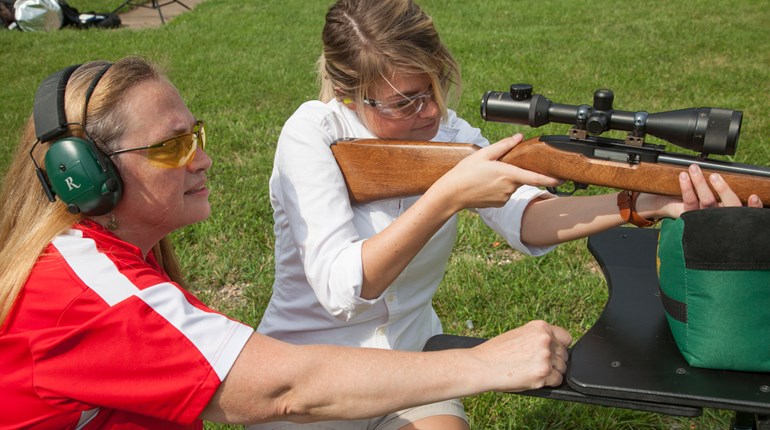
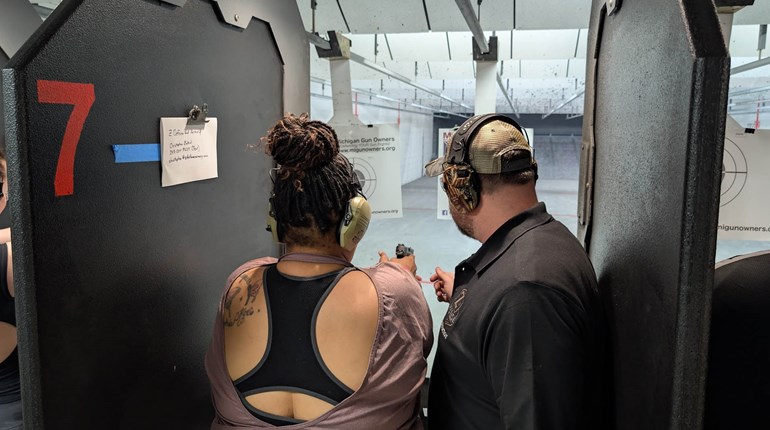
And I’m definitely telling you that a piece of paper is not going to protect you; all it can do is punish someone who violates an order after the fact. If they decide to commit violence against you, the order is meaningless in that moment. For that reason, I recommend that if you are dealing with a violent or potentially violent harasser, stalker or abuser, you consider arming yourself with a concealed-carry firearm and getting some training on how to carry and use it effectively. It might be the only thing that can actually protect you, because a piece of paper certainly can’t.