
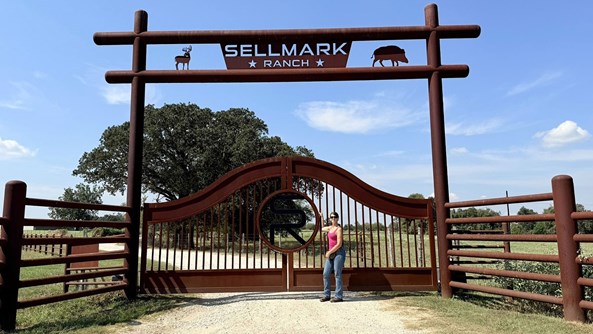
I've spent my fair share of time hunting various game, but until recently, I'd never had the chance to hit the fields to hunt wild hogs. So, when I had the opportunity to head to the Sellmark Ranch in Texas for my first hog hunt, I quickly accepted the invite and started packing my bags. Soon, my husband, Frank, and I would be spending our evenings about 90 minutes outside Dallas in elevated blinds, watching for hogs even after the sun dipped below the horizon. We'd also be using some impressive thermal technology from Pulsar, which added a whole other level of excitement to an already much-anticipated experience.
Why Hunt Wild Hogs?
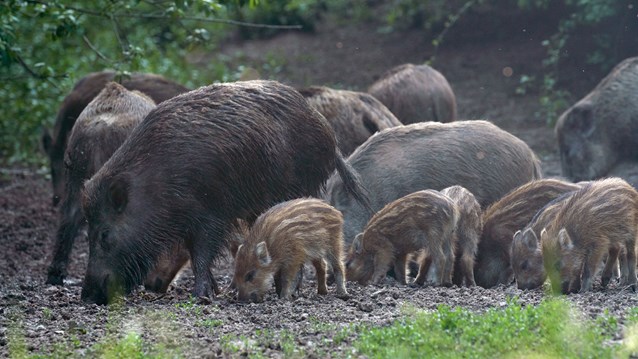
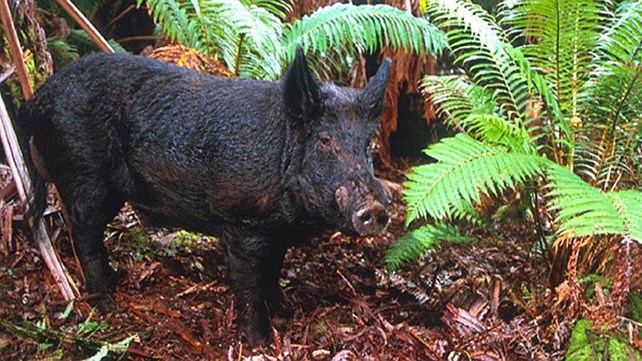
While wild hogs are a popular pursuit, people target them for more than the meat they provide. Also called feral hogs or wild pigs, these animals are a serious problem for farmers, ranchers and landowners across Texas and much of the southern United States. Wild pigs are not only invasive, but extremely destructive. They root up fields, damage crops, break down fences, and even compete with native wildlife for food and habitat.
Compounding manners is their ability to reproduce at an alarming rate. Unlike whitetail deer, where a doe typically has one to two fawns each year, wild pigs are significantly more prolific and can produce two litters per year, each litter averaging eight piglets—though litters of up to 12 are possible under the right conditions—and each of those new piglets able to begin reproducing at about six months old. As if that wasn't enough, they don't face many natural predators that would keep their numbers in check, leaving population numbers to skyrocket if left alone. Hunting is an effective way to mitigate the damage they can cause, and knowing our time in the field served a much-needed cause made the experience even more worthwhile.
USFWS image
Getting Ready for the Hunt
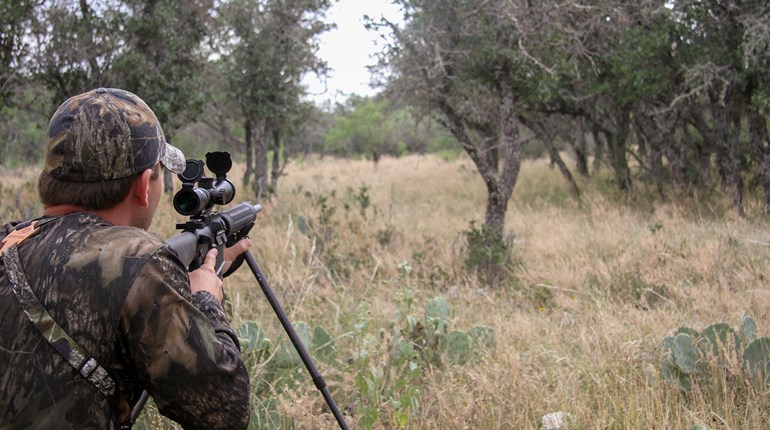
Before heading out, we spent some time at Sellmark Ranch's shooting range to make sure our equipment was ready. Our host, Kevin Reese, was gracious enough to do much of the prep work before we arrived. Over the next two days, I'd be shooting an AR chambered in 6.8 SPC, a cartridge well-suited for hog hunting. More importantly, each rifle was topped with Pulsar's new Thermion 3 thermal riflescope, featuring a highly impressive 1280x1024-resolution sensor. At the time of the hunt, this optic was under wraps, so we were among the first to test it. Folks, the amount of detail and overall capabilities of this scope are worth every penny.
We began by confirming our rifles' zero, something you should always do before a hunt even if you haven't changed your ammo or touched the gun since putting it in your safe at the end of the previous season. This also let us familiarize ourselves with the Thermion 3's controls, settings, and everything else that differed from the Thermion 2s we've used in the past. A sharp, highly defined thermal image is one thing, but quickly identifying and ranging targets when the moment of truth arrives is another. By the time we finished at the range, I was confident I could easily operate the gear I had been handed for the evening hunt.
Heading Into the Field
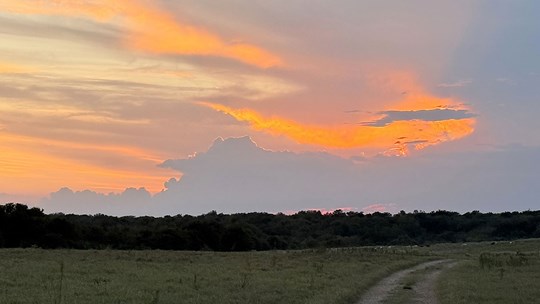
Our hunts typically began around 4 or 5 p.m., giving us some daylight before the sun disappeared over the horizon. This I didn't mind one bit, as it provided a bit of reprieve from the hot sun glaring down on us. Locals more accustomed to the warmer climate had a hard time convincing us that temps were cool. In what seemed like rock-star treatment, we hopped into the ranch's UTV and were driven to our hunting spot for the night. Did I feel spoiled? Yes. Did it feel like cheating? Almost. But, considering the ranch is comprised of approximately 6,800 acres, there was no way I was walking, as I'd undoubtedly get lost along the way and just end up camped roadside playing with the dogs who were supposed to be protecting the herds of sheep feeding nearby. We hunted from elevated, hard-sided tower blinds manufactured by Redneck Blinds and Tank Blinds.
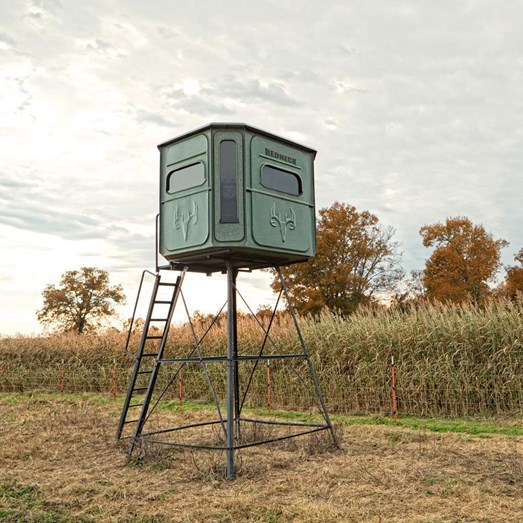
Unlike ladder-stands that leave you exposed to the elements, these blinds were completely enclosed. If you have a hard time sitting still, these are great, as they conceal any movement below the window line that would normally alert animals to your presence. Even with two people in the blind, there was plenty of room to settle in, arrange our gear, and prepare for what could be a long sit. The elevated vantage point gave us a much better view of our surroundings, and working in a team of two allowed us to maintain a near 360-degree watch on the grounds around us.
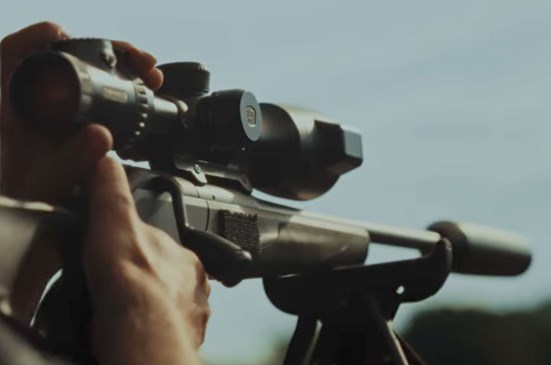
Pulsarvision.com image
Seeing Through the Darkness with Thermals
For those who may not be familiar with thermals, they work by detecting infrared heat signatures of whatever you're viewing and making them clearly stand out against cooler surroundings. They display these temperature differences in a variety of color palettes, with "white hot" being my preference. The Thermion 3's high-resolution sensor noticeably improved image clarity. I was impressed by the amount of detail I was seeing, which allowed me to better distinguish animal shapes and landscape features rather than indistinct blobs of heat. Of course, thermal isn't a substitute for proper target identification or knowing what's beyond your intended target. Those fundamentals matter just as much at night as they do during daylight hours. So we sat, scanning the fields and tree line before us, hoping our target animals would stop by for a visit. (Note: Check your state regulations about the use of thermal and the legality of night hunting.)
The Moment of Truth
Waiting for an animal to appear never gets old. You can spend hours upon hours practicing at the range, but knowing you'll have only a brief chance to make a good shot in the field puts you under pressure. After a couple of false alarms from surprisingly large armadillos scurrying through nearby brush, a clear outline of a pig appeared at about 123 yards from our position. While the pig was preoccupied rooting through the ground, I took a moment to steady my breathing and slow my heart rate. After the shot broke and Frank exclaimed, "HIT!" in a hushed voice, I kept my sights on the animal, watching it dart a yard or two away before it succumbed to the shot. Even then, I watched it through the thermal for several minutes to ensure it didn't spring back to life, which ultimately wasn't necessary, as the shot was well-placed and resulted in a clean, ethical harvest. Even with thermal technology, following up on a shot still requires patience and careful observation. The scope gave me information I wouldn't have had with conventional daytime optics after sunset.
A Hunt to Remember
My time hunting at the Sellmark Ranch was an experience I'll never forget, and I'm forever grateful for the invite. There's always something new to learn, regardless of how much experience you have doing something, and this trip confirmed that sentiment. My first hog hunt is officially in the books, and something tells me it won't be my last.