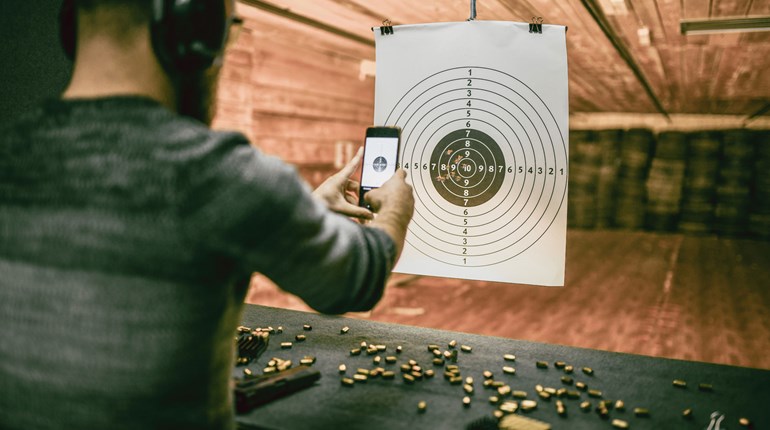
As a new shooter, you’re excited to see holes in your target—no matter where they hit. You feel accomplished that you were successfully able to use your handgun to keep the shots on paper. Eventually, you start paying closer attention and recognize that your shots aren’t even coming close to hitting the bullseye, and what you later come to learn as “tight groups” haven’t yet materialized. Rather, you see a pattern forming on the target, which you can’t seem to change: Your shots are all low and left. Sound familiar?
Probably so, because "low-and-left" is one of the most common troubleshooting problems, especially with newer shooters. It’s one of the easiest problems to overcome, if you make the necessary modifications. Or perhaps your shots are landing over the target, higher than where you believe you are aiming. The good news is that a qualified handgun trainer (preferably an NRA Certified Pistol Instructor) will be able to diagnosis the root of this problem, followed by sound advice on how to get your shots where you intend to hit.
Barring the availability of an on-site trainer, other resources are available, including some well-known and respected names in the firearm and training industry who have produced informative videos to assist with these situations. Some of the videos that we at NRAWomen.com are fans of are those from Langdon Tactical’s Discover “Beginner Shooter” video series, specifically those that analyze and troubleshoot shot placement. In this series, Ernest Langdon from Langdon Tactical Technology and Aqil Qadar from Citizens Safety Academy show you how to assess your target based on where the shots land on the target.
Check out “Assessing your Target,” one of the very helpful videos in the LTT Discover Series.
—Ann Y. Smith, Editor in Chief