
White-tailed deer are the most hunted big game in North America by a pretty wide margin, and yet populations are out of control in many states. But pick up any magazine or visit any hunting website and nearly every article will be about how to shoot a big buck. We’re obsessed with antlers, for good reason, and many hunters won’t even think about shooting a doe until they have a buck down. That’s a mistake, and I’ll give you three good reasons why we should be shooting more does.
1. Shooting Does Reduces Deer Populations
In most areas where whitetails are found, we simply have too many of them. An overpopulation of deer is bad for the habitat—too many deer is damaging to the forest understory (overbrowsing) and reduces plant biodiversity, and in turn, other species can be impacted. On top of that, when the herd is out of control, we experience more human-wildlife conflicts, from car accidents to agriculture damage and suburbanites getting frustrated with deer eating their hydrangeas.
From a hunter’s perspective, an overpopulation of deer doesn’t sound like a problem, but if you’re planting food plots or putting out feed or supplemental nutrition, the more deer you have, the more effort and money you’ll spend on your food plot or feeding program. Fewer deer means the food, natural and human-supplied, goes further. Not to mention, the more ear and noses in the woods, the higher the chances you’ll get busted while hunting.
If you’re in an area where the deer population needs to be controlled, shooting does is the way to do it. Obviously, since does are the ones having the babies, the fewer does, the fewer deer you’ll have in subsequent generations.
2. Shooting Does Balances the Sex Ratio
This is sort of a subset of population control, because an overpopulated herd will usually have an out-of-balance buck-to-doe ratio. For a healthy, balanced herd, the ideal is a 1:1 or a 1:2 buck-to-doe ratio. It’s really difficult and maybe even unnatural to achieve 1:1, and most game managers aim for 1:2 or 1:3. Think about it: If does have an equal number of boy and girl fawns, but hunters are shooting only male deer, the ratio gets out of whack in a hurry—as high as 1:4 or 1:5 in many areas.
This is a problem for a few reasons. For one, when there are too many does, the bucks simply don’t have time to breed them all in one rut cycle. If a doe doesn’t get bred, she goes back into estrus and we get into a second or even a third rut. A third rut cycle is really hard on bucks—they run themselves ragged breeding does, and if there are too many of them, it just goes on and on and the bucks become more and more stressed physically. On top of that, if a doe is bred late in the season (in a third estrus cycle), she won’t give birth until early fall, when vegetation isn’t as plentiful or healthy. Her fawns will be weaker going into winter.
From a management perspective, getting the rut over with as quickly as possible is good for the deer—and it’s good for hunters, in a way, because bucks will have to travel more to find the less plentiful does. And the more the bucks travel, the greater the chance that they’ll walk past your treestand.
When we talk about sex ratios, if you can achieve 1:3, you’re doing pretty good—but that’s not the whole story. The average age of the bucks and does matters, too. Ideally, you want older bucks and younger does. Bucks fight their way to maturity, which makes them stronger and more adaptable (the weaker ones get outcompeted for food and territory and don’t always survive). We want the mature bucks breeding and passing on their genes.
At the same time, we want younger does. If the herd is full of older does bearing fawns, we get the same genetics repeated over and over. When the younger does are bearing more fawns, genetic diversity increases, and that’s good for the herd all the way around. When young does are bred by mature bucks, we get the best of both worlds for genetic diversity and good genes that lead to better antlers and better fitness/health.
So, when you have the option, shoot an older doe rather than a younger one.
2. Does Just Taste Better
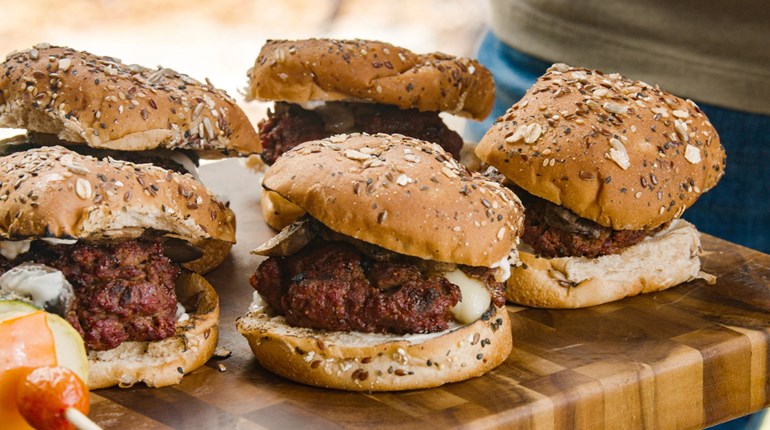
Some people will disagree with me on this or insist I’m just not a good enough cook, but it’s been my experience that all else being equal, does taste better than bucks. They’re usually more tender because they don’t spend as much time fighting and running as bucks do. On top of that, bucks are more likely to pick up a bit of that gamey flavor, especially as they age.
That said, proper field care is a bigger factor than gender when it comes to the flavor of meat. Even a mature, rutted-up buck will usually taste delicious if you care for it properly, butcher it carefully and don’t overcook it. The difference in taste between a buck and a doe isn’t usually extreme, and you’ll enjoy your buck’s meat. But if you’re strictly out to fill the freezer, a doe will probably give you slightly better meat—and you’ll help out the general health of the herd at the same time.