As hunting seasons around the country draw to a close, most hunters are winterizing their firearms for the long sleep until next season opener. This is the time that we reflect on the hunts of the past season, dream about next season, and make any repairs on equipment that needs tending to.
Every hunter I know still gets excited as the new season approaches—the sign of a real sportsman or sportswoman. Even though that excitement is still within us, there is no doubt that with each passing year the shine wears off just a little. That does not mean that we get less excited for the season opener or even when that first deer materializes out of the woods, it just means that the “new hunter” feeling or “honeymoon period” fades a little every year.
Fortunately, we can renew that feeling and put the shine back into our experiences. We can revive that new-hunter feeling by trying something new—or more specifically, by trying something old. Now is the time to start your rebirth. If you start now, you have almost an entire year to prepare.
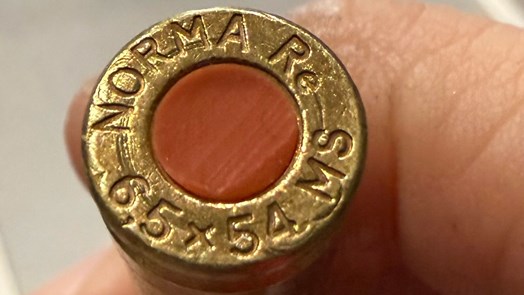
Your first step is to research older techniques and firearms. You might be surprised how much fun you will have while conducting this research. Many effective techniques have been lost in time and many of the hard-to-find, obsolete calibers were as popular in the past as the “latest and greatest” new calibers on the market are today. For example, the 6.5X54 M-S cartridge was once a very popular round, but is now obsolete, despite its superb sectional density. Just like the 6.5 Creedmoor is today, it will more than likely become obsolete as well in the distant future. By starting your research now, you have plenty of time to find something new and practice the technique or getting proficient with a “new” firearm at the range.
Change is the best way to keep things fresh and exciting. Hunting is no different. One thing you can do to regain that “new hunter” feeling is as easy as changing up your go-to firearm.
Change Up Your Go-To
Every hunter I know has a go-to firearm for the particular type of hunting in which they engage. Firearms are a personal choice, and hunters can be very superstitious about using anything other than their gun of choice. It does not matter if it is a shotgun, rifle or handgun, it seems that everyone has a favorite.
Some hunters even go as far as naming their favorite firearm. Daniel Boone named his Kentucky Rifle, originally known as the Pennsylvania Long Rifle, (.45 caliber flintlock) “Old Tick-Licker.” Buffalo Bill Cody named his 1866 Springfield Allin Conversion rifle (.50 caliber percussion cap) “Lucretia Borgia,” and Davy Crockett named two of his rifles, an 1822 custom James Graham (.40 caliber flintlock) he named “Old Betsy” and an 1834 ornate rifle gifted to him by the Philadelphia Whig Party he named “Pretty Betsy” (.44 caliber flintlock). Davy Crockett’s rifle, “Old Betsy” currently resides in San Antonio, Texas, in the Alamo Museum.
Hunt With an Obsolete Cartridge
Another great way to regain that “new hunter” feeling is to research and find an obsolete cartridge—one that might have been popular in the past but is now out of production of both ammunition and the firearms chambered for it.
While admittedly it takes a lot of research, the good news is that finding obsolete cartridges is easier now than ever. Before the advent of internet, the only way to obtain obsolete cartridges was to reload them yourself or have someone do it for you. Now a simple online search can turn up just about any cartridge ever made.
The same goes for the firearm chambered for the obsolete cartridge. There are many companies online that sell firearms and often this includes those chambered for what you are searching.
Hunt With an Outdated Action
Several types of firearms shoot obsolete cartridges. These include the common bolt-action and lever-action firearms. Fortunately, for those wanting to shoot firearms that came before the bolt-action and lever-action guns, there are also Trapdoors, Falling Blocks and Rolling Blocks
These unique firearms were common in Europe and the United States pre-1850s. Once again, the NRA has a course that covers these topics. The NRA Basic Rifle course covers these unique firearms so students can get a baseline understanding of them.
Falling block rifles are the oldest firearms that are covered in the NRA Basic Rifle course. These firearms were patented in 1848. Falling blocks work by accessing a lever under the receiver. When the lever is rotated down, the “block” containing the firing pin drops down. A cartridge is then inserted directly into the chamber. When the lever is returned to its closed position, the firearm is ready to be manually cocked and fired.
Rolling block rifles are also covered in the course. These firearms were patented in 1863 and 1864. Rolling block firearms work rolling the block rearward. Many rolling block firearms look as if there are two hammers. The actual hammer is the one towards the rear. The second “hammer” is the lever of the block. To load a rolling block, the shooter needs to cock the hammer, which allows the lever to “roll” the block back and expose the chamber. A cartridge is then inserted directly into the chamber. The block is now rotated forward and locked in place. The hammer is still in the cocked position, and the firearm is ready to shoot.
Trapdoor rifles are the most common outdated actions I see at the range. Trapdoors were patented in 1865. This was the rifle that doomed General Custer and his men at the battle of Little Big Horn. This firearm is operated by lifting the top of the receiver out of the way. The shooter needs to unlock the lever on the side of the receiver to allow the top of the receiver to rotate upward and over, exposing the chamber. The cartridge is then inserted directly into the chamber, and the “trapdoor” is rotated back in place and locked down. Lastly, the hammer is cocked. The trapdoor rifle is now ready to fire.
Hunt With a Muzzleloader
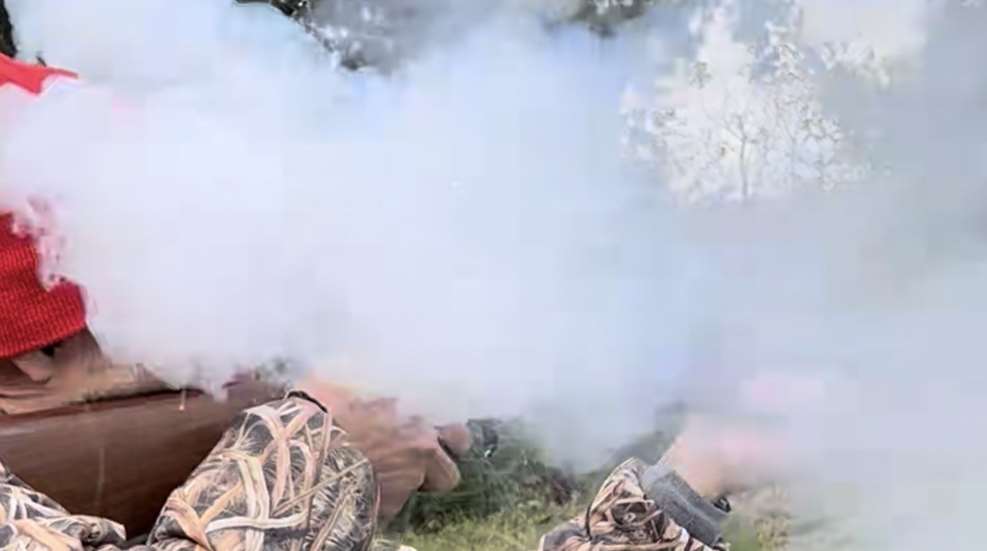
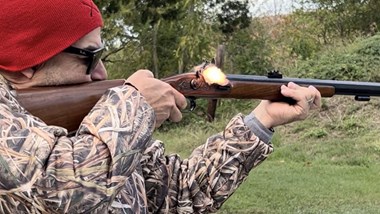
If you are interested in firearms older than one that is chambered for obsolete cartridges, there are plenty of new and used flintlocks and percussion cap rifles and varying calibers to choose from. These types of firearms are collectively known as “muzzleloaders.” If you choose to start muzzleloading it is very important to follow the rules and learn the safe and proper use of that firearm.
Fortunately, if anyone is looking to get into muzzleloading, there is an NRA Basic Muzzleloading course available. It is important that anyone using a muzzleloader take the NRA course is because there are additional safety procedures that apply only to this type of firearm that must be heeded.
Those who know me know I advocate for becoming knowledgeable in your field of interest. If your interest is in firearms, you have a duty as a responsible gun owner to become knowledgeable about firearms. This does not stop whether it is with the gun you carry for self-defense or the one you use for hunting.
Learning about guns from the past is not only entertaining, but also educational. By applying what you learn to hunting, the excitement and that “new hunter” feeling returns. The more you read, the more you know, and before you know it, you suddenly realize that you have become a more knowledgeable shooter.
—Heidi Lyn Rao