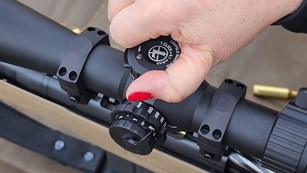

When choosing a firearm, you can do your research and purchase the best gun on the market for its intended use. The problem is that the best rifle and scope combination is no match for Mother Nature. Scopes with ballistic turrets or dials can help counter the external factors that affect a rifle’s performance.
Unfortunately, external factors that can affect your rifle’s performance can be hard to predict and can be even harder for which to compensate: gravity, wind, altitude, temperature and humidity.
Gravity
Gravity is a constant force on everything in the universe. Bullets and other projectiles are no different. There is a common misconception regarding the myth of the rising bullet. There are a lot of people who believe that a bullet shot from a firearm rises before it falls to earth. That is simply against all laws of physics. The bullet can never rise above the barrel because as soon as the projectile leaves the firearm, gravity immediately begins pulling it down by gravitational force.
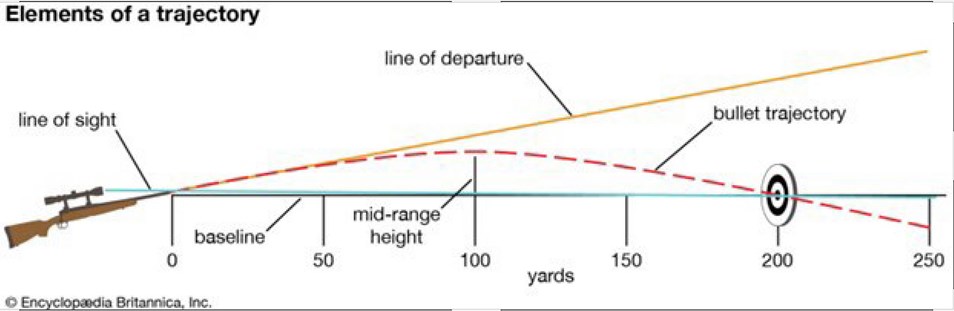
This force is greater than many shooters think. For example, if you had a loaded rifle secured in a vise and horizontal to the ground, and you held another cartridge between your fingers at the same height as the muzzle, and you discharged the firearm at the same time you release the cartridge you are holding, both the fired bullet and the dropped cartridge would hit the ground at the same time! Even though they may be hundreds of yards apart! Gravity is constant.
As soon as a projectile leaves the muzzle and gravity pulls on the bullet, the point of impact is affected. Gravity alters the trajectory of the bullet and affects the drag on the projectile. This is what is meant by bullet drop. This is why someone who is sighting in their rifle might adjust their scope so that the impact may be an inch high at 100 yards; if they are shooting at a deer at 200 yards, the bullet will still hit in the vital area of the animal. This is done to ensure that the game animal is recovered after a quick, clean and ethical kill.
Wind
Wind speed is the most common external factor that affects firearm performance. The harder the wind blows the more you have to compensate to ensure that your bullet or projectile hits its mark. Additionally, the further the shot or distance to your target, the more wind affects the bullet’s path of travel.
The amount of effect that wind can have on a bullet can be mitigated by the projectile’s design. Longer bullets with a high Ballistic Coefficient (BC) can handle wind better than a shorter bullet with a low BC. Likewise, heavier bullets with a high Sectional Density (SD) can travel straighter than a lighter bullet with a low SD.
If wind alone was not bad enough for ballistics, windy days are often accompanied by gusty conditions. It is hard to compensate for wind gusts because these conditions can be unpredictable. Wind gusts can vary in intensity and intervals. This type of wind condition can almost put an end to a hunting trip.
Fortunately for hunters, there are wind meters on the market to help adjust when there are high wind conditions. Together with ballistic charts and scopes with a windage reticle, a hunter can adjust his or her shot to hit their mark.
Altitude
Altitude is often the most overlooked factor when it comes to firearm performance. At higher altitudes, the air is thinner and there is less atmospheric pressure. This means that there is less air resistance and drag. This results in a bullet or projectile at higher altitudes maintaining velocity but with less drop or downward trajectory than at lower altitudes.
The amount of bullet drop or downward trajectory varies depending on where the rifle was sighted in at and where you are hunting. Usually, the amount of drop is not too great to miss the vitals in a larger animal such as an elk at closer ranges such as 100 yards. This means that if you are hunting elk or moose in higher timber country where the shots are within 100 to 150 yards, climbing and descending mountains should keep you in the “kill zone.”
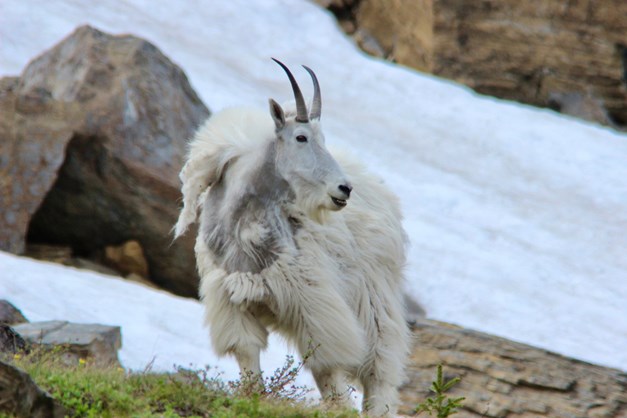
The problem comes if you are hunting at extremely high altitudes for mountain goats, stone sheep, or Dall sheep. These animals are usually in high, open country. That means that your shots could be more than 200 yards. These distances combined with the smaller size of the animal could result in a miss or wounding loss.
Temperature
Historically, temperature has been the “Achilles’ heel” of the great hunters and explorers of Africa. Early cordite cartridges were susceptible to heat. The extreme heat encountered in Africa led to cartridges and powder expanding, causing dangerous pressures in the chambers of the firearms. The expansions caused by heat also lead to cases getting stuck in the chambers and therefore preventing extraction. This could create a deadly situation if a 2-ton elephant is bearing down on you, or a set of claws and teeth decide to have you for dinner!
Temperature affects ballistics similar to how altitude can cause issues. There are two main temperature factors that affect firearm performance. The first is how ambient, or outside air, temperature affects your bullet’s impact. In warmer temperatures, ambient air is less dense. That means there is less drag and in turn, means less bullet drop or downward trajectory.
In cooler temperatures, the opposite is true. In cooler temperatures, the ambient air is denser. That means more air resistance or drag and that, in turn, means more bullet drop or more downward trajectory.
The problem with temperature is not whether the ambient air temperature is warm or cool, but what the temperature was when the firearm was sighted in versus when the firearm is used. It is always a good idea to sight in your rifle when the temperature is like what the temperature will be when you plan to hunt. If you hunt in the morning, try to sight in your rifle earlier in the day. If you hunt in the evening, try to sight in your rifle later in the day.
The second issue that can be temperature-related is higher cartridge pressures. Warmer temperatures can lead to higher pressures. Usually, these higher pressures are not enough to create a dangerous situation. What it can do though is increase the velocity enough to affect the point of impact of your bullet. This is why it is important to periodically check the zero of your scope periodically, and not just once a year. This is especially true if you plan to travel to another region or country to hunt.
Humidity
Humidity is the hidden destroyer of ballistics. More humidity equals denser air. When the humidity is high and the air is dense, the more drag your bullet or projectile encounters. As mentioned above, more drag equals more downward trajectory.
It is difficult to compensate for humidity because most scopes do not have turrets that have such fine adjustments. Additionally, humidity can affect wood stocks and any metal that is not properly treated or sealed.
Coastal areas are particularly susceptible to the effects of humidity. In the southern Gulf Coast states, shooters must deal with a combination of high temperature and high humidity. Northwestern Pacific states must deal with cooler temperatures and humidity. This means that if you sight in your rifle in a dry or arid state, your scope might not be zeroed in if you travel to a more humid environment.
The best way to deal with external factors that affect your rifle’s performance is to be proactive. Do not wait until after you miss your deer, elk, bear or whatever else you were pursuing. Take the time now, and well ahead of that once-in-a-lifetime hunting opportunity you are preparing for, to ensure your scope and rifle are in-tune and zeroed in, similar to the external conditions where you will be hunting.
Making sure that your rifle is sighted in is important to make that quick, clean, and ethical kill. When you understand the external factors that affect your rifle’s performance, you will become a better marksman. Remember, an ethical hunter ensures that his or her equipment, especially the firearm, is in proper working order.
—Heidi Lyn Rao