One of the hardest things that a firearm instructor faces, especially with a new shooter, is building confidence in their students. Without confidence, your student doubts themselves, their gun, and their ability to hit the target. This is a bad combination, and the instructor faces an uphill battle unless he or she can be successful building confidence in their students.
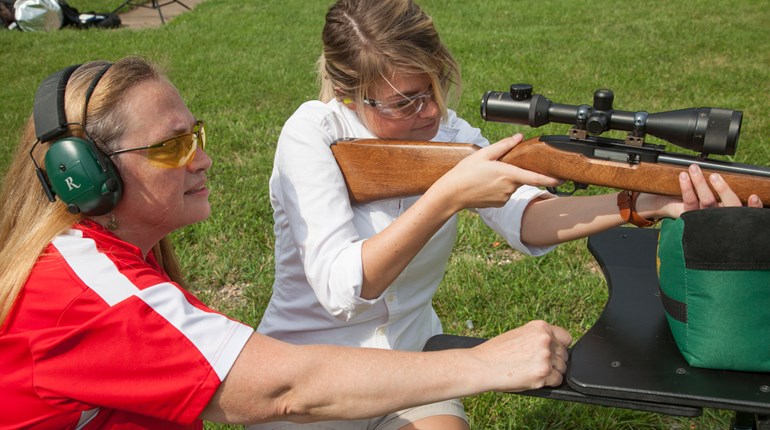
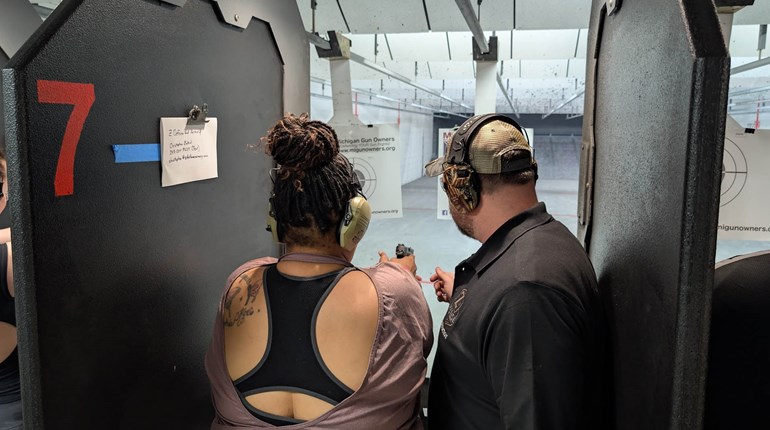
If a firearm instructor has been properly trained, he or she has no problem helping a new shooter build confidence. That is why anyone who introduces firearms to other people and teaches them how to be a safe and accurate shooter, should become an NRA Certified Firearm Instructor. During the instructor-level training course, instructor candidates are taught tips and techniques to achieve success in their classes and on the range. There are several things that an instructor can do to build confidence in their students.
Bring the Right Tools
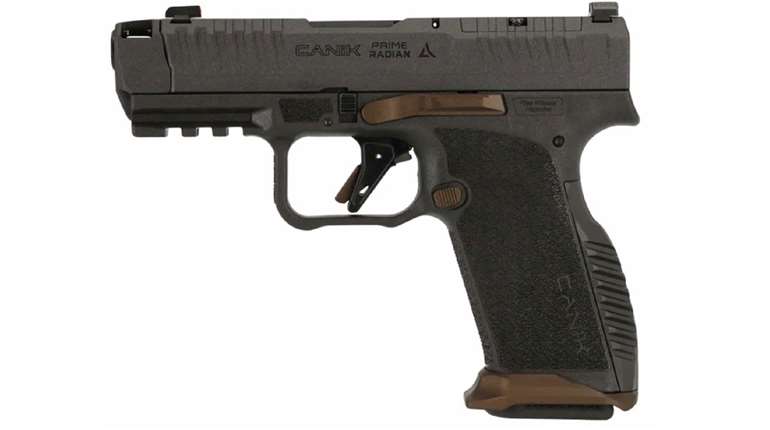
Remember, your students need to crawl before they can walk! This is one of the first mistakes firearm instructors usually make. For example, you may have a first-time shooter who needs help because he or she does not know the first thing about firearms. The problem arises when this new shooter shows up for their private lesson with a 9 mm, .40 S&W, or a .45 ACP. These calibers can be very difficult for a new shooter to master.
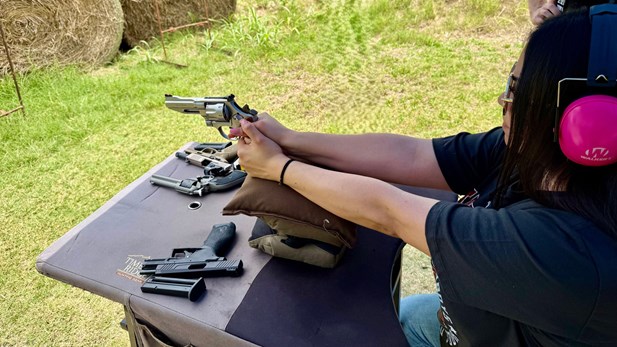
One of the first things that I ask a student when we meet for a lesson is why they chose the gun they had. Almost every time the student tells me that their father, grandfather, friend, or another family member “picked it out” for them, or the “guy” behind the gun counter told him or her that “this” gun is what they needed.
I teach quite a few NRA Basic Firearm Training courses and I can tell within a couple of shots if the student first learned to crawl before they could walk. The challenge I have with a lot of students is that they not only skipped the crawling part, but they also skipped the walking part and wanted to come out of the gate running!
As the instructor, you need to show up with the proper tools. If you hire a plumber or an electrician, you expect that they will show up with the correct tools they need to repair whatever issue that you called them for. You may not even know what tools they are supposed to have, but you still expect them to show up with them. This goes for you too. You were hired to do a job, now you must bring the right tools!
If you show up for a lesson and you fail to bring a variety of firearms of different weights, calibers, and sizes, you have essentially left your tools at home. Think of it like this: if the gun your student shows up with has too much weight, too much recoil for them to handle, or does not properly fit his or her hand, and you do not have a variety of guns for your student to try, it is like showing up to a job site without the proper tools.
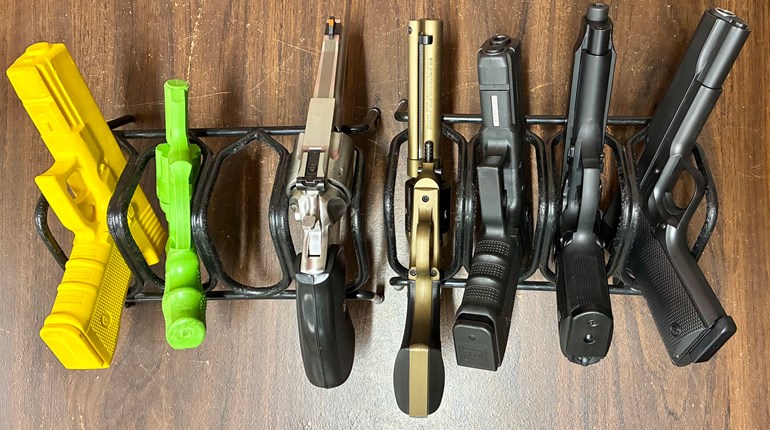
When I schedule a lesson, especially for a new shooter, I have a pelican-style hard case that has 8 different handguns. These guns vary in size, weight, caliber, and actions. This way the student gains confidence by shooting a gun that properly fits them. If the gun fits them, he or she is going to shoot better than with the gun they brought to class. This makes a happy student who will more than likely show up for more training and send referrals your way.
Start Close
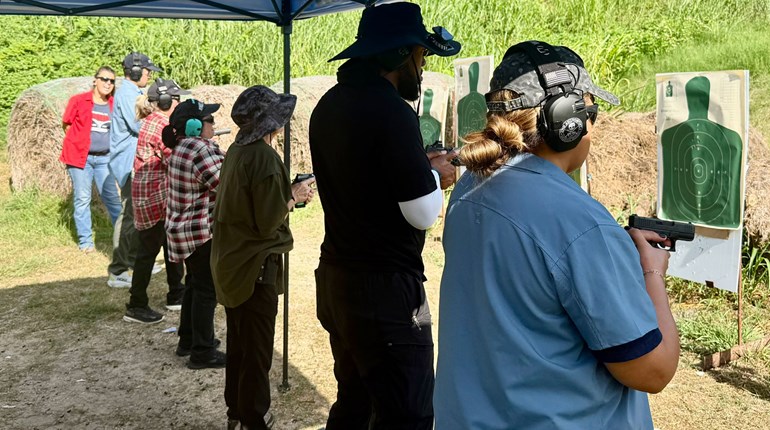
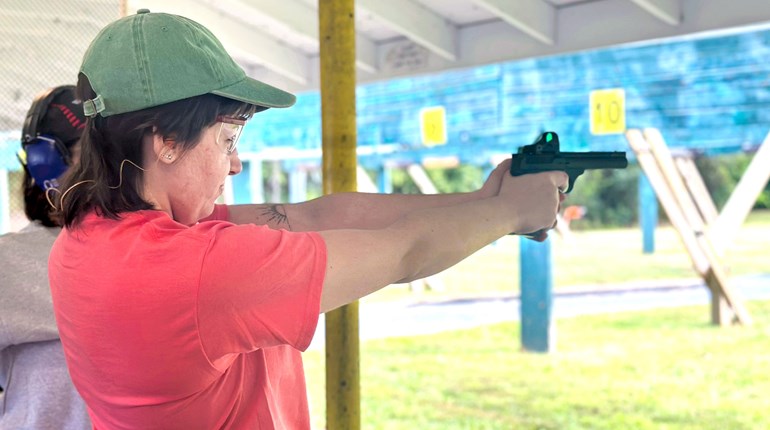
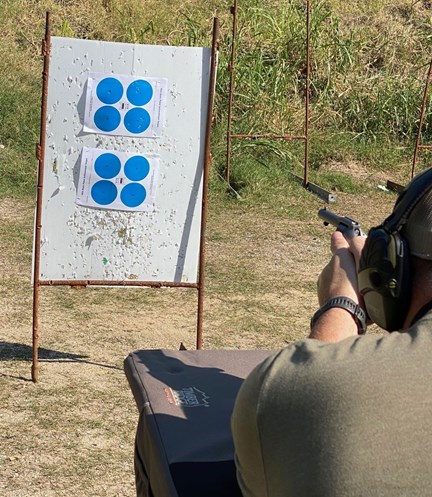
In the NRA Basic Rifle and the NRA Basic Pistol courses, the distance one must shoot to earn a “Level I certificate” for both classes is relatively close. The Level 1 rifle course is set at approximately 25 yards, and the Level 1 pistol course is set at 3 to 5 yards. This begins the confidence building.
In every class, when students see the distance they will be shooting and because of the relatively close distance to the target, it is not uncommon to see expressions of relief on all the students’ faces. Whether a new shooter who is learning the fundamentals for the first time, or an instructor candidate who will be shooting for score and qualifying, the range is usually the biggest stress students have coming into class. By calming your students down, regardless of their experience, their confidence level explodes.
When you, as the instructor, increase your student’s confidence level, success comes next. Afterall, you cannot have success without confidence. Both the instructor and the student want success. Success is not only a reflection of the shooter’s marksmanship skills, but it is also a reflection of the instructor’s teaching skills.
When your student gains confidence and success, he or she is more likely to become an advocate for the 2nd Amendment and hopefully a new member of the NRA. If you fail as an instructor, your student may not continue with their shooting journey and may not have a firearm for personal protection when he or she needs it. Additionally, if your student does not gain confidence and achieve success, we could lose someone who might make it a point to always vote for 2nd Amendment Rights.
Blank Out
Getting your student to shoot an acceptable grouping is another great way of building their confidence. A shot grouping is when shots are placed in a relatively small circumference on the target. If you are having a hard time getting one of your students to shoot an acceptable grouping, there are two confidence builders that can help your student. Both techniques involve “blanking out.”
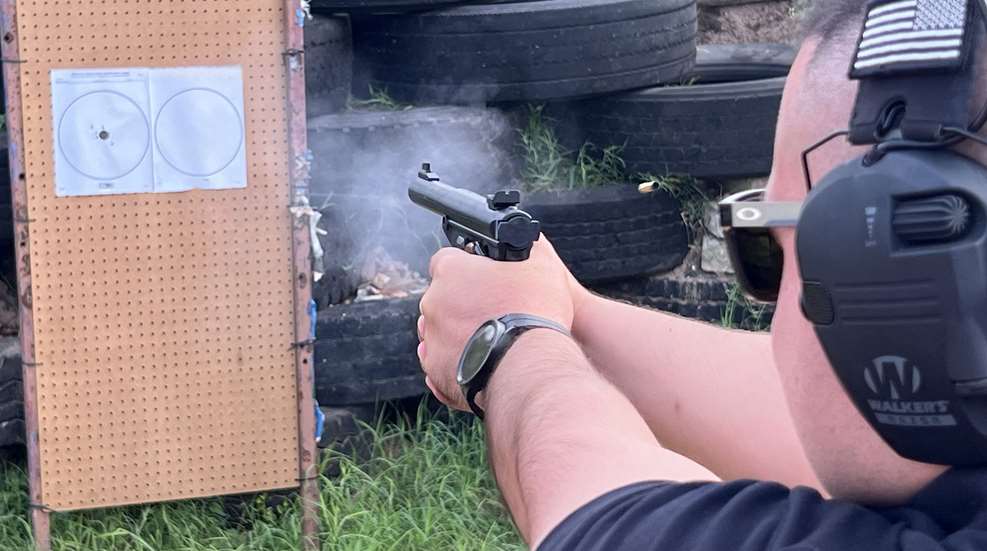
Blanking out is when you use a plain piece of paper as a target for your student to shoot at. This will get the grouping you are looking for. First, take a blank piece of paper or turn one of your targets over to the clean side, and then draw about a ½” to a ¾” dot or circle in the middle. Next, tell your student to aim at the dot each time they shoot. It is important that you tell them to shoot at the dot each time and resist the urge to “chase” their rounds, trying to self-correct each subsequent shot. We want to make sure they are doing the same thing each time, with every shot. This should get them shooting a grouping that you, the instructor, can work with.
If the student is still having a hard time shooting a grouping, have them speed up. This is the second thing to do to build confidence in your student. Normally when you speed up your student’s shooting, their shot grouping gets tighter. Once your student sees their improvement in real time, they begin to have more confidence in their shooting ability.
Everything is Good
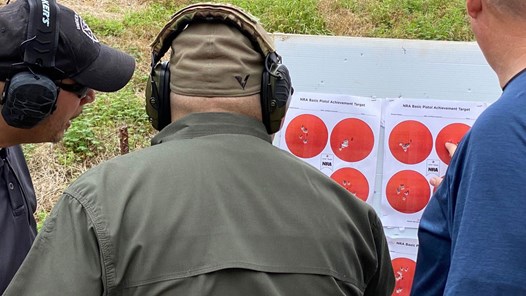
This is my favorite way of building confidence. It is simple: Every shot is a good shot! I try to stay as positive as I can be with my students, especially new shooters. Even when they miss the whole target, I tell them, “Good shot.” When they ask me why I called it a good shot, I tell them that every shot is a good shot because I will always find something good they did, like keeping the muzzle pointed downrange or keeping their finger off the trigger until they were ready to shoot. Sometimes we can learn more from a bad shot than we can from a good shot.
We want our students to practice the skills we teach them at the range. When your student starts self-analyzing what went wrong with a shot he or she just “threw,” your student is gaining confidence in themselves without having to rely on the instructor’s feedback. By calling every shot a good shot, the instructor is enforcing the importance of practicing at the range. It takes repetition, patience, and time behind the trigger to hit the target where we want to hit it, over and over again.
Look Professional
It is important that the instructor looks professional. We only have one chance to make a first impression, so instructors should take this opportunity to start building confidence in their students when they first meet them. In the NRA Basic Instructor Training (BIT) course, we are taught that instructors should provide a “welcoming and safe venue” for our students. This includes how we dress.
In a basic class, instructors should avoid dressing tactically or adorned with every patch and rocker they have collected. This intimidates many students, especially new shooters. Intimidation destroys any chance of your student gaining confidence if you come across too aggressively, even if only in appearance.
Instructors should always look clean and professional, like “business casual.” Starting at the top, instructors should wear a clean brimmed hat, a nice tucked-in and buttoned-down or collared shirt, appropriate patches for the discipline they are teaching, a belt, long pants, and close-toed shoes. Most of these items can be found in the NRA Store. Many of these items in the NRA Store are restricted items, meaning that you can only order what you are certified to teach.
A professionally dressed instructor can start building confidence in their students at first sight. Being a professionally dressed instructor shows that he or she takes pride in being an instructor and his or her ability to teach.
New shooters must be confident: confident they can safely use their firearm; confident they know how to properly use their firearm; and have confidence in themselves that they can hit where they are aiming. A good instructor can build confidence in his or her students by using the proper techniques.
Ultimately, a student’s confidence might be dependent upon their instructor. This is why it is so important for firearms instructors to go through the NRA’s training to become an NRA certified Firearm Instructor. Remember, according to the NRA’s Education and Training Division, “Students have come to NRA Trainers trusting that they will get the Gold Standard in firearm training.”
—Heidi Lyn Rao