With spring turkey time approaching, it is important for hunters to remember the threats that come with springtime in the woods, including adverse weather, venomous snakes, bears, bobcats and disease-carrying ticks. The key to staying safe? Preparation.
Temperature
Depending on the state in which you are hunting, temperatures during spring turkey season can vary greatly from below freezing to 100 degrees Fahrenheit (F). This means that hunters could be facing life-threatening situations such as hypothermia or hyperthermia. Hunters should be aware of sudden weather changes that could catch them off guard.
Prepare by having enough warm clothes in cooler climates, and enough water in the hotter climates.
Hypothermia occurs when a person’s body’s core temperature drops below 95 degrees F (35 degrees Celsius). There are three levels of hypothermia: mild, moderate and severe. Mild hypothermia occurs when your core body temperature is between 90 and 95 degrees Fahrenheit (32 degrees to 35 degrees Celsius). This level includes body shivering, being alert but possibly with confusion, and poor coordination.
Moderate hypothermia occurs when the body’s core temperature drops between 82 to 90 degrees Fahrenheit (28 degrees to 32 degrees Celsius.) At this level shivering may stop, the person may have a slow pulse, shallow breathing, and become very drowsy.
Severe hypothermia occurs when the body’s core temperature drops below 82 degrees F (28 degrees Celsius). When this occurs, there is no shivering, muscles become rigid, and pupils become fixed. Death occurs when the body’s core temperature drops below 75 degrees F (24 degrees Celsius).
There are also three levels of hyperthermia. These include heat stress, heat exhaustion, and heat stroke. Heat stress occurs when the body’s core temperature rises between 100 degrees and 101.2 degrees Fahrenheit (38.4 degrees Celsius). When this occurs weakness, fatigue, and muscle cramps can happen.
Heat exhaustion occurs when the body’s core temperature rises between 101.3 degrees and 104-degrees Fahrenheit (38.5 degrees to 40 degrees Celsius). When this occurs, the body experiences heavy sweating, a rapid pulse, and loss of consciousness.
Heat stroke is serious. This is when the body’s core temperature rises above 104 degrees Fahrenheit (40 degrees Celsius). Heat stroke causes extreme confusion, delirium, and sweating stops. Renal failure can occur, which can lead to death.
Venomous Snakes
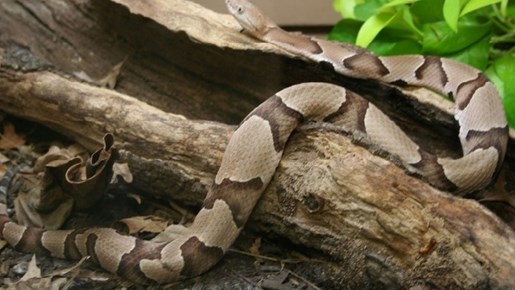
Rattlesnakes and copperhead snakes are always a surprise visitor during spring turkey season. Snakes are cold-blooded animals, so they are active relative to the outside or ambient temperature. Rattlesnakes, like all cold-blooded animals, do not hibernate but rather enter a state of brumation. Brumation is a state of dormancy that is not as deep as true hibernation.
During brumation, depending on the temperature, cold-blooded animals can wake, move around, and drink, since they still need to stay hydrated. It is not uncommon for snakes to come out in the morning during springtime and lie in the sun. The further south in the country you go, the more likely you are to encounter a rattlesnake or a copperhead snake in the morning.
It is not uncommon during spring turkey season to be sitting motionless against a tree while calling a turkey, to have a snake slither by. Sometimes the snake will try to nestle against the hunter or even try to get under him or her to absorb the body heat. Since rattlesnakes and copperhead snakes are pit vipers, they can sense and be attracted to heat. These heat sensors are called pit organs.
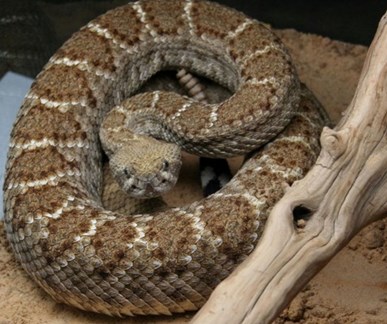
The biggest threat spring turkey hunters face when it comes to venomous snakes is walking into or out of their hunting area. Both rattlesnakes and copperhead snakes blend into ground cover, which almost makes them invisible. To make things even more treacherous, in the spring is when the snakes hatch from their eggs and enter their new world. When this happens, it is not uncommon to encounter more than 10 small baby snakes in a small area. I have seen 11 9-inch copperheads in a few square feet. In Texas, snake boots are almost essential equipment when walking through the woods during the springtime.
Bears
Bears can be a real threat to spring turkey hunters. Spring is the time when both black and brown bears awaken from their hibernation and are very hungry. If you are hunting where black bears or brown bears roam, when you are calling a turkey, you are also ringing the dinner bell for these large predators. Unfortunately, the bell leads straight to you!
Depending on the geographical region, bears awaken at different times depending on environmental factors. Black bears in southern areas may have a very short hibernation period. In extreme southern areas such as southern Florida and Texas, bears do not go into hibernation because of plentiful food sources year-round.
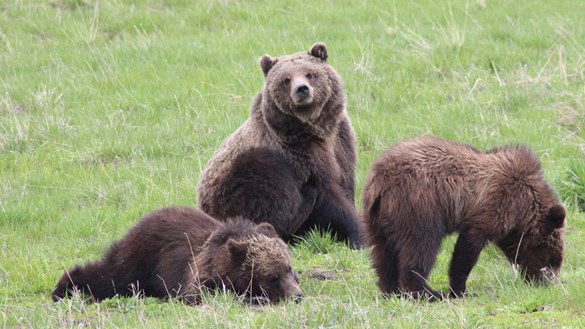
If you are hunting in areas where black and/or brown bears live, it is important to have something with you for protection. Many hunters who hunt during the spring turkey season, carry large caliber handguns and/or bear spray readily accessible on their belt.
Encountering black or brown bears can be extremely dangerous any time of the year, but coming face to face with one in the springtime can be especially dangerous. This is because they wake up very hungry after four to seven months of hibernation. During this time, they will eat anything. Additionally, when bears wake up from hibernation they devour anything they can to gain body fat for next year’s hibernation.
To make bears more dangerous, the sows give birth while they are in hibernation. Mama bears are very protective of their young. The most dangerous place for anyone to be is between a mama bear and her young. This means that when you are calling turkeys, you could also be calling a sow bear with her two to four cubs.
Bobcats
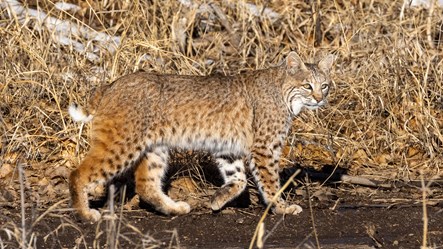
Bobcats can be very dangerous when encountered during spring turkey season. Most hunters do not give these predators the respect they deserve. Even though bobcats do not hibernate, they are still very hungry trying to make up for the little food available during the winter. Bobcats, like bears, are drawn to the sound of turkey calls.
Encounters with bobcats while calling turkeys are usually an ambush-style attack. The scenarios are very similar. The hunter, fully camouflaged from head to toe, is seated against a large tree to break up his or her profile. With camouflaged hands, looking through a camouflaged veil, the hunter starts to call. Unbeknownst to the hunter, a bobcat is sneaking up from the rear. The bobcat approaches on the other side of the tree that the hunter is leaning against, thinking a turkey is on the other side, emerges and pounces, with four sets of razor-sharp claws. This results in two very surprised combatants and ends with one confused cat bounding away and the hunter left with very deep slashes on his or her face and hands.
Ticks
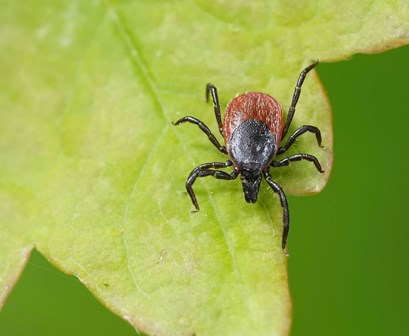
Ticks can be a serious threat during the spring. This is when the young hatch and their numbers explode. Tens of millions of baby ticks and adult ticks are looking for a host to feed on. Unfortunately, turkey hunters are on the menu. Ticks can end up in every nook and cranny of your body, and in the most undesirable places.
Ticks carry many diseases that can make people very ill. These diseases include Lyme Disease, Anaplasmosis, Babesiosis, Ehrlichiosis, Powassan Virus Disease, Borrelia miyamotoi Disease, Borrelia mayonii Disease, Rocky Mountain Spotted Fever, and Tularemia. All these diseases can affect humans. Some of these tick-borne diseases are regional and some can be encountered through the lower forty-eight.
It is important that anyone entering the woods should use appropriate insect repellant, such as DEET, wear long-sleeved shirts and long pants, and a cap. In heavy tick areas some individuals not only use insect repellant but will dust their legs with sulfur for extra protection. It is also important for anyone who is in a heavy tick area, conduct a self-body inspection while bathing for any “hitchhikers.” Any ticks found should be removed and disposed of.
Spring turkey hunting can be a very addictive. The more addiction you have, the more you will be in the woods chasing gobblers. The more you are in the woods hunting the more of a chance that you could run into adverse weather, venomous snakes, and encounter wildlife with teeth and claws, and disease-carrying ticks. Being prepared for these springtime surprises is the best way of staying unscathed.
—Heidi Lyn Rao