When hunting or hiking in the backcountry or extended camping in a “dry” camp, it is sometimes necessary to replenish drinking water. In hot climates or at high altitudes, an individual needs to drink about 1 quart of water an hour. At approximately 8 lbs. per gallon of water, it would be nearly impossible to carry all the liquid necessary for an extended hunting, backpacking or camping trip. Replenishing drinking water requires purification to remove bacteria, germs, and parasites. There is nowhere on the planet, except for the extreme poles, that water is safe enough to drink without purification.
Giardia and Cryptosporidium are two of the biggest threats to outdoor enthusiasts. Giardia and Cryptosporidium are protozoans that live in water. When these parasites are ingested, they infect the intestines of its host. These parasitic lifecycles include a swimming stage, and they reproduce from cysts. The danger of these protozoans includes violent diarrhea which can lead to dehydration. Dehydration can become life threatening in the backcountry.
There are four common methods used by backcountry outdoorsmen and women to purify water. These include boiling, chemical treatment, filtration and ultraviolet (UV) light. Each method has its own advantages and disadvantages.
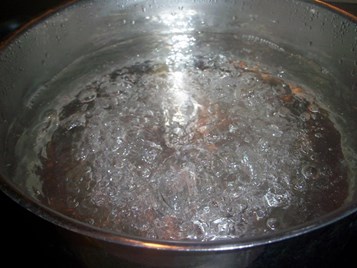
Boiling
Boiling water to purify before drinking has been used for hundreds of years, ever since “dirty” water has been associated with illnesses. It is the most effective method of water purification. To purify water by boiling, you must bring the water to a rolling boil for at least 5 minutes.
There are several disadvantages of using boiling as a method of purification. Of all the purification methods, boiling takes the most time. To boil water, you must have a heat source. This source of heat can come from a fire or from a stove. Either way, you need fuel. You either must have access to wood and a way of lighting the fire, or you need to carry enough fuel to purify all the water you need. Another disadvantage is you must have a pot or other container that can withstand the intense heat in which the water will be boiled. That brings us to the next disadvantage: weight. To purify water by boiling, you need a metal receptacle, stove and fuel. These items can take up a lot of space and add considerable weight to carried gear, especially if traveling deep into the backcountry. Lastly, boiling water does not remove any chemicals that might be in the water.
Chemical Treatments 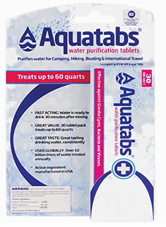
Chemical treatments used to purify water are added to drinking water to make it safe to drink. One of the most common chemical additives used to purify water are iodine tablets, household bleach, and chlorine dioxide. Chemical treatments for water purification are cheap, lightweight and easy to use.
There are several disadvantages of using chemical additives to purify drinking water. The number one drawback with chemical treatments is that you are adding a chemical substance to your body. Another disadvantage is that it can have a bad taste. Some individuals add flavored drink mixes to the water to hide the taste of the chemical additive, but this should only be done after the water is purified. It is very important to follow the directions when adding a chemical treatment, making sure you do not add too little or too much.
Filtration
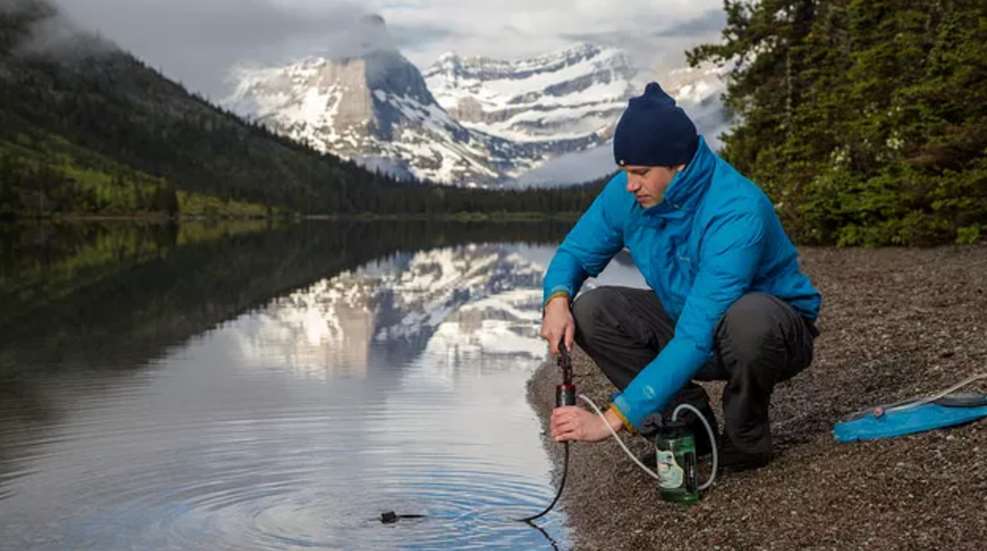
Water filters work by pumping water from a source, through a filter, and into a clean receptacle. If you use a receptacle such as a pot to dip water out of a lake or river, and fill it with unpurified water as the source to be pumped from, it is important to keep the contaminated water away from other utensils. It only takes a couple of drops of ingested contaminated water to infect an unwary outdoorsman or women.
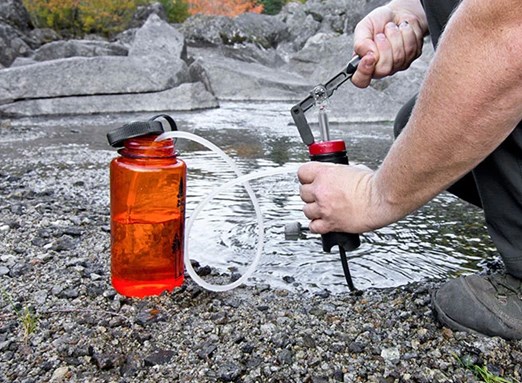
ScoutLife.org image
There are three types of filters: gravity filters, squeeze filters and pump filters. Gravity filters work by using gravity to pull the water through the filter. The advantage of gravity filters is that they do not need a power source or have electronic components. Squeeze filters work by using a hand pump to force water through the filtering system. Pump filters use an electric pump to force water through the filtration system. The disadvantages of pump filters are that you need a power source, which means carrying extra batteries which add extra weight. There can also be mechanical issues that could prevent the filter from operating properly.
There are several disadvantages of filtration as a means of purifying water. A major disadvantage of filtration is that it is not always foolproof, and some giardia and cryptosporidium can pass through and be consumed by the unsuspecting outdoorsman and woman. Another disadvantage is that filtration can take a long time to purify enough water for drinking, cooking, filling canteens, or any other use. Filtration systems can be expensive. On the bright side, filtration systems are becoming easier and faster to use as well as coming down in costs.
Ultraviolet (UV) Light
Ultraviolet (UV) light systems are used by inserting an instrument with a UV light into a bottle of water for a determined amount of time, usually a minute or two, depending on the device. These types of purification devices are electronic and run off batteries.
Ultraviolet light purification systems have many more disadvantages than the other types of water purification. First, UV purification systems can be very expensive. Another disadvantage is that this type of system is not effective in purifying murky water. Lastly, ultraviolet light purification systems are electronic and can experience problems like any other electronic systems may have. Outdoorsmen and women that use UV purification devices are advised to carry a back-up system in case of a system failure. There is also the issue of a power source. This means that users that rely on UV systems must carry extra batteries with them, which add extra weight.
It is not enough to have and use purification methods for drinking water to prevent sickness from giardia. Remember, it only takes a microscopic amount of consumed water to make someone ill. Outdoorsmen and women need to practice good hygiene when around unpurified water sources, which is essentially any lake, river, spring or any other water that is encountered.
Many unsuspecting outdoorsmen and women are infected by giardia by dipping their canteens in a water source even after their water is purified. This is because they inadvertently forgot about the water on the outside rim of the container. When their lips touch the canteen to drink, they come in contact with the water on the outside of the container, letting the giardia or other contaminants into their mouths. The same outcome can be the result of placing your hands in any water source and without thinking, touching your mouth or eyes, and becoming infected with a contaminated source.
Water is fun as well as necessary for survival. Unfortunately, water can also be life-threatening if the outdoorsman or woman does not practice sanitary procedures. Sterilize all cooking utensils and be careful whenever handling unpurified water, no matter how inviting the water source may seem.
—Heidi Lyn Rao