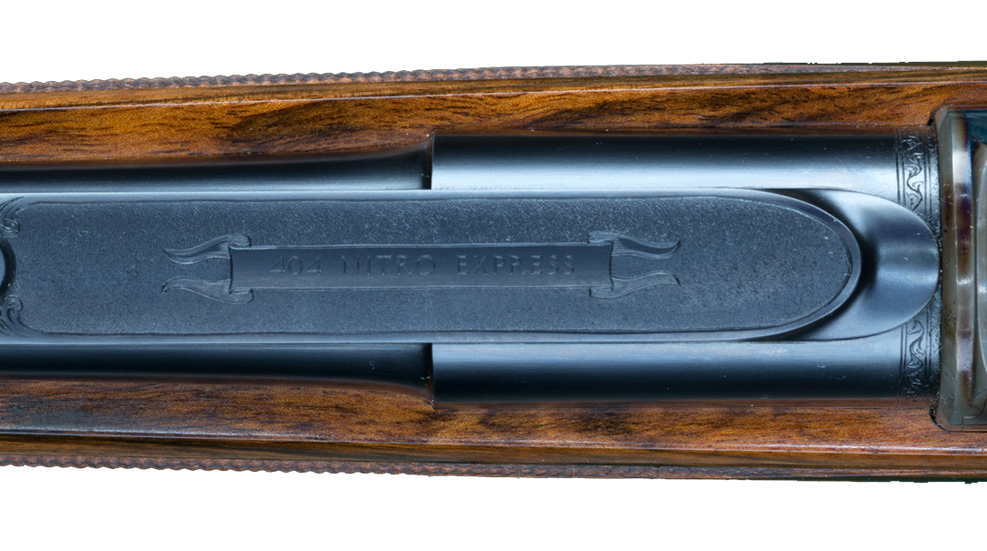
When purchasing a rifle in today’s market, understand that there are terms and phrases that are targeted at consumers. For example, twist rate, sub-MOA, trigger types, forged barrels and action types fill a gun manufacturer’s catalog and website. These descriptions are frequently used to describe a gun manufacturer’s stock guns that are readily available to consumers at retail outlets. In other words, these are the firearms you find on the shelf, ready for immediate purchase.
There is another phrase that seems to be more popular today than in past years: “glass bedding,” which is showing up more frequently in gun magazines, advertisements and forums. Unfortunately, many gun owners use this phrase when engaged in “gun speak,” but few know what it actually means. Glass bedding, usually found on custom high-end rifles, can also be found on special-order rifles from top-end gun companies. Glass bedding is almost always used in conjunction with the term “free floating barrel.”
If your favorite rifle is not glass-bedded and you wish to add it to your firearm, seeking the services of a qualified gunsmith can solve this problem.
Free-Floating Barrel
Again, glass-bedding is often used in conjunction with the phrase “free-floating barrel,” which are common, especially on new guns. Older, pre-World War II firearms usually do not have free-floating barrels. Older firearm barrels are fixed to the stock or are screwed down. Free-floating barrels can be found on both inexpensive and economy-priced rifles as well as on high-end guns. This is unlike glass bedding, which is usually only found on more expensive firearms.
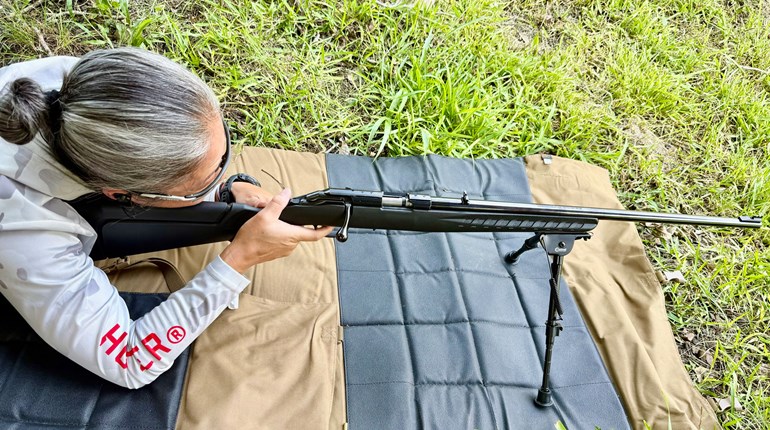
Free-floating barrels means that the barrel is connected to the receiver but never comes into contact with anything else such as the stock, stock forearm, barrel bands, etc. Free-floating barrels are used to improve accuracy. The improved accuracy occurs because the barrel is not restricted by touching anything that might affect bullet placement.
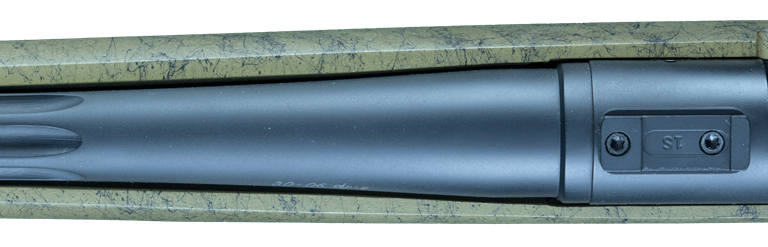
It is easy to tell if your firearm has a free-floating barrel. All you have to do is take a piece of paper or a dollar bill and run it under the barrel between the stock or forearm. If the piece of paper or dollar bill runs smoothly all the way to the receiver, the barrel is free floating. If the piece of paper or dollar bill hits a rough spot or hangs up, the barrel is touching the stock and can affect its accuracy. If there is just a rough spot or the piece of paper is obstructed and there is nothing attaching it to the stock, simply remove the stock and use fine sandpaper to smooth out these areas. If you must do a lot of sanding, make sure that you re-seal the wood so that it is not affected by external conditions such as rain or humidity.
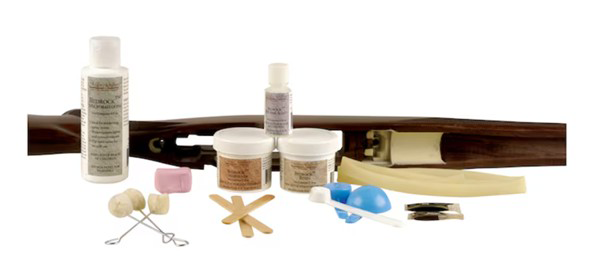
Glass Bedding
Glass bedding is the process of using a special epoxy compound between the stock of the rifle and its receiver to mold the receiver and stock together, creating a precise fit. This means that each rifle’s glass bedding is unique, because no two receivers are the same and no two stocks are the same. Even if these two firearms are the identical model coming off the exact same machine. There will be slight differences.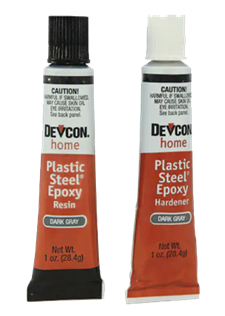
The glass-bedding process starts by removing the stock from the receiver and barrel. Using a barrel bedding tool, the barrel channel is shaved down to make room for the epoxy to sustain the free-floating barrel. Next, bedding tape is applied to the underside of the barrel to maintain spacing. A releasing agent is applied to the bedding tape for easy removal after the compound dries. The epoxy or bedding compound is then liberally applied to the stock forearm as well as where the receiver of the rifle sits. The barrel and receiver are then placed back in the stock and secured using its screws to hold it in place, removing any excess epoxy. After 24 hours the barrel and receiver are removed along with the bedding tape and any rough spots in the epoxy are smoothed out for a tight, glove-like fit.
If your rifle is properly glass bedded, there should be no movement between the receiver and the stock while shooting. It should be able to withstand the recoil from your specific rifle. Any movement between the receiver and the stock will adversely affect accuracy, no matter how little movement there is. The glove-like fit should basically make your receiver and stock one piece.

Glass bedding not only improves the firearm’s performance by eliminating movement of the receiver, but it also reduces stress on the whole firearm. Glass bedding with a free-floating barrel further increases accuracy and consistent shot placement. Other benefits include creating stability, providing a perfect fit, and improving harmonics for consistency in barrel vibrations and movement. All of these things eliminate internal factors that might affect rifle performance.
Glass bedding and free-floating barrels can no doubt improve the accuracy of your firearm, but it also takes some work on your part. Having a rifle that is glass bedded and has a free-floating barrel is not a substitute for practice and range time. You still need to do your part and become proficient with your firearm. Additionally, to get the most out of your firearm regarding accuracy, you must put the time and expense into finding which ammunition performs the best out of your rifle. Think of glass bedding and free-floating barrels as any other attachment such as scopes or scope mounts. For example, a quality rifle scope is more accurate than an inexpensive scope. The same would apply to having a quality bedding job. Additionally, quality scope mounts hold the scope so that there is no movement between the scope and the rifle. The same would apply to a quality bedding job to eliminate any movement between the receiver and the stock.
Remember, you can only get as much performance out of your firearm as it is capable of giving. Higher quality firearms are going to give you better outcomes than inexpensive guns. The more you have invested in your firearm, the greater the return you will receive.
—Heidi Lyn Rao