
A firearm is only as good as its internal components, design and relationship with the cartridge for which it is chambered. There are internal factors that can either make a gun great, or factors that make a gun destined to be sold or traded. A not-so-great gun might not be the firearm’s fault. It could be that the purchaser chooses a firearm that was not intended for a specific use.
There are four internal factors that affect a firearm’s performance: bullet design, twist rate, barrel length, and achievable velocity.
Bullet Design
Matching the right cartridge to the right firearm design is imperative for the performance of the projectile. For example, this means that spitzer-type bullets work better in some guns while round nose bullets work better in others. Bullet design plays a big part in performance.
Many factors associated with bullet design can affect a bullet’s performance, including bullet weight, sectional density (SD), ballistic coefficient (BC), and the type of bullet used. Together, these characteristics determine the path it takes to the point of aim and how it performs when it reaches the target.
Bullet design dictates what the projectile does when it hits its intended target. A soft nose bullet is designed to open quickly and expand to create a large and deep wound channel that allows for quick blood loss, resulting in a more ethical kill. Many modern hunting cartridges are now equipped with ballistic tips. This allows for quicker and a more consistent “mushroom.” Round nose and solids that have a bonded jacket are designed for deep penetration to reach the vitals. Many solids for dangerous game animals are designed to mushroom very little or with very little distortion.
The type of bullet that you choose should be dictated by the type of animal that you are hunting. For example, if you are hunting pronghorn antelope on the plains of Wyoming, you might want a medium-caliber bullet such as .265 Win. Mag. with a high ballistic coefficient that will resist air drag and have a flat trajectory. Likewise, if you are hunting large game animals in timber where wind is not a big factor as it would be on the prairie, you might opt for a heavier bullet with a lower ballistic coefficient. In this scenario, if you are hunting elk or bear, you might want a larger grain bullet such as a .375 H&H for deep penetration to swiftly reach the vitals.
An important factor when selecting a bullet should be “weight retention.” Many hunters incorrectly believe that if a bullet breaks apart, it will do more damage to the intended target. The more the bullet retains its original weight after it impacts and stops penetrating, the better the projectile. This is because a bullet that breaks apart loses energy too fast. The more weight the bullet retains, the more energy it retains.
Twist Rate
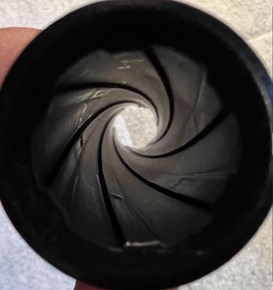
Accuracy depends on the twist rate of the barrel, which is what stabilizes the bullet or projectile. According to noted gun writer Terry Wieland, there are three general rules for twist rate:
- A longer bullet needs a longer twist rate.
- A shorter bullet needs a shorter, or faster, twist rate.
- The shorter the barrel, the lower the velocity, and hence a faster twist rate is needed.
The twist rate is expressed as a ratio such as 1:8” or 1:14”. This translates to 1 rotation in the number of inches in the barrel, which is noted in the second number. For example, the 1:8 twist rate designation is one full rotation in 8 inches of barrel. The twist of a 1:14 twist is one full rotation in14 inches of barrel.
It is the twist rate that can “make or break” a caliber. The most well-known example of this is the Savage lever-action Model 99 chambered in .250-3,000 Savage with a 22-inch barrel. This caliber was considered one of the best all-round American cartridges. It was developed in 1899 and was the first cartridge to break 3,000 feet per second (f.p.s.). Then the engineers at Savage introduced it in heavier bullets and in carbine lengths. The twist rate was too slow for these new models and ruined the reputation of one of the best American-made rifles of its time.
Barrel Length
Barrel length is what brings the twist rate of the barrel and the velocity of the projectile together. Many ammunition manufacturers publish advertised velocities out of the longest barrels available for a given caliber. Large game ammunition velocities are often recorded out of 26-inch barrels.
Many hunters prefer hunting rifles with 24-inch barrels because of easier handling. That means if you are using ammunition out of a shorter barrel than the one used to record data, your velocities may be slightly slower. This is only an issue when shooting at long range distances.
When a cartridge is developed, it is developed around a minimum barrel length. This is to ensure that there is enough barrel to complete the combustion process. This means that to get the most out of your projectile, there needs to be enough barrel length for the complete burning of all the powder in the cartridge.
If the firearm’s barrel length is too short, then you could have incomplete combustion or powder burn. Incomplete combustion leads to loss of velocity. This leads to the bullet slowing down quicker and being subject to more external factors such as gravity and wind.
Having the proper barrel length is also important to being an ethical hunter. The correct length of barrel ensures that the bullet or projectile retains enough energy for a quick, clean, and ethical kill. Using a firearm with a barrel shorter than the cartridge was designed around at long distances can result in wounding loss. This is because too much energy was lost before the projectile struck the animal.
Velocity
Velocity may seem confusing to some when described as an internal factor. This is because when we speak of velocity, it is normally in the context of external factors relating to the bullet after it leaves the barrel. External factors do have an impact on a bullet’s velocity, but it is the internal design of the firearm that optimizes the velocity of a projectile.
The twist rate in combination with the barrel length are the biggest factors in velocities. Generally, the longer the barrel, the higher the velocity. Additionally, the faster the twist rate, the higher the velocity. Unfortunately, it is not that simple though.
It takes precise engineering to get the highest velocity to perform at the optimum accuracy of the bullet or projectile. If the twist rate is too high, the bullet can become destabilized in flight, or it could fragment when it leaves the muzzle. If the twist rate is too slow, the projectile is unstable when it exits the muzzle and decreases the effective range of the bullet.
When you double the weight of the projectile, you double its energy but if you double the velocity, you quadruple its energy. It is this energy that brings your game animal down when hunting, in an ethical manner. There are two velocities that are important to the hunter. These are muzzle velocity and impact velocity.
It is the muzzle velocity that gets the bullet to the game animal or intended target. It is the impact velocity that delivers the energy needed for the bullet to do what it was designed to do, such as penetration to reach the vitals or properly mushroom.
Every gun owner should be educated in the firearm and ammunition combination that they are using. A knowledgeable shooter considers the internal factors of a firearm to ensure maximum performance. Some firearms have multiple uses while others are designed for specific activities. It is not enough just to choose a gun for its intended use. You need to choose the right gun for the right intended use.
—Heidi Lyn Rao