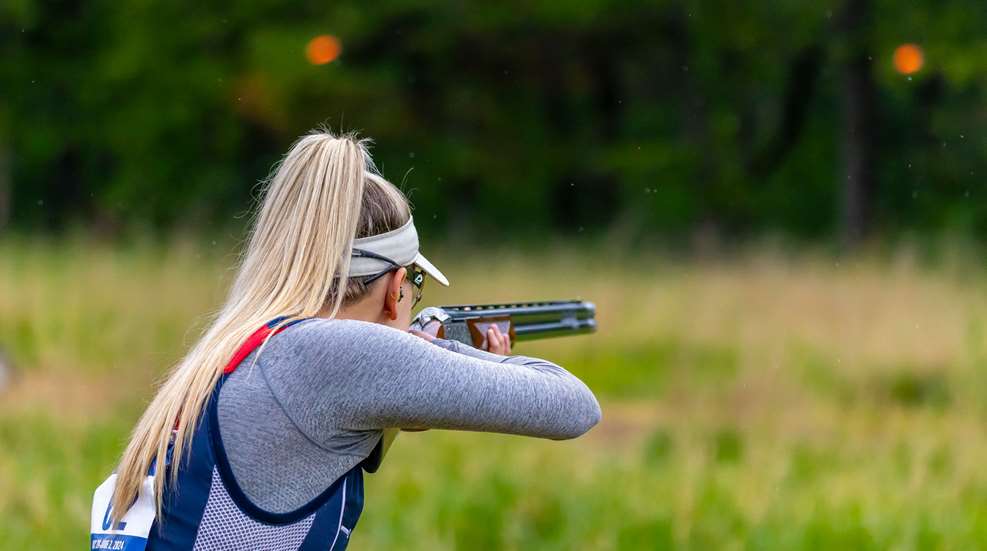
When you’re shooting moving targets with a shotgun, you have to point the gun (not aim it) at where the target is going to be, not where it currently is. Figuring out exactly where it’s going to be—the correct “lead”—is a subject for another article, but let’s talk about different ways to get the gun out in front of the target in a position to hit it.
There are many shooting techniques that will help you achieve lead, but probably the three most commonly used are swing-through, pull-away and sustained lead. They all start with the gun in a different place in relationship to the bird, and they utilize different gun speeds.
Swing-Through
I’ve heard this method called “butt-belly-beak-bang,” and that’s actually a fantastic description of how to do it. You’ll start by pointing the gun somewhere behind the target—doesn’t have to be far behind; the tail edge will often do. You will then swing the gun through the target, passing the back edge, then the middle, then the leading edge of the target. When you pass the leading edge and the gun pointed somewhere out in front, you pull the trigger.
With this method, the gun will be moving faster than the target because it’s “chasing” it. The speed of the target will determine how fast you must move the gun, which can make lead a little bit easier to build in—meaning there’s less guessing at how far in front you need to be before you shoot. For that reason, this method is often recommended to new shooters. In addition, when shooting real birds that don’t fly in predictable lines like clay targets do, swing-through might make it easier for you to stay on the bird if it dips, dives or makes other erratic moves.
Pull-Away
There are variations on the pull-away method, but typically, you’ll start with the gun pointed right at or on the front edge of the target. You will swing with the target so that the gun and the target are moving at the same speed, and then you’ll push the gun out in front of the target and pull the trigger when you think the lead is right.
You’ll match the gun speed at first, but then you’ll increase it, and how much to increase it (and therefore how far in front you are when you pull the trigger) will be determined by how fast the target is going. Slow targets need less of a pull-away than faster crossers. It’s a pretty difficult movement to get right every time, because your pull-away move will sometimes be a gentle push and sometimes nearly a jerk, moving much more quickly. All of these methods require practice to get used to, but this one probably needs more practice than swing-through.
Sustained Lead
With the sustained-lead method, the barrel starts in front of the bird and stays there, so you’re never behind it trying to catch up. You will insert the muzzle to the approximate lead you think the target needs, then continue to swing the gun at the same speed at which the target is moving while maintaining that lead (this is also called the maintained lead method for that reason). Some shooters get good enough at this that they mount the gun directly to the correct lead and pull the trigger at the moment the gun touches their cheek. This takes a lot of practice.
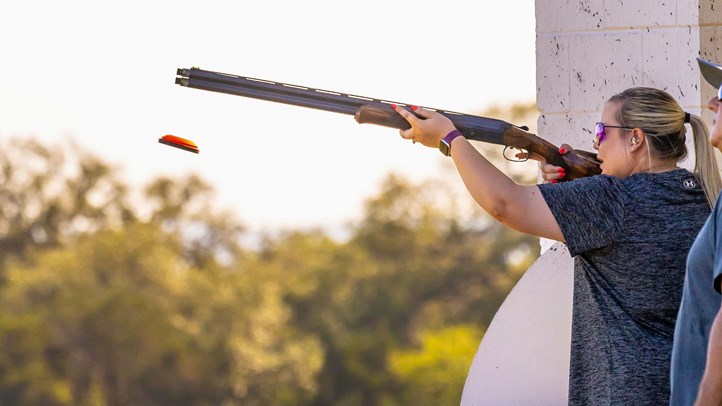
Skeet shooters overwhelmingly use the sustained-lead method, because they know the target line and speed almost exactly.
Sustained lead is possibly the most difficult method to master, but it’s considered the superior method for skeet, trap and many sporting clays shots, because the target lines are quite consistent—skeet targets aren’t juking through the air like a duck might do. It’s precise and allows you to make a small adjustment in your lead because you’ll be staying with the bird for a touch longer. With swing-through and pull-away, you only have the correct lead for a brief second, and if you miss the chance to pull the trigger at that moment, it’s gone, because your gun is moving faster than the target is. With sustained lead, the gun and the target are moving at the same speed, so theoretically, once you get the right lead, you keep it unless the target slows down or you change the speed of your swing.
Sustained lead also allows for less gun movement, especially when you get good at it, so while you still have to follow-through and keep swinging until the target is hit, you can move to a second bird or target more quickly. It’s also a great method on clay targets that are flying in a curved line, like battues and chandelles. You can’t swing-through those because they aren’t flying in a straight line.
One downside is that sustained lead works best when you know what the target is going to do, like in the various clays games, which makes it trickier to use when hunting birds. Because you are never pointing the gun at the target and coming through or past it, it’s trickier to get the target line right, and vertical error is more likely than it is with the other methods. You will have the most success with this method if you are pretty good at understanding leads, which makes it a bit more of an advanced method to master, but a very helpful one, especially if you shoot clays.