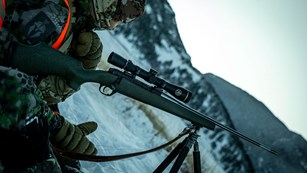

On its face, spot-and-stalk hunting seems simple, because it’s exactly what it sounds like: You spot an animal, and then you stalk up to it until you’re within shooting range. That’s the gist, but of course it’s not quite as easy as it sounds.
Spot-and-stalk is typically done in relatively open country, by necessity—you have to be able to spot the animals from far away, which is not easily done in thick cover. I’ve spot-and-stalk hunted mule deer, pronghorn and even turkeys out West, as well as plains game in Africa, and what’s so much fun about it is that every experience is radically different.
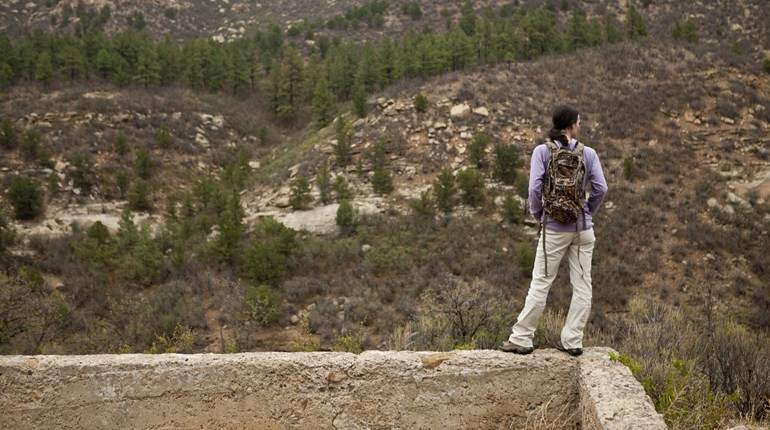
The “spot” part of spot-and-stalk can happen in any number of ways, but it typically involves what we call glassing. Glassing is settling in at a good vantage point and carefully, methodically examining the terrain with binoculars or a spotting scope. And it’s not as simple as throwing up your binos and seeing a deer standing on the far hillside—you often to look very slowly and carefully, as animals are often bedded down. You might see only a flicker of an ear behind a bush or a single antler tine poking out of the tall grass. This is why many Western hunters spend serious money on really high-end optics—they’re often looking through them for long stretches at a time, straining their eyesight.
You can glass and spot on foot or out of a truck; I’ve done it both ways. Now, you won’t be hunting from the truck—this is just the spotting part, and when you’re in vast country looking over literally miles and miles a day, a vehicle can help you cover more territory in a short amount of time. When you’ve got an animal spotted, you might be able to tell that it’s a shooter, or you might have to stalk into position just to see more of it and determine whether it’s one you want to take.
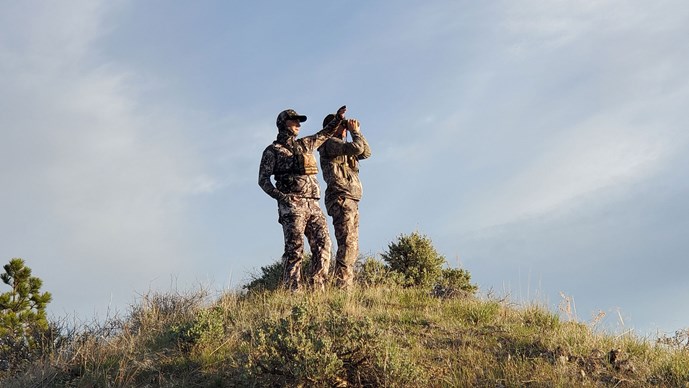
Once you’ve spotted an animal, the stalking part begins. This is the real fun, because a good stalk is not just a physical endeavor—it can be very strategic. Animals who live in wide-open spaces conducive to this kind of hunting tend to have really good eyesight or a highly developed sense of smell, or both, as a defensive mechanism. You’ll have to defeat those senses by staying hidden and keeping upwind so the animal never gets a chance to scent you. Good camo helps, but you’ll also have to use the terrain and any vegetation to your advantage. Plan on losing sight of the animal for large chunks of the stalk, which feels weird at first, but remember, if you can’t see him, he can’t see you. You usually won’t be able to make a straight line right to the animal, but rather, you’ll have to sneak around to a spot that’s upwind, taking a route that keeps you as hidden as possible and keeps you upwind of your prey the entire time. And don’t forget that winds and thermals change, especially in valleys and low spots. The wind is the most important factor here, but also take note of any other animals that might be around. Don’t get so focused on a bull that you ignore the cows milling around—if one of them busts you, it’s over.
The other thing to keep in mind when stalking is that, depending on the distance, you might have to stalk to where you think the animal is heading, not where he currently is. The farther the distance, the more likely this is to be the case. It’s not uncommon to spot an elk on the opposite ridge, casually feeding and wandering north, and having to plan an hours-long stalk that keeps you out of his sight but which you hope will let you intercept him eventually. And then you get there and discover that he changed directions and headed west instead, and the stalk is a bust.
Once you’ve got a good stalk strategy—how to get to him without getting seen, heard or scented—the stalk is on. Move carefully. If you’ve put terrain and vegetation between you and the animal, you can probably move pretty quickly as long as you’re not making a lot of noise, especially if you have a long way to go. If there’s not much of a way to stay hidden, you’ll probably be slower, taking breaks when he picks his head up from feeding. Be prepared to crawl on all fours or even Army-crawl on your belly. And when I say be prepared, I mean that literally—you might be really glad you invested in those thicker pants or a pair of gloves that can shield your hands from thorns and sharp rocks. I crawled without either in Africa chasing a red hartebeest, and let me tell you, it was slow going.
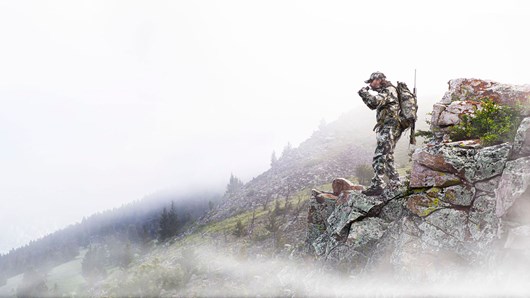
Mossy Oak image
It’s not a bad idea to practice crawling and belly-crawling with your rifle. My favorite way to do this is to crawl on my elbows, with the gun (again, empty chamber) lying across my forearms. I sometimes keep my butt in the air and crawl on my knees, or sometimes lay all the way down and wiggle in a true Army crawl. It’s slow going, but sometimes it makes all the difference in being able to stay hidden on a stalk.
So, spot-and-stalk hunting really is as simple as it sounds—spot and animal and then go stalk it until you’re close enough for a shot. However, simple isn’t the same as easy, and as you’ll learn through trial and error, stalking can often be far from easy.
—Jo Deering