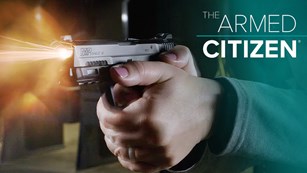

Although you certainly can’t count on this being the case, it is very possible that you might draw your gun in self-defense and not have to fire it. If just the sight of a gun scares a bad guy away, that’s great—you won the encounter and no one got hurt. This is the best possible outcome! However, just because the bad guy ran away doesn’t mean everything is over and you can just go about your day. No, you still need to call the police and report what happened. Why?
For one thing, if there’s a dangerous individual in the area, police should be informed about it. Chances are good that guy’s already looking for someone else to victimize. But moreover, you should remember that drawing your gun is a serious action that can have consequences. Keep everything on the up and up by informing the police that you were faced with a threat and had to draw your gun, and let them know what the threat looked like and in which direction he ran.
One of the reasons this is important is because whoever makes the first 9-1-1 call gets a jump on being treated as the “victim.” If the would-be mugger calls the police and says a lady just pulled a gun on him “for no reason,” all of a sudden you’re stuck defending yourself and you’re initially presumed to be the one who misbehaved.
OK, not a lot of bad guys are going to involve the cops voluntarily, so that situation is possible but not all that likely. However, what about bystanders? Who might have witnessed this incident and called the police to report someone with a gun? What did the witnesses see, and what did they not see? Did they enter the parking lot in time to see you pull a gun out of its holster and point it at some teenager, without having witnessed whatever happened before that made you feel justified in drawing your firearm? If all a bystander sees is a lady in a parking lot with a gun, and they tell 9-1-1 that, and you get in your car and leave as if nothing happened, pretty soon you’re going to find yourself explaining to police why you had a gun out and why you “fled the scene,” and it might not be a pleasant encounter—at least not at first.
That’s not to say you must stick around. If the situation in that area remains unsafe or sketchy, feel free to drive somewhere else while you make the 9-1-1 call to report what happened. Get somewhere safe if you need to.
Many states have laws around brandishing, “intentionally pointing” or other non-shooting uses of a firearm. You could be facing one or more of these charges if someone reports you as having had a gun out in public, and depending on whether or not there’s video footage available, what witness might have seen (and not seen), and more, proving you were the good guy in the situation could get sticky. If you voluntarily call 9-1-1 and get your side of the story on record, you have more control over the narrative. Pointing a gun at someone is typically classified as assault, so you very well may have actually, technically, committed a crime. Proving that you were justified in pointing a gun at someone can keep you from being charged with and/or later convicted of that crime, so let’s go ahead and get that narrative out there right away.
If you ever have to draw your gun and you’re fortunate enough that the encounter ends without shots fired, consider yourself fortunate. First, ensure your safety and re-holster the firearm. Then, call the police and report what happened. You might find yourself down at the station answering questions; you might be detained as witness statements are hashed out. But making the initial 9-1-1 call establishes you as “the victim” and gives you the best chance of minimizing the legal consequences and the overall hassle factor. It goes a very long way toward establishing the justification for why you drew your gun in the first place.