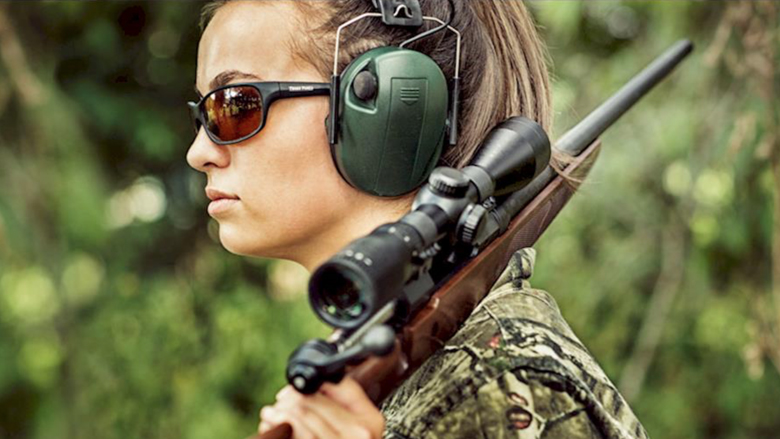

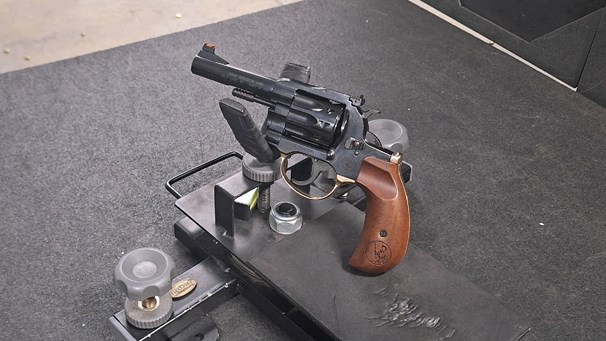
At a time when other gun makers are playing their cards close to their chests, Henry Repeating Arms is stepping things up with a whole slew of new products for 2026. Along with an impressive expansion of their lever-gun line up, this company also expanded their double-action revolver selection. The new Deadeye configurations keep the best of the original gun design while incorporating a more flexible set of sights. This evaluation takes a closer look at the H16 Golden Boy, chambered in .22 LR and outfitted with a birdshead grip frame.
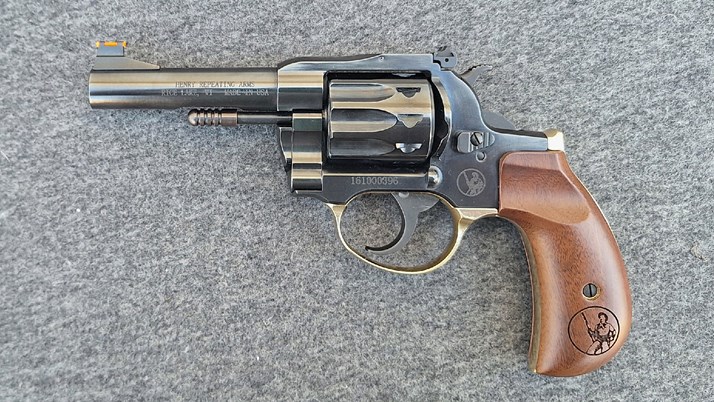
This revolver is made with the same blued steel, brass and walnut stocks as the Golden Boy lever-action rifles.
Henry launched its double-action revolver series with the release of the 6-shot H17 Big Boy .357 Mag. in 2023. It was followed by the 10-shot H16 Golden Boy .22 LR rimfire version in 2024. Both of these original models ship with a more rudimentary fixed sight system. A narrow blade front sight is paired with a groove, milled into the top of the receiver, which terminates in a square notch rear sight.
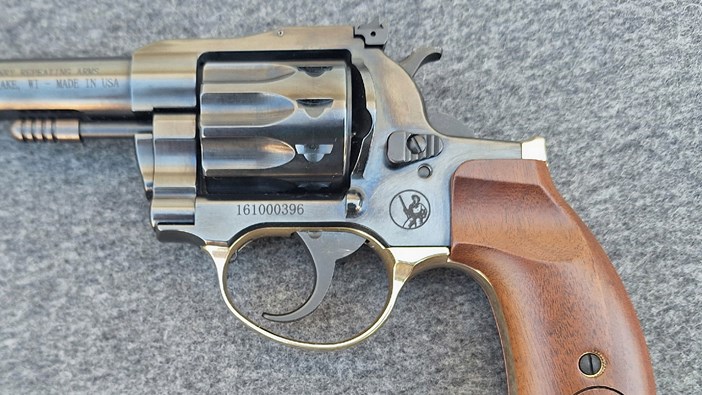
The left side is pressed forward, toward the muzzle, to open the action.
Although I found these fixed iron sights to be usable, they are relatively limited in their applications. Fixed notch rear sights like this are more commonly found on compact concealed carry revolvers and some older duty guns. This is because an integral rear sight notch provides a no-snag profile for a smooth draw from the holster and has no small parts to shift or shake loose.
However, Henry's “Boys” are all steel, medium-framed revolvers in the same size and weight class as the Ruger GP100, Smith & Wesson's K-Frames, and the Taurus 692 Tracker. While these guns can be carried concealed, they are generally intended to be multi-purpose guns suitable for target shooting and handgun hunting as well as personal protection. For those roles, an adjustable rear sight would be a better fit.
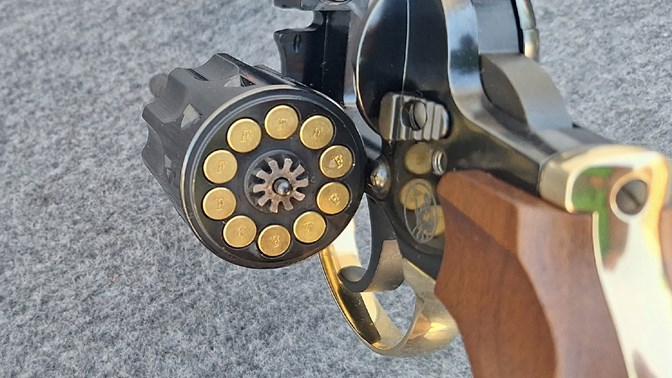
The Golden boy holds 10 rounds of .22 LR, .22 Long or .22 Short ammunition.
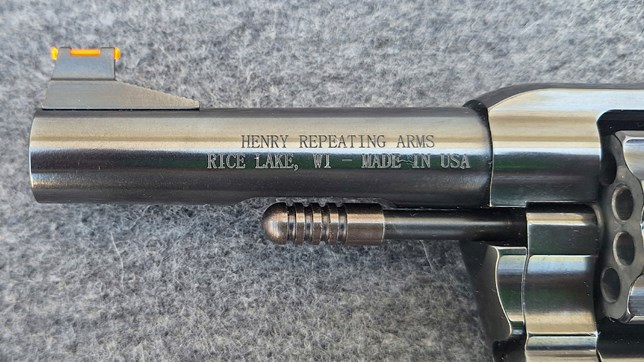
Henry's answer to customer requests for adjustable sights is the Deadeye series. The groove and fixed rear sight have been replaced with a fully adjustable square notch rear sight assembly. Two screws allow for both windage and elevation adjustments. The front sight has also been upgraded with a bright red/orange fiber-optic set above a serrated ramp. This adjustable sight configuration is much more conducive to extended shots placed out to distances of 25 yards and beyond.
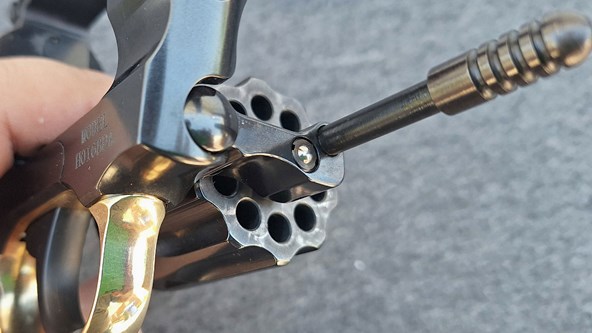
The yoke is fitted with a spring-loaded detent for a tight lock up.
Other than the changes to the sighting system, this version of the Golden Boy is the same as the previous version. Weighing in at 37 oz. unloaded, it is constructed primarily of neatly fitted and nicely polished blued carbon steel components. The primary exception to this is the highly polished,
one-piece brass grip frame with its integral trigger guard. This frame is outfitted with American Walnut grips which is the same hardwood used to make the stocks of the Golden Boy lever actions.
The 4" round-profile barrel is installed in front of a 10-shot fluted cylinder. The textured pie-wedge cylinder release is found on the left side of the frame. Much like a Smith & Wesson style release, it is pressed forward towards the barrel's muzzle in order to open the action and swing the cylinder out to the left side of the frame.
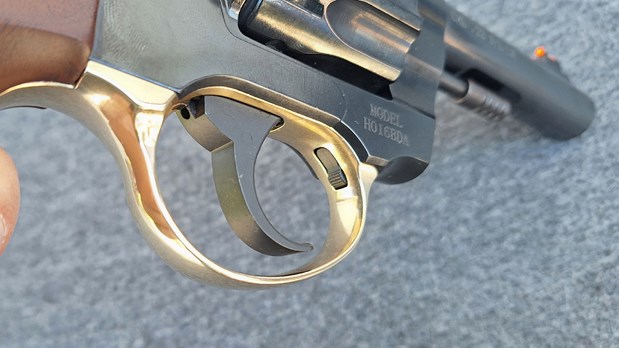
This small release lever allows the cylinder assembly to be removed from the frame.
A curved, smooth-faced steel bow trigger actuates the spurred hammer. A transfer bar safety is situated in between the hammer and the frame to prevent the gun from going off if the hammer is bumped. When the hammer is manually cocked for single-action (SA) firing, the trigger breaks cleanly with 3 lbs. 6 oz. of pressure. Firing in double-action (DA) mode gives the trigger a longer and heavier trigger pull of 11 lbs. 4 oz.
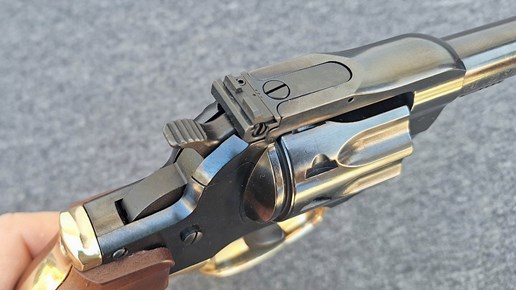
The rear sight is fully adjustable for height and windage.
Two details of the design eluded mention in previous evaluations. One is the spring-loaded ball detent set into the front of the cylinder yoke which works to lock up the action more tightly. The other is a tiny blued steel lever set into the forward interior surface of the trigger guard. With the cylinder open, depressing this lever allows the entire cylinder assembly to slide forward out of the frame. This is certainly a bonus when it comes to cleaning the gun. Removing the assembly allows for more detailed cleaning of the unit itself and makes it easier to work on the frame and bore without the cylinder flopping around.
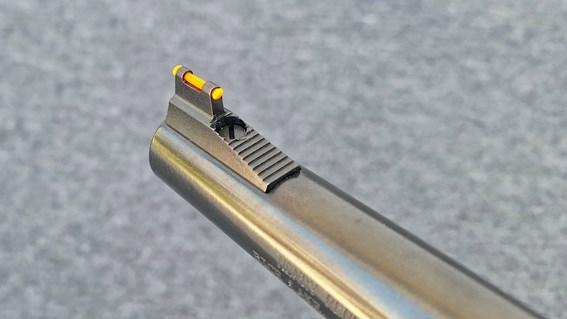
The front sight is fitted with a bright red/orange fiber optic.
A spring-loaded cylinder assembly removal release is a rare feature for double-action wheel guns. The only other models I've handled with this type of release have been the Diamonback SDR and the caliber-convertible Taurus Tracker 692. In the case of the .357 Mag. Tracker, it arrives with a second 9 mm cylinder which is easily traded out using the release.
Is the presence of this type of release on the Henry revolvers an indicator that the company will offer models with caliber conversion cylinders at a future date? So far there is no mention of this possibility from the folks in the know. But I have my fingers crossed that the company will pursue caliber convertible models in the future since this key feature is already in place.
The Golden Boy fed, fired and ejected all of the ammunition tested reliably.
Some folks will be asking which grip shape is ”the best.” Is it the square-butt, “plough-share” style Gunfighter Grip, or the rounded-off Birdshead Grip? Having worked with both grip shapes in center-fire and rimfire configurations now, it’s safe to say that each one brings different benefits to the table. For my somewhat smaller hands, I've found the Gunfighter intuitively forms a higher grip, with the web of the thumb at the top of the backstrap. This is ideal for managing the recoil of the centerfire models. There is also about half an inch of front strap below my little finger. So this will probably be the better grip shape for folks with larger hands.
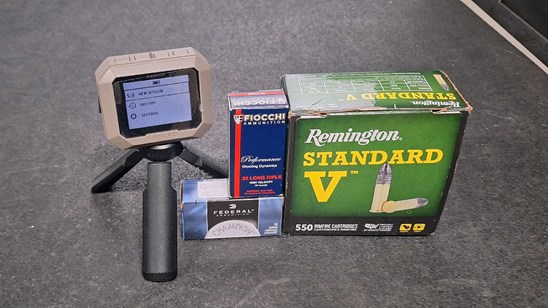
A Garmin Xero C1 Pro chronograph was used to measure muzzle velocity.
The Birdshead Grip feels a bit more slim and trim. Back in the day, this grip shape was originally developed to reduce printing when single-action revolvers were carried concealed. The curved backstrap of this particular model settles more centrally in the palm of my shooting hand. For the centerfire models, it will allow the gun to roll back in the hand to help mitigate felt recoil. In the case of the rimfire revolver, with its almost gentle levels of felt recoil, the slimmer, rounded grip shape settled into my hands like it had been custom built just for me. It contributed to an already enjoyable shooting experience.
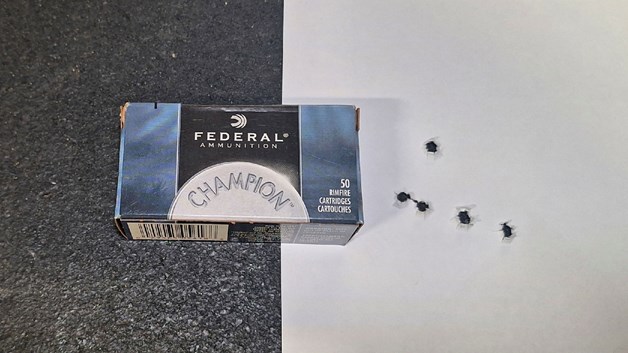
The best individual group of 1.44” was fired using the Federal Champion load.
At the shooting range, this Golden Boy was exceptionally well-behaved. The controls cycled smoothly and the levels of felt recoil were about as close to nil as a handgun can get. One of the reasons that .22 LR revolvers continue to be a favorite is that the ammunition sensitivity that plagues some semi-auto pistols in this caliber simply evaporate when the same ammunition is fired from a wheel gun.
The more formal benchrested performance testing was conducted using Federal Champion, Fiocchi USA and Remington Standard V .22 LR loads. Five 5-shot groups were fired into paper targets posted at a distance of 15 yards with a Garmin Xero C1 Pro chronograph on hand to measure the average muzzle velocity for 10-shot strings. This revolver demonstrated a preference for the Federal load with a group size average roughly an inch smaller than the other two rounds. Here are the complete test results:
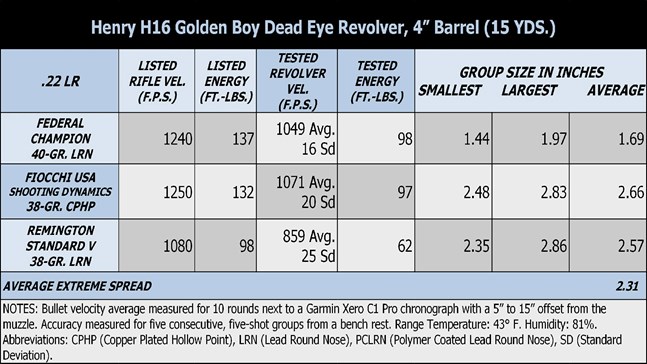
Henry Repeating Arms has done a terrific job of transferring its American Made style and quality into its double-action revolvers. I love the fact that they have incorporated the brass, blued steel and walnut of their long guns into its high-quality wheel guns. Not only are they fun to shoot but they certainly stand out from the crowd. As for pricing, this version of the Golden boy is listed with a suggested retail price of $970 which makes it between $50 to $150 less than comparable models. For more information, visit the company website.