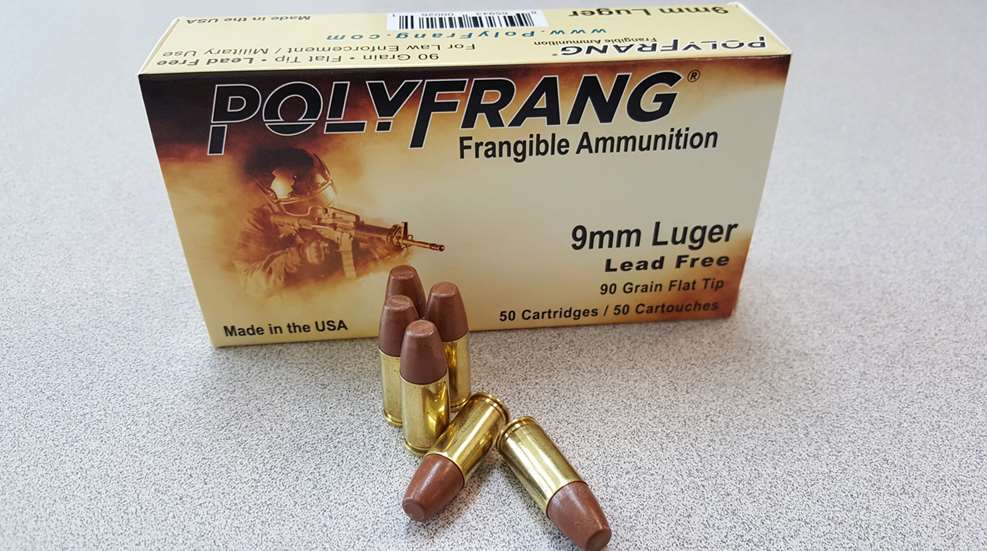
To use a relatable analogy, frangible ammo is sort of the chicken nugget of the ammo world—it’s one piece that’s not actually a solid hunk of anything (meat or metal), but rather a bunch of particles smashed together to form a cohesive chunk. Like how sawdust is pressed and mixed together with adhesives to create that particle board that builds your Swedish furniture, frangible ammo uses projectiles that are made of metal particles or powder pressed and bound together into a bullet shape. Copper and tin are common ingredients, though there are others.
Frangible ammo was created back in the day to use at county fair shooting galleries—normal bullets were, as you might expect, a little dangerous and tended to cause ricochets. Because it’s made of compressed metal particles, a frangible bullet will break up back into its components when it strikes something harder than itself. It essentially turns back into powder upon impact, which greatly reduces the chances of ricochet and shrapnel.
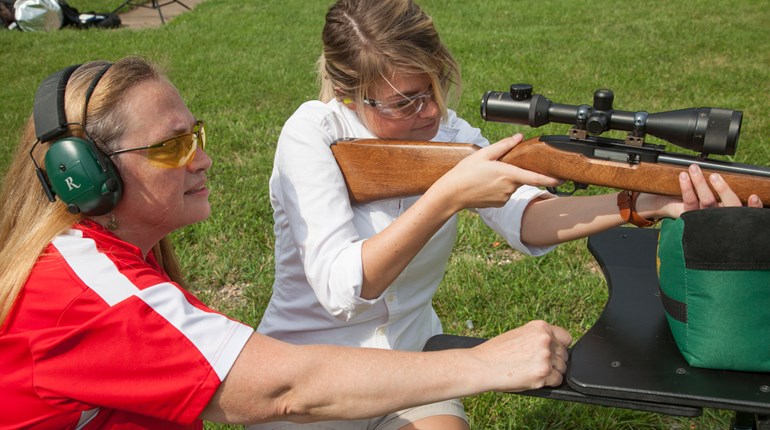
For this reason, frangible ammo is great for shooting steel plates, as in competition shooting or range plinking. It’s also great in shoot-houses and anywhere there’s close quarters, such as tactical training by law enforcement and military. Do you need to use frangible ammo when shooting steel? No, not unless your local range requires it. But many shooters prefer it because they don’t have to worry about ricochets.
You might notice I said above that frangible bullets disintegrate into powder when they strike something harder than themselves. That generally does not include soft tissue, so make no mistake: Frangible ammo is NOT less-lethal. They are absolutely capable of deadly force. Some tests even show that they penetrate soft tissue as well as or deeper than hollowpoint rounds. At the same time, they do carry less risk of overpenetration, as they often expend their energy inside the body and do not exit. However, and this is important: Frangible bullets can and usually will penetrate drywall and wood. You are still responsible for every bullet you fire, and frangibles are not magic bullets that stop threats but never go where they’re not supposed to. Steel, concrete and glass, among other hard materials, will disintegrate frangibles. Softer, porous materials will not, or at least not reliably.
That does make frangible ammo very useful in places like chemical plants and aircraft, where security personnel might have to stop a threat, but where the risk of punching a hole in a hazmat container or airplane wall would be catastrophic. Law enforcement departments also sometimes use frangible ammo in close-quarters situations (like house clearing or apprehending a suspect in a populated building like an apartment complex). Obviously, these are specialty uses that don’t apply to most of us.
So if they are lethal force and penetrate tissue well, and they are less likely to pass through a threat and potentially harm someone else, does that mean frangibles are suited for self-defense?
That’s a complicated question. You’ll have to weigh the variables for yourself. While frangible rounds designed for self-defense do tend to penetrate soft tissue well, they don’t fare as well against bone—most of the time, they’ll disintegrate upon striking bone. I don’t know about you, but I don’t care for phrases like “most of the time” when I’m choosing ammo I’m staking my life on. Unless you think you can slip a bullet between two ribs to get penetration into the vital organs, I’m not sure you can rely on frangible ammo to reliably stop a threat—at least not as reliably as traditional hollow points. For that matter, what if your threat is hiding behind your recliner or couch? A solid projectile will penetrate that. A frangible probably will, too, but again, I have no interest in “probably” in a life-and-death situation.
Should You Use Frangible Ammo?
Frangible ammo definitely has its uses. If you shoot a lot of steel, you might really enjoy the lack of splashback and ricochet potential that frangibles offer. If you train or operate in close quarters, like shoothouses or in SWAT or military scenarios, you might like frangibles for their tendency not to overpenetrate threats or ricochet in tight spaces.
If you are in a special situation where you need to/are authorized to carry a firearm on an oil platform or an aircraft or at a nuclear power plant, where you might need to stop security threats but you absolutely cannot risk breaching a steel barrier, frangibles are your ideal solution.
If you are concerned about lead exposure, you’ll be happy to know that frangibles generally contain no lead.
If you’re strictly interested in punching holes in paper at the range or in self-defense, frangibles probably aren’t for you. Their effectiveness on active threats can be lethal but not as reliably so as traditional hollowpoint bullets.