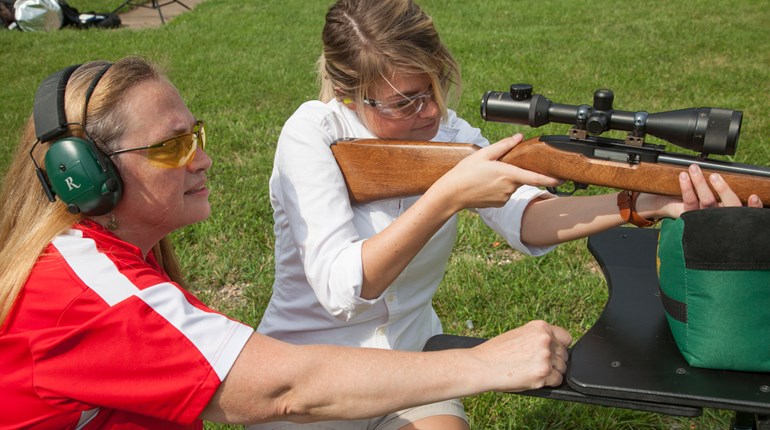

While most gun owners use a shotgun for activities like hunting or sporting clays, some of us use them in speed events, like IPSC shotgun competitions. When the goal is speed, being well-versed in loading a shotgun is a useful skill. Here’s what you should know to load like a pro.
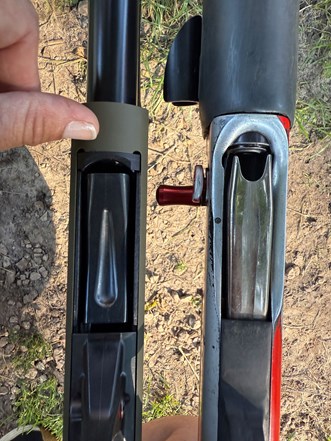
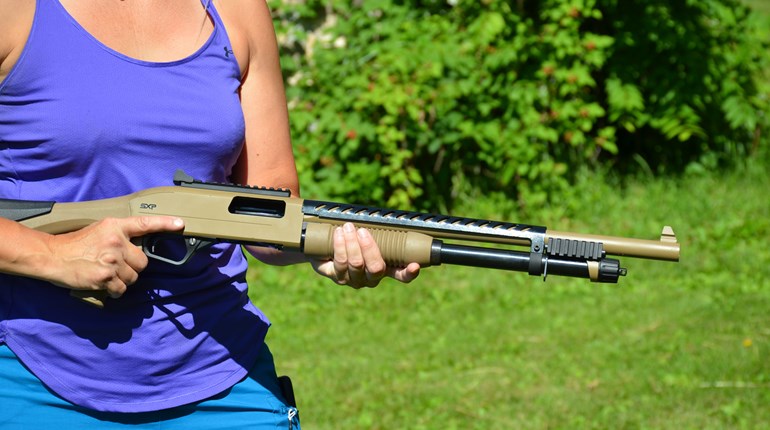
Loading port and lifters on Winchester SXP and SX4 shotguns.
1. The Loading Port
The opening into which you put shells into your gun is called the loading port, and it is located on the underside of the shotgun action. Inside the loading port is the shotgun’s lifter. Understanding how to get shells past the lifter and into the magazine tube is the main skill to learn. Everything else required to manipulate a shotgun is simply understanding how your particular shotgun action operates.
First, it’s helpful to know that there are three main types of shotguns into which you can load more than just one or two rounds:
- Gas-operated shotguns (semi-automatic)
- Inertia-operated shotguns (semi-automatic)
- Pump-action shotguns (manual action)
There are also magazine-fed shotguns, which operate off gas and have magazines. Loading is as simple as changing the mag.
For a tube-fed shotgun, the gun’s operating system does not really affect loading. What matters, however, is that manufacturers have different mechanisms for moving shells from the tube and onto the lifter so that the shell can be cycled into the chamber. It’s useful to understand these available variations so you know the steps required to load the gun.
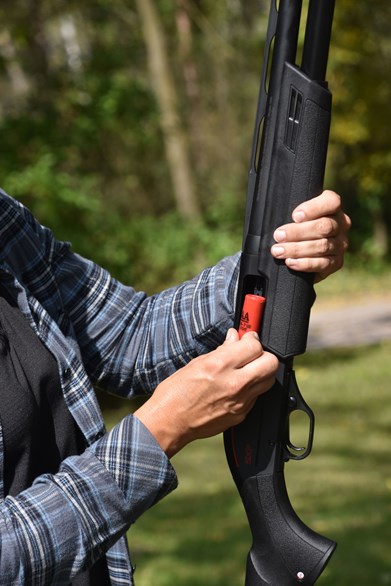
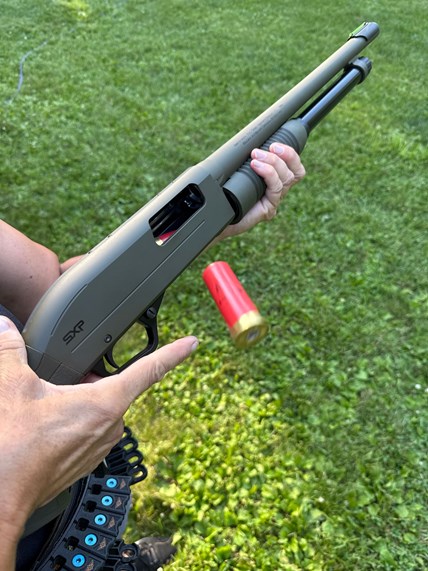
When you see someone with a manual-action shotgun “pump” the gun, they are moving shells manually through the shotgun. The backward stroke brings a fired, empty hull out of the chamber and a new shell out of the tube and onto the lifter. The forward stroke then pushes the next shell into the chamber, the trigger is pulled, and the cycle repeated. But to get the very first shell out of the tube, there’s typically a small button you must push, which allows the forearm to slide backward and the tube to release that first shell.
To get the first shell out of the gun with an inertia gun and some semi-automatic shotguns, the user must hit a shell-release button, which allows a shell to slide past the shell catch and onto the lifter. Some shotguns, like the Winchester SX4, do not have a shell release button; this makes it simpler for beginners!
2. Shell Release and Bolt Release
Two other facets of a shotgun to understand are the bolt release and the shell release. The bolt release is the button on the side of a shotgun’s action that allows you to close the bolt when the gun is locked open. It interfaces with what is inside—the “release”—part of the system. There is often an articulating “foot” on the end of the release nearest the opening of the magazine tube that hinges toward the center of the gun (it will sit under just the edge of the rim on the bottom-most shell in the stack of shells sitting in the magazine tube). When that piece is depressed, it moves out of the way to allow a shell to slip past onto the lifter.
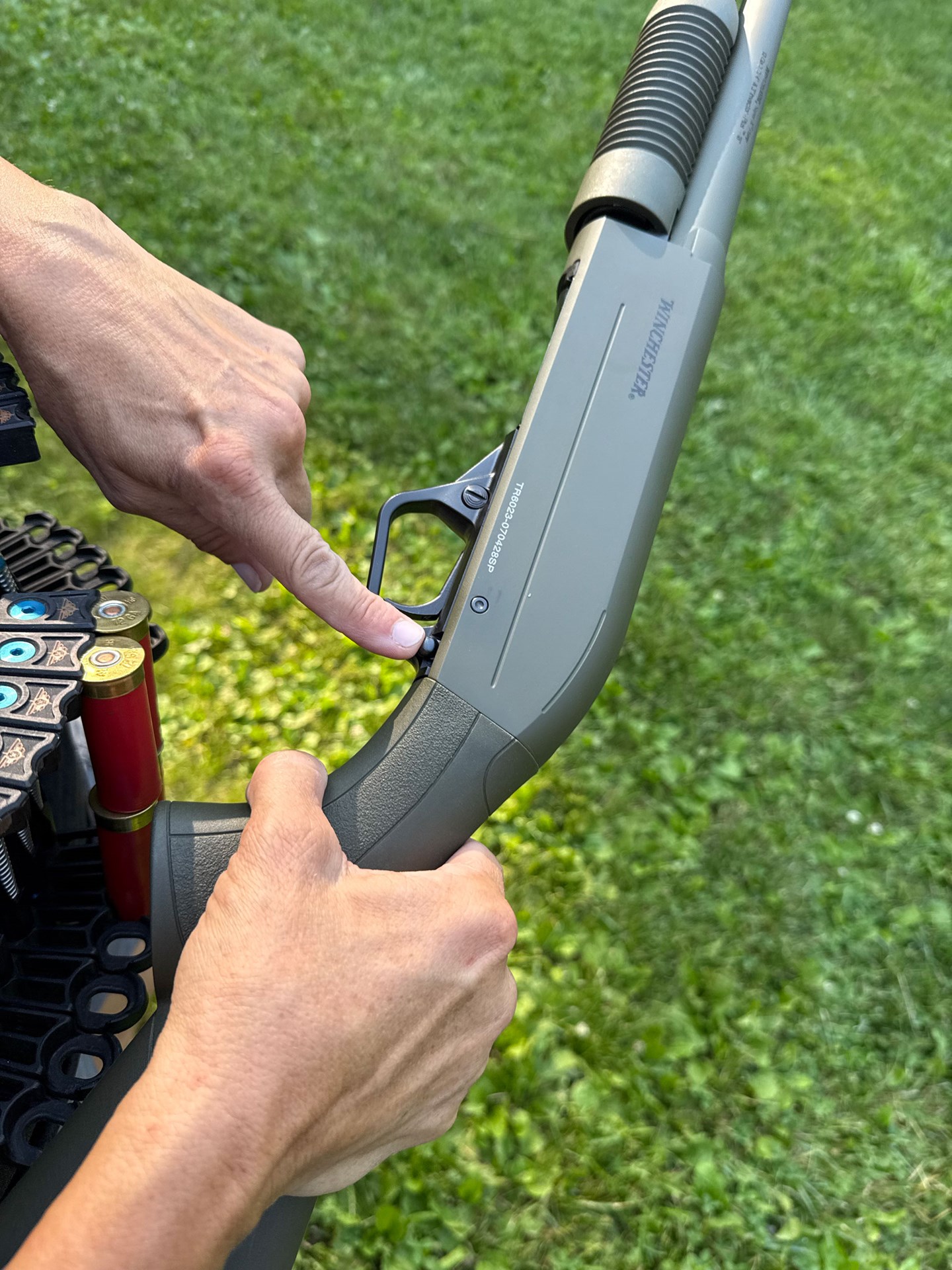
Understanding that you must work with the bolt release and shell release, and knowing the role of each, is integral to using a shotgun. Once you have shells loaded in the tube and you want to chamber a round, you must hit the shell release button to kick a shell out onto the lifter, then pull the bolt handle to chamber the round.
Sometimes the shell-release button is located next to the trigger guard, or even above it. Thus, reviewing the controls of your shotgun and understanding your gun is important.
3. Loading Shells into the Gun
There are different ways to load a shotgun. If you’re shooting sporting clays or trap, you might only load two shells. If you’re shooting in a competition, then you might have a 12-round tube you need to fill—and fast.
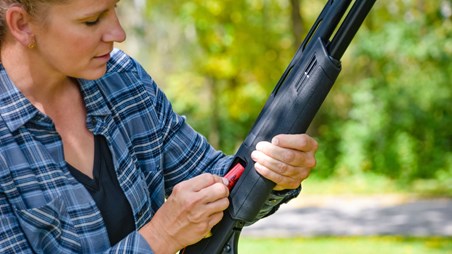
The author loading the Winchester SXP shotgun.
Loading a semi-automatic or pump shotgun can be performed two ways:
- Option 1: Open the action and insert one round into the chamber, then push rounds into the tube.
- Option 2: Leave the action closed, put rounds in the tube, and then pull the bolt handle back to cycle a round into the chamber.
For fast-paced loading in competition, we use special shell holders, and load either two or four rounds at a time. This type of loading (quad-loading or loading 2s) can be done with either your strong or dominant hand, or your weak or non-dominant hand.
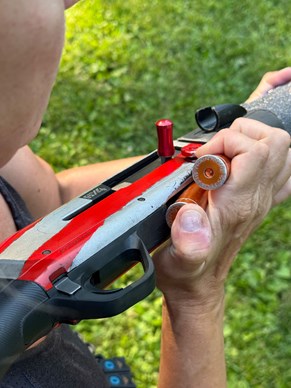
Quad loading the first set of shells. NOTE thumb position.
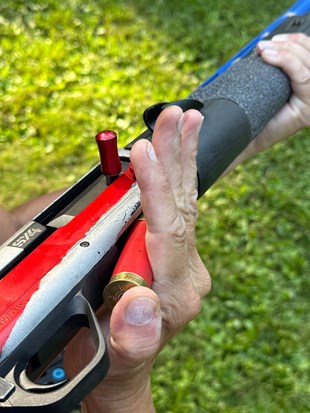
Second set of shells. Note other fingers keep shells aligned.
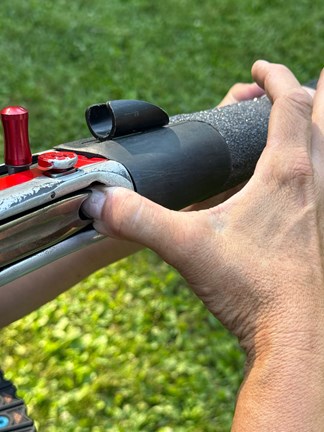
Warning: Do not put your thumb this deep into loading port.
Strong-hand loading involves moving your shotgun up onto your shoulder, grabbing shells, and loading them into the gun. This is a preferred technique if you have a tight area in which to work (think duck blind with little room in front of you or a close wall in a competition scenario). It also is easier for people who aren’t accustomed to holding a shotgun up in front of them as it allows you to literally shoulder some of the weight while you work to load. It’s usually a better technique to teach someone new to loading a shotgun.
Weak-hand loading involves dropping the gun and rolling it upside down, then using your non-dominant hand to load. This can be helpful if you don’t have the room for it (think duck blind with low ceiling or a tunnel for competition shooters).
The best way for YOU to load depends on your strength, dexterity and the gun you are using.
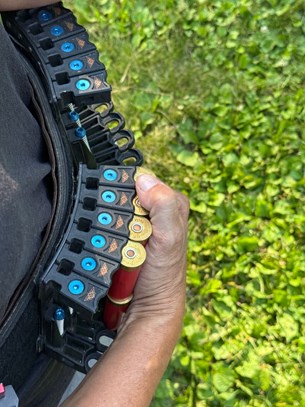
A good grab for someone loading for competition involves the thumb of your loading hand only covering the outside half of the base off the shells you grab.
If you’re learning for competition, specialized competition gear helps position shells at just the right angle to grab them fast. The shotgun’s loading port has usually been worked on by a gunsmith to make it easier to insert shells. However, there are a few guns out there that come from the manufacturer with special cuts to make them similar to custom work, but they are usually very conservative.
The most important part of the loading process is how you grab the shells. If you have a bad grab or your placement of your fingers is off, it will just create more difficulties as you try to load. A good grab for someone loading for competition involves the thumb of your loading hand only covering the outside half of the base off the shells you grab. This allows you to push the shells into the gun without potentially getting your thumb so deep into the action that it gets stuck between the end of the lifter and the opening of the magazine tube.
The second most important part of loading a shotgun is practice. It takes time to get familiar with your gun, the amount of strength you need to load shells, and how to set up your gear. Learn by taking video as you practice so you can see where to make adjustments.
Even if your goal is just to know your shotgun better, using dummy rounds and working to load and unload your gun will give you confidence and understanding so that you can enjoy your time shooting or hunting.
Tips to make you look like a pro:
- Always check that your shotgun is empty before you start working with it and understand which button is the safety and which is the shell release (if you have a shell release).
- Push the shells into the tube until you hear and feel them pass the shell catch. If you do not push them far enough into the tube, the magazine tube spring can push the round you are trying to load back out and it will sit on the lifter. The only way to get it out of the way to load more rounds is to hand-cycle it through the gun by pulling the bolt handle back and chambering and un-chambering the round(s). Sometimes a round sitting on the lifter is referred to as “ghost loading.”
- If the lifter won’t move out of the way to allow you to insert shells into the tube, that usually means you have to cycle the action. The best way to start any loading session is to check that your shotgun is empty, and this will also ensure your lifter will depress to load the tube.
- Start at a speed where you can load without mistakes, and then progress to going faster. A mistake-free load is usually faster than trying to go lightning fast, but dropping shells.