
Duck and goose hunters know that North America is divided into four different flyways—corridors or pathways that birds follow on their migration between their breeding grounds in the north and their wintering grounds in the south. We still are not sure why waterfowl use the paths they do or how they know where they’re going, but we do know that they tend to follow major geographical landmarks, such as coastlines, mountains and rivers. For the purposes of research and management, we have divided the migratory paths into four vertical sections called the Atlantic, Mississippi, Central and Pacific flyways.
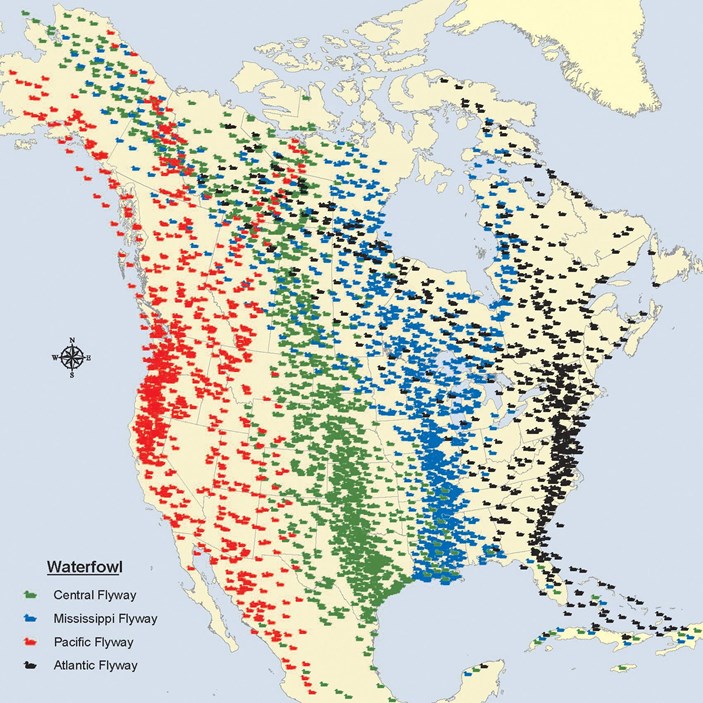
Map courtesy the North Dakota Fish & Game Department
Atlantic Flyway
The Atlantic Flyway runs along the East Coast, from the northeastern Canadian provinces down to the Caribbean and as far west as Pennsylvania and parts of Ohio.
The Atlantic Flyway has more people in it than any other flyway, so suitable waterfowl habitat is at a premium. The good news is that there’s a lot of variety in the terrain here, from rocky coasts to tidal flats to inland agricultural fields. The East Coast has some legendary waterfowl hunting traditions, from sea ducks in Maine to black ducks and Canada geese on the Eastern Shore of Maryland to the Florida mottled duck found only in the Florida peninsula.
Mississippi Flyway
Moving west, the Mississippi Flyway comes next, stretching some 2,300 miles from north of Manitoba down to the Gulf Coast in Louisiana and Mississippi. It is the most heavily traveled flyway, used by up to 40 percet of North America’s waterfowl, and it includes the Great Lakes as well as, of course, the Mississippi River and its rich delta.
Hunting opportunities abound here, from early-season dry-field hunts in Manitoba to mallards and wood ducks in the flooded timber of Arkansas.
Central Flyway
Next is the Central Flyway, which covers a million square miles from Canada’s Northwest Territories down through the Great Plains, ending in Texas and New Mexico and south into Mexico. This flyway includes the ever-important Prairie Pothole Region, a massive-but-shrinking area of wetlands and grasslands in the Great Plains that serve as nesting grounds for millions of ducks and geese. It’s generally considered the most important area for breeding waterfowl in the country—Ducks Unlimited states that in wet years, up to 70 percent of the continent’s duck production originates in the Prairie Pothole Region.
Hunting opportunities in the Central Flyway include everything from ambushing dry-field geese from layout blinds in agricultural fields to hunting ducks over small ponds and potholes to shooting sandhill cranes in Texas and shooting whistling ducks along the Texas coast.
Pacific Flyway
As you might have guessed, the 4,000-mile-long Pacific Flyway includes the West Coast, from Alaska and the Yukon down through the Baja Peninsula and south. It is roughly separated from the Central Flyway by the Rocky Mountains. Like the Atlantic Flyway, it includes both inland and coastal migration routes, with the huge range of hunting opportunities that go along with such varied terrain.
Of course, Alaska is home to king eider and other majestic sea ducks. Washington state is the only place in the Lower 48 where you can legally shoot a harlequin duck (one per year, subject to a special lottery permit), and of course, California has a famed waterfowling tradition and is one of the best places in the world to hunt pintails.
Why Flyways?
Because waterfowl migrate, it’s too complicated for individual states to manage them the way they manage mammals, so migratory birds are managed by the U.S. Fish & Wildlife Service on a federal level. States do still have some say in the management and hunting regulations, though, so be sure to read up on your area’s laws.
Dividing the country up into flyways helps biologists and regulators manage and track populations through banding research, habitat projects and more. Each flyway is managed by a special council, consisting of representatives from each state, provincial, and territorial agency within the Flyway. Each flyway also has a USFWS representative that works with the council and its advising biologists to help manage bird populations and make recommendations to the USFWS.
Because each flyway is managed a bit differently based on its unique structure and needs, hunting regulations and bag limits can vary by flyway, with the Pacific Flyway currently having a more liberal bag limit (seven ducks a day) than the other three (six ducks a day). Again, individual states can set further limits, so be sure you know your local regulations before you hit the field or the water.
The flyways aren’t randomly drawn lines on a map—the birds basically defined the flyways themselves by the routes they tend to follow. We just made them official and gave them names. Naturally, there’s some overlap on the edges, but as most ducks and geese don’t tend to do a lot of east-to-west traveling, the flyways are relatively vertical and are roughly defined by landmarks like the East Coast, the West Coast, the Rocky Mountains and the Mississippi River.
In addition to state and federal agencies, conservation organizations like Ducks Unlimited and Delta Waterfowl also divide their work and efforts along the flyway lines, helping to manage various projects that best fit the management and population needs in each section of the continent.