
When you’re shopping for hearing protection to wear to the range, you’ll quickly notice that almost every style and brand lists a Noise Reduction Rating (NRR) on the packaging. This number seems simple on its face: The sound entering your ears should be reduced by however many decibels are listed, right? Not at all, actually. But the higher the NRR, the better, right? Generally, yes. In reality, those numbers aren’t as accurate as they seem.
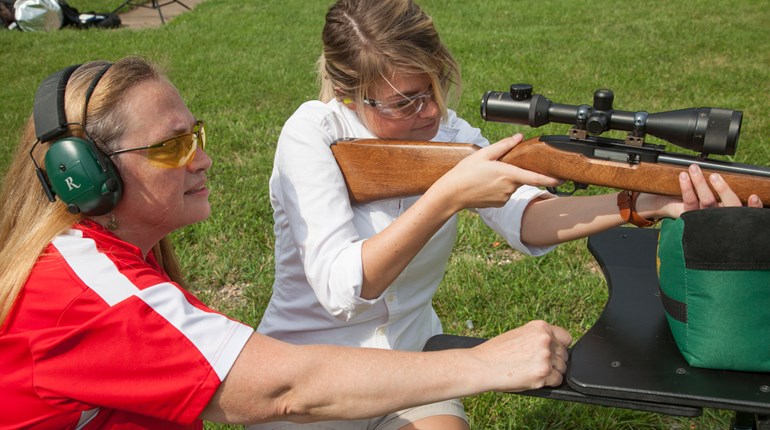
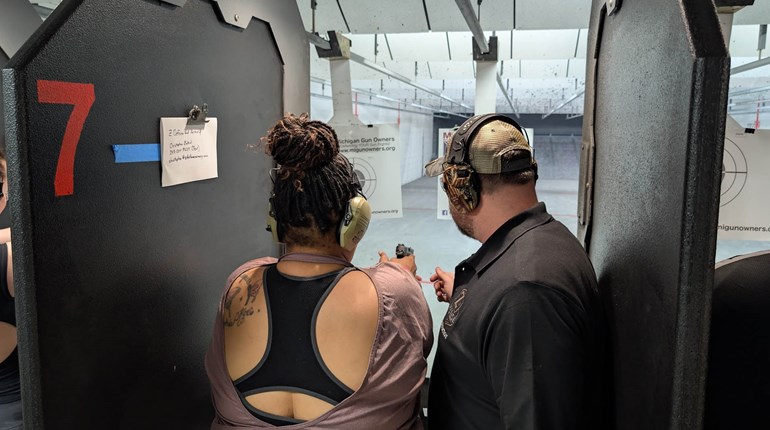
Noise Reduction Rating is calculated or measured in a highly controlled laboratory under ideal conditions—conditions that are rarely present in real-life situations where you’ll be using hearing protection. For one thing, you’ll only get the reduction indicated on the package if you wear the hearing protection exactly right and if it’s well-fitted. Many of us aren’t wearing our hearing protection properly—foam plugs in particular are seldom worn the right way. They should be deep in your ear, so deep that you can just barely grip them to remove. When you can see someone’s foam plugs when they’re looking at you because the plugs stick out so far, that person is not getting much protection. Similarly, few of us wear muffs properly. Our shooting glasses interfere with the seal, the stock of the gun bumps the muff and knocks them slightly off kilter, or they just don’t fit us well and therefore can’t seal properly.
Plus, NRR is measured based on a few people and extrapolated out to the general population. Since we aren’t all the same, NRR is an estimate based on what 98 percent of the population will experience if the protection is fit and worn properly. If it’s not, the number can be off by 50 percent or more.
And NRR isn’t a direct reduction, anyway. You have to run a calculation to determine how much noise reduction you’ll actually get. For example, gunfire is in the range of 140 decibels. You might think that wearing hearing pro with an NRR of 25 will bring your exposure down to 115 decibels (140 - 25), but you’d be wrong. The actual number is calculated by subtracting 7 from the NRR and then dividing the result by 2. So 25 - 7 = 18 and 18 / 2 = 9. Your exposure is actually only 140-9, or 131 decibels. Why is it this way? Why can’t they just print the actual number on the box? I have no idea.
Best to double up, then, right—wearing plugs and muffs so you can add the NRRs together? Unfortunately, that doesn’t work on a straight calculation, either (although it is definitely helpful and a good thing to do for protection). Instead, you merely get to add 5 decibels to whichever of the NRRs are higher, and that’s your new NRR. So if you wear plugs with an NRR of 26 and muffs with an NRR of 23, your combined NRR is only 31 (26 + 5). Running the calculation above tell us that your level of exposure is 128 decibels.
On top of all of that, NRR doesn’t necessarily account for frequency. Low-frequency noises and higher-frequency noises might not be protected against in the same way.
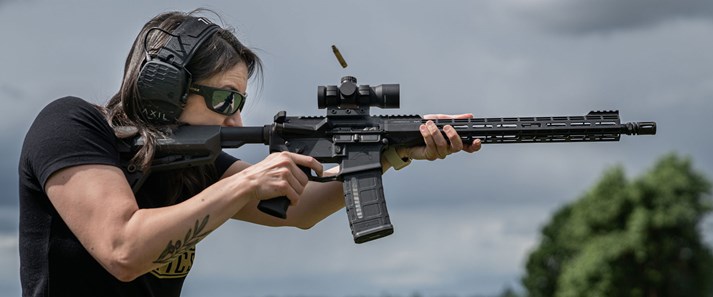
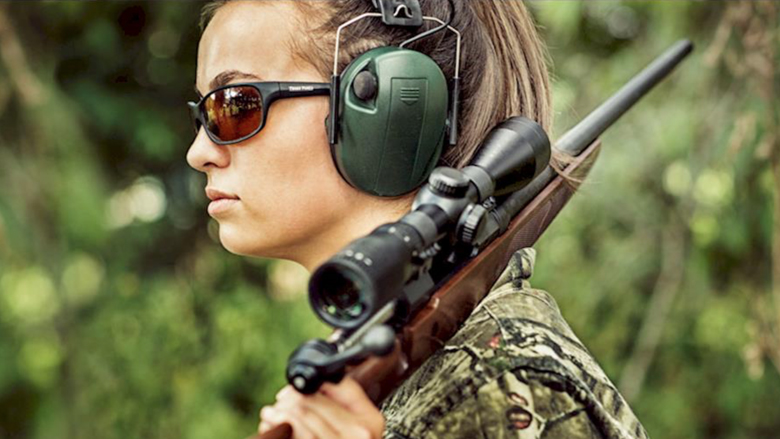
So given all of this, how do you buy hearing protection? Well, NRR isn’t useless—it’s true that a higher number is generally better, and doubling up is better still. But it’s also helpful to know the difference between active and passive protection. Essentially, active hearing protection uses electronics to detect and dampen sounds over a certain level. Electronic hearing protection also amplifies sounds under that level, which makes it easy to have a conversation, hear range officer commands, and just be aware of your surroundings while you shoot. This is a safety consideration as well—being able to hear range commands like “cease fire!” helps keep everyone safe. Active hearing protection can come in the form of muffs or in-ear style. Passive protection is everything that doesn’t have electronic sound suppression.
Passive protection tends to have a slightly higher NRR than active protection, all else being equal, but many shooters find the convenience of being able to hear normally while wearing electronic hearing protection (except for loud shots, of course) to be well worth a few NRR points. And when you consider the variations in how we actually wear/fit our ear protection in real life, the passive kind might lose the NRR battle in real-world conditions, anyway.
Hearing protection, like everything else, is a bit of a trade-off. Understand when you look at Noise Reduction Ratings listed on packaging that you’re not actually getting that number’s worth of decibel reduction, and if you’re not wearing the product exactly right, you’re getting even less.
If you’re looking for the best of both worlds, you can combine active and passive protection by wearing passive foam earplugs with electronic muffs overtop, or vice versa. This will lower your exposure to loud noises by the maximum amount while also allowing you to hear some level of ambient noise, so you can stay aware of what’s going on around you.