
Hunters are the ultimate conservationists, funding massive chunks of state fish & wildlife departments through excise taxes, sharing a genuine love of the animals we pursue, and throwing our own money behind a bevy of conservation organizations dedicated to species we care about. And conservation works—there are a number of species we take for granted today that almost went extinct during this nation’s history, but dedicated conservation efforts brought them back to huntable populations. These are some of our greatest success stories.
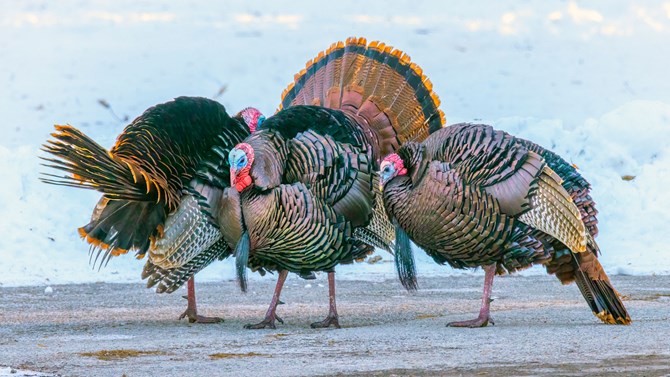
Wild Turkeys
In the 1500s, we had an estimated 10 million wild turkeys in the continental U.S., spread across 39 states. Between market hunting and habitat loss as the country expanded, those numbers dropped to as low as 30,000 total among just 21 states by the end of the first World War. Through some trial and error, conservationists used a combination of trapping wild turkeys and raising them from poults on farms, then releasing, to begin to boost populations—mostly funded by excise taxes on hunting equipment. In the 1950s and ’60s, hunter Herman Holbrook hit on a formula that worked well, and success rates skyrocketed. The National Wild Turkey Federation was founded in 1973 to help with this conservation effort, and by 1974, turkey populations were at an estimated 1.4 million. By the year 2000, the population sat at a comfortable 5.4 million across 49 states (all but Alaska), and today, it’s estimated as high as 7 million birds.

Elk in the East
Today, we think of elk as a Western species, but they originally lived all over the nation, including the Eastern Seaboard states. As happened with many other species, elk populations suffered greatly as the U.S. expanded westward, thanks to unregulated hunting and massive habitat loss, and elk slowly disappeared from the eastern U.S. By the 1880s, they were gone from states like North Carolina, Kentucky, Pennsylvania, Illinois, Indiana, Tennessee and more. The entire subspecies, called the Eastern elk, was wiped out, with the last one we know of being killed in Pennsylvania in 1877.
In the early 20th century, hunting regulations came about and restoration efforts for multiple species began, including, eventually, elk throughout some of their eastern range. Restoration/relocation efforts using mostly Rocky Mountain elk were hit and miss, but Pennsylvania’s relocation found some success, and hunting season was instituted there (in some counties) in 1923. The numbers waxed and waned over the years, as did the hunting season, and restoration was interrupted by WWII. But thanks to conservation efforts, the state started issuing elk tags again in the year 2000. Today, Pennsylvania boasts an estimated 1,400 elk—the largest population in the northeast.
Kentucky, too, has had a successful reintroduction over the past 100 years, and the state is now home to a whopping 6,500 elk. They, like Pennsylvania’s elk, are the Rocky Mountain subspecies. Unfortunately, the Eastern elk is gone forever.

Wood Ducks
Because ducks are migratory, their populations depend on a lot of factors, including weather and habitat from Canada to Mexico. In particular, the wood duck was nearly extinct by the early 1900s, yet another victim of market hunting and habitat loss. In 1918, the Migratory Bird Treaty Act made it illegal to hunt wood ducks, and that allowed populations to begin to rebound. It worked well enough that hunting was reopened in a few states in 1941, more in 1959, and biologists continue to work hard to this day to keep an eye on wood duck populations and habitat.
Today, numbers are still hard to pin down, but it’s estimated that the U.S. holds 4 million wood ducks, with many of those in the Eastern and Central flyways. Ducks Unlimited reports that as far as we can tell, numbers appear to be increasing.

Whitetails
You can barely drive down a rural road without seeing deer these days, but it wasn’t always so. In fact, North America’s most popular big-game animal almost went extinct around the turn of the 20th century. There were an estimated (how do they estimate these things, anyway?) 15 to 30 million whitetails on the continent prior to European contact, but as with the other species on this list, the rapid growth and expansion of the human population lead to overhunting and destruction of habitat. It was so bad that the U.S. whitetail population hit a catastrophic low of 300,000 in 1890—that’s a 99 percent population decline, and it continued to dwindle for the next decade.
The Lacey Act put a near stop to market hunting in 1900, and shortly after passing that, Teddy Roosevelt went on to create the National Wildlife Refuge System, which benefitted many of the species in this article. Restocking and relocation efforts began, using Pittman-Robertson funds from excise taxes on hunting equipment, and overall, they were successful. In fact, this history of restocking deer and moving them from state to state helped create the weird pockets of rut timing we see today in the southeastern U.S.
Fortunately for whitetails, their famous adaptability allowed the relocated populations to thrive in new and varied environments, and to make a long story short, today, biologists estimate that the whitetail population is back to or has exceeded its original number of 30 million+, spread across nearly every state.