
Every occupation that requires the carrying of a firearm requires different tasks and rules pertaining to keeping the firearm at “the ready.” Game Wardens or Conservation Officers across the United States probably put their firearms through the dirtiest conditions. This is especially true with Texas game wardens. In the span of one day, wardens will be carrying their firearms in the early morning to be sprayed with salt water along the coast, then slushing through the damp marshes mid-morning, traveling inland and crawling under fences through the mud after lunch, and being in a windy and dusty desert in west Texas in the late afternoon as they check mule deer or pronghorn hunters for compliance.
My husband, John, a retired Texas Game Warden, had a full career carrying a firearm for self-defense firearm. Here are a few gun carrying tips from an experienced game warden.
1. Keep Your Gun Clean
Keeping your gun clean will ensure that your firearm is always at peak performance and is dependable when needed. A dirty gun can lead to increased wear and tear on parts, resulting in feeding or ejection issues. Particulates from spent rounds can also attract moisture into the firearm, causing rust and rust-related issues such as pitting.
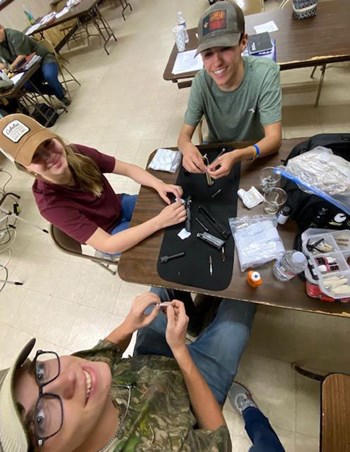
I am an NRA Training Counselor and too many times my students have told me they only clean their firearms every 500 or 1,000 rounds, or only when the guns start malfunctioning. This is neglect of their equipment. Regardless of their personal philosophies on cleaning, students must demonstrate proficiency in cleaning their firearms to pass the class.
Most of the game wardens I knew kept their guns clean because they were always getting sprayed by salt water when patrolling by boat in the Gulf of America, accumulating dust from crawling under barbed wire fences, and all the other environmental particles that were encountered while in uniform wearing their gun belt. John cleaned his gun nearly every day because of the conditions he worked in.
There is also a legal reason why you should keep your gun clean, especially the firearm you carry for self-defense. If someone ever falsely accuses you of taking a shot at them, you are much better off legally if you have a clean firearm as opposed to a dirty one.
John recalls a situation that really drove this message home. A game warden was told to report to his district office—almost three hours away. When he arrived, the captain asked to see his duty gun. The warden handed the gun to his captain, and he started inspecting the firearm inside and out. The captain handed the firearm back to the warden and told him he was good and could leave. When the warden asked the captain what all that was all about, the captain told him that one of the local rice farmers claimed the warden took a shot at him. Lucky for the warden he had a clean gun.
All firearms, especially guns carried for self-defense, should be cleaned after every time it is fired. It does not matter if it was just one round. A firearm should also be cleaned often depending on the environmental conditions to which it is subjected.
2. Rotate Your Ammunition
Rotating your ammunition means that every time you clean your firearm, you should replace the “old” rounds from your gun with new ones. This is especially true if you carry a revolver, because gun oil is penetrating oil, which starts penetrating the metal as soon as it is applied. That is why any oil applied to firearms should be immediately and completely wiped off. Penetrating oil will also “weep” back out, so it is a good idea to place a clean cleaning patch on the bolt face to catch any oil that weeps out to prevent gumming up the action when storing for long periods.
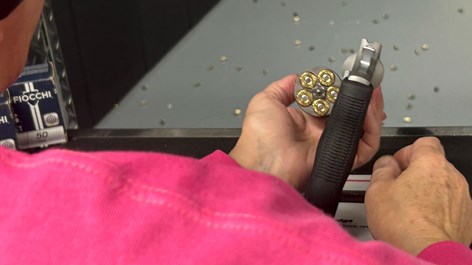
A dangerous condition can occur if the same rounds are put back into the cylinder of your revolver or magazine of your pistol after cleaning. The oil can start to penetrate the case of the cartridge. The same thing can also occur with the primer of the cartridge. The primer can get exposed and penetrated by any leftover oil after cleaning. The gun powder in ammunition and/or the priming compound, being exposed to repeatedly oiled firearm components can become damp and result in a misfire.
John remembers how the older game wardens would have to explain this phenomenon to new recruits. When John first became a game warden, the officers were given a box of duty ammunition. Some would hoard it and “save” it for later. The wardens, especially the new recruits, were told to make sure they rotated their ammunition periodically, which required that six new rounds in their revolver should replace the old rounds at least once a month. Remember, most game wardens that I knew cleaned their guns three to five days per week.
Always get into the habit of periodically rotating your self-defense rounds in your firearm. In a self-defense situation, a misfire can result in an unfavorable outcome.
3. Maintain Your Holster
The holster is often the most over-looked part of self-defense carrying. After all, the holster is the central component of concealed carry. The holster allows you to have your self-defense gun on you when you need it, secures your gun so that someone cannot take it from you, and protects the trigger to prevent accidental discharges. Even though the holster is such an important part of concealed carry, many people who carry for self-defense give little thought when choosing the right one.
Another factor that is often given less thought than the design itself is the regular holster maintenance. Everyday concealed carry exposes your holster to the various environmental conditions: moisture, dust, salt air, etc. All these conditions can cause your holster to fail.
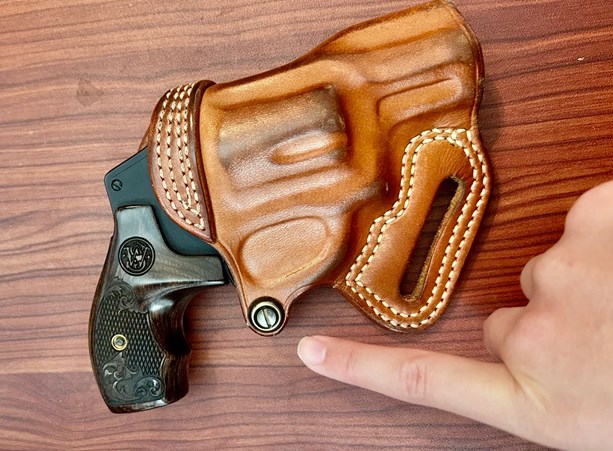
Students have attended my classes with holsters that are out of adjustment, have rusty metal components, or do not want to release the firearm when the student attempted to draw. When I point out where the adjustment screws are and points on the holster that needed to be oiled, they tell me that no one ever told them that they needed to do anything as far as holster maintenance.
Holsters need to be periodically adjusted for proper retention. Because factors like temperature changes occur, the resistance the holster provides can also change. Most holsters have retention screws that can be tightened or loosened to change the resistance. There is a balance between resistance to securely holding the firearm yet loose enough to be easily drawn when needed.
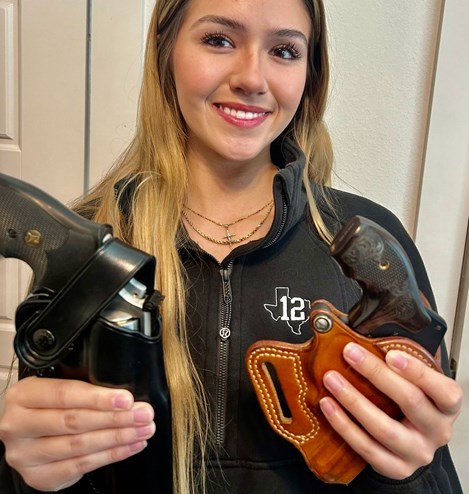
Holsters have a retention rating that goes from Level One to Level Five. The level refers to how securely the firearm is held in the holster from simply falling out because of gravity to preventing another person from disarming you. Level One holsters provide very little security while Level Five holsters provide the most.
The different levels are activated by springs, levers and snaps. All these components be periodically lightly oiled. This will keep the holster working properly, especially when deploying your firearm in a self-defense situation.
Rusty, dry or corroded snaps can be the most dangerous in a self-defense situation. If you’ve ever enjoyed outdoor activities and have had canvas bags that had stuck snaps, this is like a malfunctioning holster. Often the snaps would be stuck together until enough pressure is applied, resulting in a broken device.
We often warn students about the importance of keeping snaps clean and oiled. John’s first duty rig as a game warden was a simple open holster with a field strap that held the issued .357 Magnum. Even though most of the game wardens kept their firearms clean, the holster snaps were often overlooked. A combination of the salt air of the Texas Gulf Coast and a metal snap can be a deadly combination. The result was the duty revolver being unable to be drawn when it was needed the most.
Adhering to these three pieces of advice can make your self-defense carry gun ready to employ in a dangerous situation. You may have one chance to defend yourself or others and the one chance may come in a fraction of a milli-second. Keeping your gun clean, getting in the habit of rotating your ammunition, and taking care of your holster can mean the difference between winning an aggressive confrontation or losing. You have a duty to protect yourself, your family, and your community.
—Heidi Lyn Rao